EXPLORE CLOUDWAYS
Experience lightning-fast loading times and seamless platform
View Demo >PRODUCTS
CLOUD PROVIDERS
SUPPORTED APPS
WHO WE SERVE
PARTNERSHIP PROGRAMS
Lifetime deal: 75% OFF
Advanced Support
POWERFUL FEATURES
DISCOVER
WHY CLOUDWAYS
 Read Case Study >
 Jesse Tutt
Founder & CEO

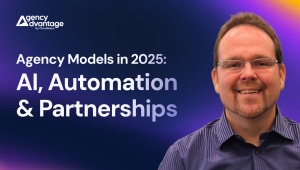
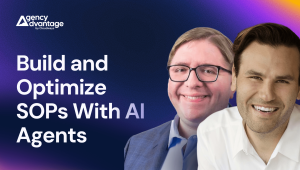
AI isn’t the future, it’s the present, and this session hands agencies a practical roadmap. In this Agency Advantage 2025 opening keynote, an AI transformation strategist walks through adoption stages, agent-building frameworks, and live demos of custom GPTs and automations.
🎙️ Speakers
▸ Kushboo Choudhary — AI Transformation Strategist, E2M
▸ Host: Brent Weaver — CEO, E2M
✨ Key Takeaways
✦ AI model capability is now doubling roughly every six months, so agencies that adopt strategically gain a real edge in productivity and growth.
✦ Every agency falls into one of four adoption stages, AI-first, AI-enabled, AI-curious, or AI-aspiring, each with its own playbook to move up.
✦ Use the BITE framework (business criticality, impact, time saved, ease of implementation) to prioritize which agents to build first, without bias.
✦ Don’t start by building one “expert” agent; break expert work into small objective tasks, build an agent for each, then have them talk to each other.
✦ Custom GPTs shine for internal knowledge, an SOP agent lets team members ask questions instead of hunting through a 30-page doc.
✦ Tools like n8n, Make.com, and Langflow let agents connect to your CRM and other apps; Airtable hooks in most cheaply, GoHighLevel also works well.
✦ Agents won’t be perfect at first, expect two to three months of feedback and iteration, and put critical “never skip this” instructions at the end of the prompt to curb hallucinations.
Brent Weaver: All right, welcome welcome welcome, good to see everyone here, it’s already lightening up. Welcome, agency owners, freelancers, developers, to Agency Advantage 2025 by Cloudways. I am your host, Brent Weaver, CEO at E2M, your number one white-label agency partner, a proud sponsor of this year’s Agency Advantage event.
So why is Cloudways putting this amazing event on? Hopefully you all are as excited as I am. Cloudways has a vision of educating and enabling its community so they can grow and scale. Attention, agent, AI is not the future, AI is not the future, it is the present, it is here, it has arrived, and agencies like yourself have to adapt to stay in business, remain competitive, and increase your own business returns as well as your clients’ and the results that you get for them.
So we’ve got a packed schedule for you over the next couple of days. What are some things that you can expect? Well, first of all, you can expect eight insightful sessions with over 15 AI experts that have been handpicked to give you hands-on practical strategies to grow your agency and your client businesses. There’s so much amazing content over the next couple of days, plus we have three interactive activities where you get to engage and get some chances to win gift cards and hosting credits, who doesn’t love some gift cards and hosting credits. So definitely make sure that you’re here, that you’re engaging, we always do a little bit of an announcement at the end of all the different people that won gift cards and prizes and all that good stuff, so stick with us till the end of the event.
And we’re running a workshop on AI prompts where you will learn how to navigate tools like ChatGPT like a pro. I know if you’re like me, we’re all using ChatGPT on a daily basis, I’m sure there are some tips, tactics, and strategies to uplevel the results that we get. But wait, there’s more, we also have an Easter egg hunt, there will be various Easter eggs placed throughout the platform that you will have to look for and submit on a shared Google sheet. So the team, I think we have a shared Google doc that we can put in chat, copy that link, copy the Google doc, make your own version of it, and be on the lookout for those Easter eggs, so it’s something new that we’re doing this year. So keep an eye out on those Easter eggs, if you don’t know what I mean by an Easter egg, grab the link for the document and you’ll understand, we’re just looking for those little hidden treasures throughout the event, and those who track all the Easter eggs submit it at the end of the event, and we’ll announce the winner of who got the Easter egg challenge at the end of the event. So team, make sure we get that document shared out to our amazing attendees here today.
Before we get into our content, I just want to put a big shout-out to our sponsors, events like these wouldn’t happen without the amazing support of people like WP Umbrella, TemplateMonster, ProfileTree, and my own threads, E2M. So check out those booths when you have a chance, kind of explore the platform here on Zuddl, there’s a way for you to check out those sponsor booths, jump in there, see what the sponsors are all about, of course check out their websites, support those partners because they’ve made this event possible. So you’re going to get all this amazing content through those sponsors, so big shout-out to our sponsors.
So I’m super pumped, I’m really pumped about the next couple of days, I’m really excited to be back here with Cloudways hosting this event, and I’d love to know, are you excited, are you guys excited to just go in and just deep-dive, drink from the AI fire hose? I want to hear from you on chat, I’m seeing some emojis flying up, I’m seeing party emojis, big smiles, some love, some heart. I want to tell you one thing that makes my job so much better is when you all engage and give lots of love through emojis, and here’s the pro tip, our speakers love it too, so we want to make sure those speakers keep coming back for more to support amazing events like this. So when our speakers are up, ask them questions, give them lots of emojis when you get lots of value from their talk, so if there’s something that you got a takeaway on and you just took a note down, make sure you smash that like or love button with that emoji, and that’ll tell our speakers that their content is appreciated. So really excited for you all to be busting out those emojis as we go through the next couple of days.
And a quick reminder as well, while speakers are presenting, if you have questions, use the Q&A tab to ask questions, and keep that chat flowing. If we have time after every speaker, I’ll jump back on and I’ll MC some Q&A with those speakers, time permitting, so make sure you get those questions in there, if we can get to your question live, hopefully we’ll get that answered. After the event, but we definitely want to get as much Q&A done live with our speakers as possible, I know you all are going to get a ton of value out of this.
All right, drum roll, we’ve got our first speaker who’s going to be coming on the stage shortly, she’s going to be kicking off the Agency Advantage conference with the topic of practical AI roadmap for agencies, from quick wins to total transformation, and Kushboo Choudhary is gonna be jumping on stage here. She’s near and dear to my heart, she’s the Chief Operating Officer at E2M Solutions, the company that I’m now CEO of, and so Kushboo is one of the most knowledgeable experts on AI on the planet right now. I’ve actually heard her give this talk multiple times, the cool thing is every time I hear it there’s new and updated information, because AI is moving so quickly and E2M is doing so much to help agencies take advantage of the AI revolution. So Kushboo is an AI transformation strategist, she helps agencies streamline operations, enhance client delivery, and scale effectively using AI-powered systems and custom workflows. So without further ado, let’s get this party started, Kushboo, let’s get you on stage here and let’s jump into our first session here at Agency Advantage 2025, welcome.
Kushboo Choudhary: All right, thank you, thank you for that wonderful introduction, fully pumped up and excited to share all the learnings and all the geeky stuff that we have been building so far, let’s fire it up.
Brent Weaver: I’m fired up, let’s go.
Kushboo Choudhary: Awesome, so I’m going to share my screen, all right, let’s get it going, is it visible to everyone, ready to rock and roll? Awesome. So yeah, super excited to speak on this topic, really very near to my heart, I have been doing hands-on AI experimenting since, I would say, one and a half year, so there are a lot of quick wins, lessons, and transformation stories that I’ll be sharing with all of you with this presentation.
So just giving a quick background on why am I sharing this. So just like Brent mentioned, I’m the CEO at E2M Solutions, have been in the agency ecosystem for like last eight years, worked with more than a thousand-plus clients, overseeing a portfolio of more than 400-plus agencies. So I kind of eat, breathe, and sleep what agencies do all day every day, so I know the agency ecosystem in and out, and have spent a lot of hours on the AI research part as well. So kind of integrating AI research into my agency ecosystem experience and creating something exceptional out of it, so that’s what my background is.
Now, diving deeper into it, let’s go a little bit back into the history. I don’t know how many of you are aware about Moore’s Law, but Gordon Moore, the co-founder of Intel, stated that computing power doubles every 18 months. So we have seen computers doubling that power, like there used to be computers that used to fit a room, and now they just fit our pockets. So when we look back at this law, we definitely feel that yes, that is something that we have witnessed in the history. Now, Sam Altman stated the same law but with the perspective of AI in it, where he stated that AI models are doubling power every 6 months. So now, instead of 18 months, we will be seeing that AI will be kind of changing the way we work with it every six months.
And then we have been witnessing that as well, like just in the initial days of ChatGPT where we used it for content, there were more models, then came Anthropic’s Claude, then came Llama, and then there are so many new tools and applications and MCP servers and other softwares that just came in and kind of changed the game of AI. So we have seen the whole evolution of AI. Now, if we are seeing the future of AI, I would say that right now where we stand is, I would say, the base foundation or the starting point of AI, we have just started exploring how we could integrate AI in our business, in our agency, for our clients, and there’s a whole long way to go when it comes to integrating it in our businesses. So just like Brent mentioned on the starting note, it’s no longer an optional or a competitive success factor, AI is here, it is the present, and then as agencies we should be strategically leveraging AI to get an edge in the business. This is just a quick stat from one of the recent studies, businesses that are leveraging AI see 50% higher productivity and 2x faster growth as compared to those who don’t. So now today in this session we are going to cover how can we be in those businesses who are already leveraging AI and kind of increase our profitability as well as productivity.
So the biggest question right now is, how do we really use AI to transform agency operations, and all of you must be having the same question. So now let’s debrief that question. So today we are going to learn about concept mastery, like what are the agents, why do we build agents, what are the different use cases we could build agents for, and then how we really have the team use the agents we create. So those are the three aspects which we are going to cover in this presentation today.
We are all aware about the four best frontier models which are, I would say, majorly used in all automations and everything that we do when it comes to AI, it’s OpenAI’s ChatGPT, right now we are using 4o, Anthropic which is the Claude, Gemini, and the Llama model. Now the way that these models have been evolving is based on four major criteria. So if we want to test out which model is better for us, the parameters that are used to test out if a model is good or not is based on how many parameters or tokens it allows, what is the context window of it, and then which processing techniques they are using to iterate or to process anything that we are feeding to an LLM model. So these are the normal linguistic jargons that are used in the AI space if we want to derive if a model is good or not.
Now, first, whenever we start any journey, we really want to know the initiation point of it, to know how much distance we have to cover. Same way, if we are starting the AI adoption journey, we really want to know which stage we fall into in terms of AI adoption. So we do this AI adoption assessment, we have an entire playbook, but one thing in common which we have witnessed is all the agencies, anybody that is using AI, falls into either of these four stages that we have figured out. So AI-first agency, AI-enabled agencies, AI-curious agencies, and AI-aspiring agencies.
Now what do these stages say, how do you know which stage you belong to? So AI-first agencies are the agencies that have fully integrated AI across all the operations, like sales, strategy, customer services, every business area that they have, they have already integrated AI into it, like early adopters of generative AI, they use all the different models, all different tools out there. So if you think your agency is something that you have already integrated AI into all aspects of your business, then you might fall into an AI-first agency. AI-enabled agencies, I would say moderate AI adoption, wherein you have some areas where you’ve already utilized AI for, but then there is a whole lot of room for improvement, there are different areas where you still haven’t figured out how to use AI, in that case you will fall into AI-enabled agency. AI-curious agencies, very limited to no AI integration, like you use ChatGPT or you use Claude for anything like content or maybe email update or something like that, but you don’t use it aggressively in any of your business areas where it could help you leverage or get more business or get more efficiency, in that case you will fall into AI-curious agency stage. And the last is AI-aspiring agency, like a solo agency owner or a small agency where you don’t have that infrastructure but you really want to do something big in the AI arena, then you fall into this stage.
So we are going to do a small exercise, we’re just going to take a minute, just kind of assess your own agency, where do you feel you resonate to the most, in which stage do you feel you resonate to most, and then just hit on the chat, like where do you feel you stand, and then we have strategies and playbooks for all the different stages, like how do you move from that stage to the higher stage. So let’s do that quick assessment and we can just move on from it in a minute, just check yourself, just do that quick assessment based on the use cases I showed you, which spectrum or which stage do you feel you fall into. So if I’m assessing ourself as an E2M, I would say we are anywhere in between AI-enabled agencies to AI-first agencies, integrated AI in a lot of areas, but then there are still areas and opportunities that we feel could be automated, so we are somewhere in between that. So you could be in between the stages as well, but then there are playbooks and strategies that would help you move the needle to the other stage.
Okay, I believe we are done with the exercise, now we’ll move toward the action plan. So if you feel you fall into an AI-first agency, the proven methodology that has been working for all the agencies who fall into AI-first stage is getting a generative AI steward. Basically what happens is, when it is distributed among all the internal team members, usually when we have our primary jobs and then AI is also something that we are doing, our focus kind of tends to shift a lot. So if we have someone whose sole responsibility is just integrating AI into all the business aspects, we can leverage that team member for all the different operations. So you should be having someone whose whole and primary responsibility is this AI integration into the system. So making AI-enabled solution a part of OKRs and KPIs for each team, so it’s not optional now, it’s a part of their OKRs, it’s a part of everybody’s KPI that they have to do something on the AI side, like each month, each quarter, and it has to be constructive, it has to be saving time and efficiency.
This is the one which I love the most, action plan for AI-enabled agency. So now AI-enabled agencies are agencies where they have already done a bit of AI work but now confused on how to handle the priorities or how do we even select what should we work on next. So in that case, the BITE framework works the best, so you can just write down all the different options that you really want to work on and then use this framework to scale it from like 0 to 5. So I’ll just show you an example. So like I had five different options that I wanted to really work on, like sales automation, proposal agent, follow-up bot, payments board, quality testing agent, but then if I really want to see which one would have a higher impact or which is the one that I should be working on first, if I’m taking that guess I might be biased, and I might want to work on something that might not be a good bet at that point in time. So using this framework has always given us best results, wherein you just rate everything in the priority queue based on how much of business criticality it has, like is it super critical to the business, give four, if it’s not that much critical to the business then just give like one or two, and when I say criticality it’s basically it should have that impact in the business, in that case if it has a maximum impact just rate it higher, if it’s having lower impact just rate it lower. Impact potential, now if you have that automation or an agent, what impact it is going to have in your agency, so rate it based on that, how much time it is going to save in the agency, so rate it based on that. And then ease of implementation, how easy it is to build that agent or an automation, so even if let’s say it’s saving so much of my time, like the follow-up bot is saving so much of the time, the ease of implementation, I could build something really quick for a follow-up bot, so I would rate it five, and that gets my total to 18. So now this is something that I’ll be working on first, which is a follow-up bot, and then I’ll be working on sales automation and a proposal agent. So now I have my priority, which is not biased on how I think, but then we know what impact it’s going to have on the business, so based on that, if you’re using BITE framework, it just helps you move the needle to the next stage where you know the priority that you should be working on in terms of what automations or what are the agents that you should be building first.
Then comes an action plan for AI-curious agencies. Now this is a very interesting pyramid, and this is something that I’ve learned from all the mistakes that I made in like the first six months. Now when I started diving deeper into AI, I know it might sound dumb to you right now, but usually when you start off you really want to build something which has crazy results, like being in a sales background I wanted to create a sales expert who could do literally everything that a sales team does right now, and when I started building that I failed miserably, like I was wanting to create something which was so big, and AI was completely new, and then I never ended up creating it. So what I learned is, okay, if I cannot build an expert agent at first, how about I break down what I do into different objective tasks?
So taking an example of sales, like what do I exactly do in sales, okay, we could have a lead gen, we could qualify the lead, we could find the details about the qualified lead, we could summarize those details about that qualified lead, we could write personalized emails to that qualified lead, we could send follow-up emails, have them in marketing campaigns for inbound leads, we can have a follow-up bot, a Zoom call agent for the calls that we do. So there are basically so many smaller tasks that go into creating an expert sales agent. So what I learned is, how about we go on breaking down the expert task into smaller objective tasks, which is like a smaller chunk of that bigger task, and then create agents for the smaller task. So now all the different aspects of sales, just like how I mentioned, I will have an agent for almost everything that I mentioned, and now what happens is, once I have agents for all the smaller chunks of task, it’s very easy for me to create expert task, because then what I’m going to do is have all these agents talk to each other, so that just creates an autonomous agentic AI which kind of links in and then creates an expert task for me. So don’t always start with expert task, break down your expert task into different objective tasks, get your objective tasks in place, like your agents in place, and then that helps you create the top of the pyramid which is like an expert task automations.
And the middle tier is unlimited time. So there are a lot of things in our business where we feel that okay, I wish I had more time for this. I’ll just give you an example, for a social media strategy, if you have a lead or if you have a client and you want to send a proposal, I would feel that, oh, I wish I could go and see all the previous history or all the previous social media posts of this client and see exactly what has worked for them, what has not worked for them, and then what kind of strategy would work for them in future, but now because I have a time constraint I might limit my research to last one year or maybe last 6 months. But what if I had unlimited time, I would go in the history and check all the details which would give me a very precise workflow or an action plan that would really work for them, because it is based on all the history-backed data. But now you could have agents and automations that could scrape all the data from their history, summarize it based on the format that you finalize, and then give you all the insights you need. So basically now with limited time you are doing unlimited research just by leveraging AI. So objective task, unlimited time, and then expert task.
And AI-aspiring agencies, so there is a lot that an AI-aspiring agency could do, so tools that we recommend highly, ChatGPT, and then best-first approach, because you’re just starting off, start with something which is really very near and dear to you. So let’s say if you are a marketing analyst, so start with a marketing agent, or start with something that you feel you’re really confident about. So now you are not complicating things by taking a complicated agent, and, like, AI is also new, you are combining two complicated tasks together, instead just go for something which is very simpler, which you feel really confident about, or you already have a process or an SOP around it, and then turn that thing into an agent. So the first learning curve is a little bit easier for you, because you’re creating it for something you’re very confident about, and then learning AI with that thing that you’re confident about, and then once you know how to build agents or how these automations work, then you can take up on more complicated tasks. So that’s the best-first approach.
Now, we all know that this is an era of AI agents, there is nothing in agency business operations which an agent cannot do. So what are exactly agents? So agents are advanced systems that execute multi-step processes and achieve complex goals, so they are not like LLM models which require a lot of prompting and a lot of back and forth and a lot of feedback, agents are something that could be created based on your process, based on your SOP, or based on what you do right now, and they just act and behave the way that you might have mentioned the process in the SOP. So we’re going to see a working tactical of it, but just giving you a gist of what exactly AI agents are.
Now, do you not think that how we interact is changing again? Like in 1995 everybody thought they should have a website, then everybody thought they should work on the digital marketing aspect of the website, then came social profiles, like everybody had one, then came mobile apps, like every B2C client had one, now we are going into an era where everybody would need an AI agent, and then we really want you to know how to build one, and then how to keep on making that AI agent more and more precise by giving constant feedback.
So use case discovery. So from our experience of working with so many agencies, we have figured out that there are certain, I would say, low-hanging fruit when it comes to creating agents for. So there could be a sales insights agent, there could be a customer intelligence agent where you feed all your customer information and then if there is any of the team member who wants to know about that customer they just go and ask that agent, so you don’t have to handhold that team member, they can just get all the customer information from that agent itself. Dynamic SOP AI agent, that’s a complete game changer, now we know traditionally how we share our SOPs or process documents or any of the documentation with our team and then believe they’re going to go and see it, but we end up getting messages like, okay, I missed this, I think I should have looked at the SOP, but we know that there are a lot of human errors that happen. But how about we have an AI agent where we feed the SOP or the process document to an agent, so now the team member doesn’t have to go and look at the SOP every time, they can just ask the questions to the agent and the agent fetches the answers from the SOP, so it just makes their life very simplified. Financial analytics AI agent which could help you get the profit and loss and everything, lead generation agent, automated outreach agent, AI lead qualification agent. So these are just a few areas where we have figured out that okay, we could build an agent and it could do an autonomous job just like how the team member is doing right now.
Now we do two small exercises. The first is AI quick wins, free up your time. Now what does this mean, is there might be some quick wins for AI in your business where you might see there is some repetitive task that is happening or there is something which is taking up a significant portion of your week, or maybe if you have something around it it would allow you to focus more on the strategic work. So you have to list down three to five items where you feel that okay, these are the most repetitive things I work on, this is more manual work than what you expect, or this is taking a significant portion of your week and this is something you would love to automate. So list at least three to five tasks where you repeatedly spend time. Just giving you an example, like proposal creation, so you know we could have an agent drafting proposals based on the templates that you have used previously or something that has worked for you in the past, we could create a proposal creation agent out of that, a sales outreach agent, so these are just the examples, you could have your own unique three AI quick wins. So I just want you to take like 2 minutes and just think, where do you spend most of your time, and then write down which are the top three things that you would want to have an agent or an automation for. So we’ll just take 2 minutes right now and make a note of it, and once you’re done you can just post it on the chat, I would love to see after this presentation what are the ideas or what would you want to work on.
And then the second one is AI big wins. So now we have listed down something that’s going to help you free up your time, now I want you to work on something which is going to help you boost your revenue. So AI big wins for your business, so list down something that you feel it’s going to help you generate more revenue, maybe attract new clients, or it would help you serve your clients better. So you just have to write three use cases where you think it could help you significantly to either improve your revenue or client satisfaction. Just giving you an example, that could be sales outreach optimization wherein you could reach out to more clients as compared to your existing team, now that’s going to help you boost your revenue, upselling and cross-selling, it would go and sense the patterns, see when is the right time to upsell and cross-sell, so that’s something that would help you boost your revenue, customer retention strategies, it would go in and see the data, understand the pattern, the behavior of the client, and then based on that it can just give you recommendations on what could really work for this client in terms of how you can retain this client or increase the satisfaction score. So we’ll work on this real quick, once you’re done you can drop that in the chat, I’m kind of more excited to show the hands-on agents and how they really work.
So yeah, so once the agents are created, there are a few tools that automate the AI agent experience, one is Make.com, so you can just integrate your agents into this tool and then it could be integrated to third-party applications, one is Langflow, and then there is n8n as well. So yeah, now is the time we will be seeing the agents in action and kind of see how to create one.
So okay, so how do we exactly create the agents? So you go in GPTs here, you go on create GPT, this is the interface you get. Now this is the interface which is used to create the agent, so basically you just go in and write the name of the agent, description of what this agent really does, instruction on what you really want this agent to do, then what are the questions the team should be asking. So I’ll just give you an example of an agent that is already working, to show you exactly what kind of configurations we have made in the back end. So you see, this is like an account manager guide, so we have an SOP which is like, I would say, more than 20, 30 pages, these are all the different aspects of the SOP, so whenever we onboarded any new client account manager we used to give this SOP link and then it’s a whole lot of thing for a person to go through in like a couple of days and make sure that they know how we kind of onboard or what does our renewal process look like. And instead what we did is we created this agent, wherein, okay, it’s an account manager SOP agent, what does it do, so it’s a guide for account manager instructions, so I’ll just maximize on this, you are an assistant dedicated to providing external guidance for account management team of E2M, you know what exactly you’ll get to pull the information from, so I’ve attached all these four knowledge base. What I’ve done is I’ve just downloaded all of these documents and provided it in the knowledge base here, so you just need to mention that okay, you must pull all the information strictly from the resources provided by the user, including the files uploaded, so these are the four files we have uploaded, do not use internet, so we don’t want it to go out of the knowledge base that we have provided to give any of the information from the internet, because this is very specific to the SOP.
Now these are the processes, like provide guidance on the daily account management tasks, assisting with client onboarding, guiding account managers, supporting consistent client communication, so this is the instructions, like how I would want it to work, it’s just plain English that you write in terms of what your responsibilities include, just like if you hired somebody to give answers to the client account management team from an SOP, what would you guide that person in terms of what steps they need to do, the same way you just provide those steps in here, and that just goes into the instructions. The conversation starters, so now when I’m giving this agent link to any of my team members, I really want them to see it this way, like they should know what are the questions they should be asking, like what are the daily tasks on the account manager, how should I handle a new client onboarding, so everything that you mention here comes in a block, so whenever you are giving the link of this agent to anybody, they just know what questions to ask, so it’s a good starting point for them. And then the knowledge base, so all the documents, all the files that I had for this SOP, I’ve attached it here. Now there are these capabilities that an agent could have, so if you are ticking it on, like in terms of web research, if they do not find an answer in the SOP they would go outside in the internet and find the answer from the internet, so I have checked it off right now because I just want all the answers to be within the SOP and I don’t want any answers from the internet. Canvas is something that if you feel you have a feedback you can just go in and ask it to make the changes itself, and then it can go and make the changes itself, code interpreter and data analysis, it just gives us a good idea on the logic that’s happening, and then there are additional settings, but you don’t require any additional settings right now.
So probably I’ll just go and ask, hey, it’s my first day today, what do I need to do? Okay, welcome aboard, so now this is giving me all the information from the SOP, and now all I have to do is just follow this, it’s giving me example sales call to go through, getting myself acquainted with the tools we use, what are the other things that I should be looking at, reviewing the onboarding SOPs, so just giving me everything that I would have gone into an SOP and checked it myself. Is there anything about escalations I should know? So it just gives you an entire guide. Now if you don’t know how to create this instructions or what kind of agents you should be creating, we have a playbook, I’ll be more than happy to help you with that, but just showing you a use case of how you could use an agent for and how do you build your agents.
The same way, just how we have it for account manager guide, we do a lot of WordPress websites, so we have a quality testing agent as well, wherein I’ll just show you that agent, I know we are short on time, I’ll just quickly wrap up, wherein you can just go and write the instructions what this agent needs to do, so it just needs to check all the checkpoints of the WordPress that we have mentioned. So I’ll just give you context on how the checklist looks like, so this is the checklist that our team follows, so now what we did is we just provided this checklist to the agent and said that do as much as you can, being an AI agent, so these are the steps, the conversation starters, provided the checklist link. So now all I have to do is just go and add the link, okay, can you do all the QA for, okay let’s give E2M Solutions link, I’ll just take the link here, paste it here. So what it is going to do is it is going to check everything it can which is accessible from the front end, now one of the things that it cannot do right now is it cannot go into the back end or it cannot go into any of the tool and do anything in terms of checking from the back end with the login credentials, but anything which is on the front end or anything which is visible on the internet it can go and check those things. So it’s going to check and do all the tests, it says I’ll begin now and let you know once QA is done, so it just takes about four to five minutes of timeline.
All right, let me know once done, and meanwhile it’s doing that, I just want to quickly show you how the automations work. So this is like one of the n8n tools, just like how I said that you break down your expert task into smaller objective task, so this is what we built for lead generation. So basically all you have to do is just write down different notes, so what this n8n is used for, just giving you a quick background, this n8n is basically used for when you have different agents talk to different tools or third parties and then have an autonomous outcome of it, in those cases you use tools like n8n or Make or Zapier. So basically if I wanted to create something where there are four to five agents talking to three to four different applications, doing something which is like a whole autonomous task, in that case I would use an n8n automation. Just giving you an example of a lead gen automation, so now we have scraped these leads, we will provide this to the automation, I’ll just start this, all right, test workflow, and while it is being tested I’ll just give you a quick glance of how this works.
So it just takes all the agencies from the spreadsheet that I showed you, it gets all the information from the internet about that lead, then we have a qualification criteria where it goes and qualifies those leads, like does that match our ICP or not, if not then we’ll just flush it off and move it to a different marketing campaign, if it does pass our qualification criteria we just go on the internet and find some more information about that lead, just update the spreadsheets, then we summarize that information whatever we have found out using the LLM model, then we go ahead and scrape very specific information about their employee count, industry, followers, and all the things that we could find for that agency, we then again go ahead and update the spreadsheet, then it is all being summarized, then the whole thing is being mapped to okay how does their service area or their expertise match with E2M, based on that we write a personalized email, and that email is being passed to the lead generation team, and they kind of check on the email and they send the emails. So basically right from lead generation to creating the personalized email, everything is being carried out in this whole n8n automation. So this is still executing the workflow, but just giving you an idea here, so now this will be passed and then we will start getting different, as you see this is being populated, so at the end of this automation we do get emails generated, we will come right here in 2 minutes, but we just want to check how that agent is doing in terms of quality testing.
So it just said that okay, it’ll be connecting, let me evaluate each category, just give me on this, okay, let’s just say we want, so it could do as descriptive as you can provide the processes on, but right now we just wanted to work on SEO and on-page elements because I really want to show you the results like how it exactly works, there’s a checklist section, verify if the title gets discontinued. Okay, can you give a detailed report, so it just gives you the list of everything that it has checked, and then also mention what it was not able to check, so basically you can just assign the team for all the remaining items, but for everything that the agent could check you don’t have to spend any manual efforts on that side. So just giving you guys an idea on what are the different areas you could use AI agent for, how it really works, and then what kind of automations you could create. We’ll just see that if this has completed, where we are in terms of, okay it’s on the second-last stage, and we’ll be completing it soon, and then I’ll be up for questions.
All right, now one thing that I feel that we have to keep in mind is agents are not always going to work the way that we think it should work, it’s a constant feedback and iterations, so you should be ready to give it constant feedbacks in terms of, okay, this is what we provided. Now if you go to sheet two, first name, last name, you’ll see a lot of data not available, but you can reiterate this workflow, you’ll see the LinkedIn, the number of employees, industries, and then if you want to see the emails we can just go in here and see, it has created the emails, the custom body, mapping out how it exactly aligns. So yeah, agents are not going to be perfect when you create it first, but yeah, always give it more feedback on how you want to make it more accurate, and just keep on training the agent to perform the way you really want, it’s going to take at least two to three months to create an agent that exactly works the way you want, but it’s in constant evolution. So never feel like, you know, I don’t want to create an agent, it’s not going to do what I’m doing, or I don’t know if it’s going to be precise, just start with it, just start with the objective task, and then it’s just going to take you further and further.
So yeah, summing up, let me just share it back again. So yeah, we have playbooks and everything in place, so in case if you really want the resources you can just hit me up on LinkedIn, here’s my LinkedIn profile, we have playbooks for every stage, adoption stage that I just showed you, use cases, default use cases and prompts that you could use to create agents, different use cases for n8n automations, and then how you create those projects and agents on GPT. So we have all the resources, all the playbooks that an agency could require, so you can just let me know on LinkedIn if you’re interested and then I can send you all that assessment and all the resources we have. And yeah, it was great sharing all this information with you, we have an exclusive community as well in terms of the Slack channel, so in case if you want to get updated on the AI space you can join this community and we can keep you posted on what’s happening in the agency ecosystem on this community. All right, I’ll just stop sharing it and we’ll be up here for Q&A.
Brent Weaver: All right, well, Kushboo, amazing as always, friends in chat, let’s give Kushboo some warm applause, and I know we can’t hear the clapping but maybe we can see those emojis start firing, let’s give some love here to Kushboo and the amazing content. Hey, Nick Bird, good to see you, Katherine, good to see you, James, awesome, thank you, Karen, lots of love coming in on chat, Kushboo amazing as always. I’m going to jump over to the Q&A panel, I hadn’t seen a whole lot there yet, I did see a couple folks ask about recordings, I always know a presentation is going well when people want to watch the replay of it over and over and over again, and some people were concerned about not being able to take notes fast enough, so we will make sure that recordings of Kushboo’s talk and our other speakers will be shared after the event on the event platform, so make sure you take a look at that.
Around 15 minutes into your talk, or maybe it was about five or 10 minutes, it said, can I integrate several tools or is it only possible at the moment? So I’m not sure what the context was there, I know you fired off a lot of your favorite tools, Kushboo, I know that some of the tool integrations are changing rapidly with Make and n8n, and also now what Claude and ChatGPT support out of the box, do you want to just maybe talk for another minute or so on some of your favorite tools and maybe some of the changes and the new tech that’s happening with the AI tools?
Kushboo Choudhary: Yeah, so we started our journey with Make.com, it does a lot when it comes to automating different agents and then integrating it with third-party tools, but n8n has so far been the best, where you can integrate agents with the OpenAI models, they have nodes for almost everything, and now they have MCP nodes as well, so you could integrate all the third-party tools, maybe everything that you might be using in your agency right now, with agents and LLM models. So that is something I would feel it’s going to give you an edge, where it’s not just the agents that’s working for you but the agents are speaking with your tools, getting the data, summarizing it, and then giving in the information that you need. So tools like n8n are kind of, I would say, ruling the market in a way, where it’s just letting you do everything that you dreamt of from an agency perspective.
Brent Weaver: So something I’ve heard from some agency owners is like a hesitation to invest too much time, because, you know, by the time I finish my cool tool, maybe the AI tools have now just launched a new version of their app that just does that thing for them. Have you found that you’ve lost work or had to rework things as the technology is changing and moving so quickly?
Kushboo Choudhary: I would say we have not lost the work ever, but it has always improved. So whatever we are using right now, we know that it’s going to be better over time, so probably with the new model update or with the new product update within the tool, we know that okay, if the kind of accuracy was about 90 percentile, it’s going to go to 95 or 96% with every new update that they are coming up with, so it’s just going to save us more time. But yes, I agree to the point wherein you have to invest a lot of time to learn that tool, to see how that tool works, but it’s all worth it, or maybe hiring someone who knows that tool, or maybe knows how to build those automations, would be like a big plus, because then you’re not investing that time but then you are getting everything that you can get and leveraging that tool for everything that you do in your agency business.
Brent Weaver: Yeah, I feel like as an agency owner it’s easy to get so caught up in my own client work I forget to work on my business, and so that’s a good reminder for our folks. This question is coming in from Jim McDonald, where do you store and share your SOPs, any platform recommendations and best practices?
Kushboo Choudhary: Yes, so we store our SOPs on Coda right now, that’s where we have it all centralized, where every division have their own SOPs, and now Coda has an API available which can directly integrate to OpenAI or Claude, so you can just create the agent by just plugging in the API of Coda, so that is something that is used a lot. But yeah, in terms of recommendation I would highly recommend organizing it on a centralized platform like Coda, so every division can have their own SOPs, and then you can directly plug it in with any of the LLM models.
Brent Weaver: I know something that was great for me when first starting with E2M was, you have the n8n agent inside of Slack, and yes, Slack is a workflow that me as a business leader I’m already used to, like Slacking team members and stuff like that, and it’s really cool because Kushboo built a system where I can Slack the n8n agent and it tells me if a certain person is a client, it tells me how many billable hours they have, it tells me lots of key metrics about them, and so when I’m out at an agency event I can literally meet an agency owner, and yes, I could probably go search for them in the CRM and all that kind of stuff, but I just Slack my n8n agent and it tells me whether that person is a client or not, which has been super useful, and I can have a conversation with it, I can say, hey, is there anything else, are they trending up, are they trending down, right, it doesn’t just give me a fixed response but it’s a very dynamic response, which has been very useful. We maybe have time for a couple more questions, can we get a link to the quality test agent custom GPT that you mentioned?
Kushboo Choudhary: So that is more proprietary, that is for all the clients that we work with, but I would love to help you create one for yourself, so yeah, you can hit me up on my LinkedIn and I’ll be more than happy to share the checklist that we have and help you create one for yourself.
Brent Weaver: Yeah, and what I found, you’ve mentioned this before, Kushboo, is that while a lot of agencies have similar processes, like we all need a quality assurance process, sometimes your own unique agency processes are different, right, you don’t really want to copy and paste another agency’s, even though we go, okay, maybe there’s some concepts or a model that we can reuse, but don’t just want to copy and paste what somebody else is doing because you might care about some different things.
Kushboo Choudhary: Exactly, so we created a lead generation agent for all the clients we work for on the fractional AI side, everybody wanted to create a lead gen agent, but then everybody had so different processes when it comes to extracting the leads or reaching out to them or the kind of emails they wanted, so that is the most common problem, but it had 18 different solutions, or we had 18 different automations for one common problem. So it’s like there could be one common thing that you might be wanting, but everybody would have different processes or different SOPs around it.
Brent Weaver: This question is from Nick Bird, good to see you Nick, what CRM do you use and does that hook into n8n, and maybe you can comment further about common CRMs that do hook into n8n as well?
Kushboo Choudhary: So the CRM we use, which is Trello, does not hook directly to n8n, but what really hooks seamlessly is Airtable, Airtable is something which has the least cost when it comes to having the APIs, so if you’re trying to build a CRM and wanting to hook it with n8n, Airtable is something that I would highly recommend. GoHighLevel also integrates really well, but their cost is a bit on a higher side, so you need to invest more in terms of API and the platform cost, but even that plugs in really well with any of the LLM models. Apart from that, Zoho doesn’t go really well right now, HubSpot we did try but the API costs are very high and then it just doesn’t work the way that we want, but yeah, I would definitely go for Airtable at any point in time.
Brent Weaver: Very cool, and a follow-up question here from Nick, that was great, I’d really like to understand how to make this practical for bigger teams that are less tech-savvy, example, an administrator automating an onboarding process across multiple pieces of software, so maybe even thinking about how an agency might help their clients implement that, maybe as a subtext there, Kushboo.
Kushboo Choudhary: Yeah, so if you’re planning to integrate or maybe help your clients have these kind of automations, so basically what we have to do is just understand their processes first, like see how they work, what kind of SOPs they have, or what is the step-by-step approach and how do you want that expected outcome to be, and then based on that we create like a whole automation. So based on the tech stack or the substack that you use, we’ll just see what kind of endpoints it has or what kind of APIs or OAuth, and then based on that the whole automation is created.
Brent Weaver: It reminds me, if agencies are out there thinking about offering AI solutions to their clients, it kind of reminds me of, I mean, basically a website project framework, right, like there’s a consultative discovery, then there’s a kind of a blueprinting and scoping, and then there’s a build and execution, and then there’s kind of this management and maintenance of whatever you build for your client ongoing. So I imagine if you’re somebody who’s a website agency, web development agency, adding AI services might be an easy transition, or at least somewhat, I’ll call it a simple transition, maybe it’s not easy because a lot of the stuff that you’ve gone over today, Kushboo, is complicated, there’s definitely some nuance here. I think we have time for one last question, this is from Anton Shepard, what framework or protocols do you use to mitigate incorrect information or hallucinations, especially for critical workflows?
Kushboo Choudhary: Right, so we kind of make sure that we feed it right into the memory of the agent that, hey, this is something that you never should be doing. So just like for an SOP agent, I often ran into an issue where it gave answers from some different documents, whereas that information was not asked at all, so in those cases you just write it in the prompt, so you use double-asterisk trick, just write “important note, never skip this step,” and just write all the things that you want it to do every time. So it’s usually like how you know when you are training a person you say that okay, you make all the mistakes but you never make this mistake, the same way when you’re prompting any of the agent you just write a note that hey, never miss this step, and just write it in a way where it’s the last of the prompt that you’re giving. So whenever an AI is going through all the prompting steps, usually when the hallucination happens it usually happens in the middle of the prompt that you have given, so even if the hallucination is happening, when it goes to the end of the prompt it knows what it doesn’t have to do, and in that case the hallucination doesn’t happen on the important checkpoints that you might have mentioned. So this trick has worked for me all the time, and I can kind of bet on that this trick would work for you as well, like having special instructions or something where you just mention “do not miss this at any cost” and just mention those points at the later part of the prompt.
Brent Weaver: Awesome, I think I’ve seen a post on Facebook the other day of somebody trying to build a GPT to tell ChatGPT to not use em dashes anymore, and it was actually quite difficult to get AI to stop using em dashes, so maybe we’ll try that one with that instruction being the very last one on there. Kushboo, thank you so much, I did see multiple people ask for your link to the community as well as to your LinkedIn, so please feel free to share that on chat before you exit out for the day just to make sure people have those to follow up with. And just want to thank you again from the Cloudways stage here at Agency Advantage for sharing your amazing knowledge on AI, audience, let’s give Kushboo some more love here, let’s get those emojis flying in chat, let’s get those reactions flaring, and Kushboo, thank you so much.
Kushboo Choudhary: All right, thank you so much for having me, it was great sharing all these experiences with everybody.
Brent Weaver: Very good, awesome, I’m seeing those links in chat, very good. All right, next up we’ve got an amazing panel on the future of WordPress, how AI is going to be shaping that, some amazing panelists, and one of our co-hosts here at Cloudways, Moeez, is going to be jumping in and taking the stage to help run that panel. So thank you for kicking off with us here at Agency Advantage 2025, we will be right back with more amazing content on AI to help you grow your agency and business very shortly.
Answer a few questions, and we'll present you with a personalized tour of the Cloudways platform based on your answers.