EXPLORE CLOUDWAYS
Experience lightning-fast loading times and seamless platform
View Demo > [Free Event] Build. Ship. Scale. at Velocity. See What’s Next at Prepathon | Sep 22–23 Save Your Spot Cloudways Velocity is here. Deploy Node.js apps on managed, predictable infrastructure. Start Hosting Now
 PRODUCTS
CLOUD PROVIDERS
SUPPORTED APPS
WHO WE SERVE
PARTNERSHIP PROGRAMS
Lifetime deal: 75% OFF
Advanced Support
POWERFUL FEATURES
DISCOVER
WHY CLOUDWAYS
 Read Case Study >
 Jesse Tutt
Founder & CEO

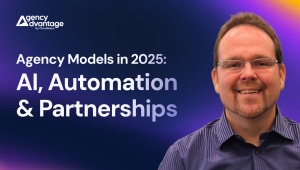
Traditional outsourcing is breaking down, and the real threat isn’t AI, it’s the outdated service model. In this Agency Advantage 2025 session, a fractional consultant argues agencies must shift from execution to enablement, becoming coaches rather than content vendors.
🎙️ Speakers
▸ Tom Wardman — Director, Fractional Marketing Consultant
▸ Host: Elizabeth Zurn Lujan — Co-Founder, Vinrock Media
✨ Key Takeaways
✦ Most execution-only agencies won’t survive the next five years; the ones that thrive will look very different, shifting from doing to enabling.
✦ A “perfect storm” is squeezing agencies: zero-click search, an AI content flood, a trust deficit, pricier ads, and buyers learning on YouTube, Reddit, and TikTok.
✦ Clients now draft content in-house with a prompt and Grammarly, so paying thousands for generic output no longer makes sense to them.
✦ The traditional model has three fatal flaws: misaligned incentives (paid to do, not teach), bottlenecks and bloat, and no strategic seat at the table.
✦ Move from vendor to growth coach: leverage AI rather than sell it, and teach clients to build systems around tools they already have.
✦ Shift the delivery model from done-for-you to done-with-you, retainers to sprints and training, content writers to content coaches and workflow designers.
✦ You won’t be replaced by AI, but you can be replaced by someone who helps your clients use AI better than you do.
Elizabeth Zurn Lujan: That was so great, learning about everything that’s going on with DigitalOcean and Cloudways and their AI that they’re integrating. Now we’re going to talk about AI and the end of traditional outsourcing, building a smarter agency model. This time our guest is Tom Wardman. Tom is a marketing strategist and fractional CMO specializing in building trusted brands that attract customers through clear strategy, HubSpot implementation, and expert coaching. Tom, I’m so excited to hear what you have to share with us today.
Tom Wardman: Thank you, great to be here. Let me just get my slides up and running. Okay, we good to go?
Elizabeth Zurn Lujan: Yes, I can see them.
Tom Wardman: Okay, perfect. So I’m going to start with what I think is probably the worst client experience ever, and it’s a real-life scenario from when I was working within an agency several years ago. So the year is 2021, I’m working in-house, I’m actually responsible for agency marketing, so I’m not even part of the client delivery team at this point. And for various reasons, one of their content writers ended up going on leave. I had a content background, so they brought me in to help with that, and I ended up joining a client call, never met the client before. Instantly they were furious, and they were just unhappy about the level of service. The team had no idea what the deliverables were, and it ended with the client getting a free month off of their retainer. That monthly fee was $7,000 a month, given away for free, like that. One month then became several other free months, and eventually that client left because of a lack of results and because of stagnation, and ultimately that agency fell into administration. But that meeting has stuck with me ever since, ever since that meeting.
And it’s because of that that I want to start this presentation with a thought-provoking moment for you. Let’s get you all thinking, and it’s this: that most agencies as we know them today won’t survive the next 5 years. Most agencies won’t survive the next 5 years. Now, that’s not an exaggeration for me, and from what I’m witnessing, that’s a direction of travel that is already taking place. However, I also believe that some agencies, which will be the ones that adapt, that evolve, that rethink their role, those are going to be the agencies that absolutely thrive, but they will look very very different.
So with that in mind, let me put a question to you guys, and you can pop your answer into the chat, I want to see some yeses and some nos and any other thoughts that you’ve got. So, have you lost a client in the past 12 months that you felt like you shouldn’t have lost? Go ahead and drop a yes in the chat if you have had that scenario. Excellent, getting lots of people commenting. So if you’ve also been feeling like client relationships are harder to retain, like your proposals aren’t landing, like your results are harder to justify, I think people also agree with that as well from what I’m seeing in the comments. But the good thing to know is you’re not imagining that. So let’s dig a little deeper. I want you to also comment yes in the chat if, in the last 12 months, you’ve seen any of the following. So if you’ve seen longer sales cycles, tighter margins, increased client churn, harder to show return on investment with the work that you’re delivering. Excellent.
Great. Now, I’m going to put my neck on the line here and say that I think that’s a good thing. And I might sound crazy in saying that, but I absolutely do think it’s a good thing, because in a way we’re now all in this together. But what we need to recognize is that these aren’t isolated issues. In fact, they’re symptoms of a much bigger shift. And that bigger shift can be seen with these headwinds, in this perfect storm that we’re facing. So, we know that zero-click is on the rise, so SEO traffic is shrinking and Google is sending less traffic. We know that content volume is up but performance is down. We know we’ve got a massive trust deficit, people and buyers just don’t trust us like they used to, they’re skeptical of these done-for-you promises that agencies continue to shout about. And another thing, Google Ads and wider ad platforms are starting to cost more and getting pricier, but they’re less effective, and we’ve got less performance to show for it. We know that 18% of our search traffic now isn’t happening on Google. Clients are learning from pretty much everywhere, they’re learning from YouTube, Reddit, TikTok, and it’s not just search or blogs.
This is all to say that for us, the agency, we’ve been riding the same bike for 15 years, which is what I’m trying to emulate with this image of someone riding a bike with, bizarrely, an AR headset, kind of lends nicely to the AI analogy. So we’ve been riding that bike for 15 years, but the terrain has changed, and we haven’t changed with it. We’re not on a flat road anymore, we’re on a mountain trail, and AI isn’t changing the bike, it’s changing the environment. So what do I mean by this? I’m pretty sure we can all agree that the buyer has changed, and that’s not just buyers of agencies, that’s buyers for pretty much any purchasing decision that we make in this digital world that we’re all living in. As a buyer, we’re more impatient, we’re learning fast, we don’t want to feel sold to, we want to feel empowered. But if we think about it, the buyer has every right to have changed, and in fact we, the agency, are the one that has made them change, because it’s us, the agencies, that have constantly been shouting, yeah, you just need to publish more content. In the early 2010s, 2012, that was the main mantra of agencies, just publish more content, you’ve just got a blog, you’ve just got to put all that content on your website and Google will find it and everything will be hunky-dory.
But it gets worse than that, because now history is repeating itself. The AI floodgates, I’m sure we can all agree, have opened, we’ve seen so much more content, there’s an influx of AI content on websites, on social media, on LinkedIn, in posts and comments and everything in between. Because of AI, what we’ve seen in the last 18 months is the biggest democratization of content tools in history. But the reaction of most businesses, and in fact a lot of agencies, has been just to crank that volume up. So history is repeating itself. In 2012 we said just publish more content, now we’re saying just ask ChatGPT. We’re making the same mistake but just with new tools. We’ve got the same pig but a different shade of lipstick.
So I’m going to ask you another question as well, and I want you to pop in the chat if you’ve had a client say something like this to you in the last 6 months: oh well, we just don’t know what we’re paying for anymore, or, we’re trying AI internally, do we really need an agency? If you’re getting comments like that from your clients, go ahead and say so in the chat, don’t be afraid to hold back. And whilst we wait for those comments, what I want to suggest is some bad news. I hate to break it to you guys, but this is where we need to hold the mirror up, because if your clients are starting to test AI in-house, and your pitch and retainers are based on outputs, then the writing is on the wall. What I’m saying is that AI has fundamentally changed what clients are going to be expecting from us, the agency. In other words, they want control back. Now, we might not like it, but that unfortunately is reality. Because your clients now are paying five, seven, $10,000 a month for content that they could easily draft with a prompt and with Grammarly, and they’re saying things like, well, why should I be paying these thousands of dollars a month for the same generic output that AI can draft in seconds? And here’s the thing, they’re not wrong to ask that, because AI is letting them do more and more in-house than ever before.
We’re also seeing agencies replaced by fractional CMOs, because those people are embedded, they’re strategic, they’re trusted. In other words, clients no longer want execution alone, they want enablement, they want insight, and they want ownership, and they’re not buying just the execution. So if you are an agency that’s only offering execution, not only are you competing with low-cost contractors and DIY solutions, but you’re now competing with AI tools, and that unfortunately creates a race to the bottom. So suddenly agencies are fighting for relevance, we’re not just fighting for leads anymore. So if I was to sum this up, the best thing I can say to you is that AI is no longer your competition, your old business model, your old agency model, is.
Because there are three big problems with the agency model that has been the crème de la crème for 10, 20, 30 odd years up to date. If we’re honest with ourselves, if we want to survive as an agency, we have to accept that we’re not designed to make our clients self-sufficient, we’re designed to keep that retainer alive. And because of that, you have misaligned incentives, because you’re paid to do, not teach, you’re paid to produce more blog posts, not better results. Essentially you’re paid to do, not to empower, but your clients are wanting autonomy. You also have bottlenecks and bloat, project delays, slow turnaround, overservicing, underwhelming results, you name it. I once saw a client have to wait 9 weeks for one blog post because of the feedback loops internally and externally. Nine weeks for a thousand words. You won’t be surprised to hear that we did lose the client. And AI can now draft that in a matter of seconds. And number three as well, there’s no strategic seat, because ultimately we’re seen as a vendor and not a partner, we’re reactive, we’re not proactive. So for instance, another scenario I saw, when a CMO was promoted, the agency was dropped, because they wanted a partner, they didn’t want just someone to outsource their content. So one thing to think about is that if your biggest client left tomorrow, how much internal marketing capability did they actually build whilst they were working with you? How much self-sufficiency would they have? But more importantly, how damaged would your agency become, especially if it’s your largest client? So AI is not going to replace the work, AI is going to replace bad processes, slow delivery, and that’s where the value and the value model needs to shift.
But before I show you what that looks like, I just want to give you a bit more background about myself, because you’re probably wondering why I’m so passionate about this shift. So I spent six years working within agencies. I started as an account manager, and then over that six-year period went through different agencies and eventually moved up to a senior leadership position. I built, I led a client delivery team from scratch, so I was sat in pitch rooms, I was working with budgets, big budgets, and I saw what worked and I also saw what didn’t work. But I also saw something incredibly heartbreaking, which was great people losing their jobs multiple times, because that business model, that agency model, wasn’t evolving. So agencies were losing clients not because the work was bad, but because the relationship was breaking down, expectations weren’t aligned, value wasn’t clear, and unfortunately many people in many agencies that I worked at, including myself, had to lose their jobs. So now today I work as a fractional COO for agencies, I help them design and redesign how they operate and how they can systemize their service delivery. I help them with operations, and I help them essentially evolve from being a doer to becoming that strategic enabler. I’m also a certified coach in what’s known as the Endless Customers methodology, and that’s a framework that I use with businesses to help build in-house marketing self-sufficiency, because over the years I’ve spent agency-side and in-house, I’ve recognized that that’s what clients actually want, and now that’s what I want to help agencies deliver.
So without further ado, let’s take a look at what that new agency model is going to look like. And it’s a model that a lot of industries already use. So I want you to think about your favorite athlete, your favorite business guru, your favorite non-fiction author. Chances are they have, or have had at one point in time, a coach in some form or capacity. So I ask you, what if you became the coach instead of the crutch? What if you made the shift from execution to enablement? What if you helped your clients build that internal capability instead of outsourcing everything to you? In other words, that means we would move from being a vendor to a growth coach. And to me, this is the opportunity that most agencies are missing, because your clients have access to the same tools, you can teach them how to build the systems around those tools. So in other words, help them do it themselves, but just do it better. So think strategist, think trainer, think systems builder. It’s about leveraging AI, not selling AI. AI can write the blog, but it can’t build the editorial calendar, or integrate with the CRM, or build the full funnel strategy. Clients already know about the tools, so why not show them how to build everything else around those tools? That’s where you come in. Agencies can easily facilitate this, but only if you rethink your role.
And that’s a role that has new delivery models. So we’re going from done-for-you to done-with-you. As I’ve said, we’re going from execution to enablement. You would go from a retainer to a sprint and training. And in terms of internal roles, you would go from things like a content writer to a content coach and an AI workflow designer. Let me show you how you can do that. So essentially, you want to coach your clients instead of just serving them, you want to use AI to accelerate the capability, not replace people. We’re not getting rid of people in a business, we’re building standardized systems, and we’re building that AI capability that you can then frame everything around. Imagine something like this, where you’re offering a $3,500, $5,000 a month package that isn’t content creation but content coaching. Think of how low fulfillment that would be, but how much higher trust, and how much more valuable that would be to your clients. And if you don’t believe me, all I can say is I’ve seen what happens when agencies don’t evolve. Like I said, I’ve been on the receiving end of that many times, when agencies have had to make cuts because the value model has broken down. But I’ve also seen the agencies course-correct before it’s too late.
And I recognize that you’re probably sat there going, well, we can’t do that, you’ve got hesitations, you’ve got concerns. So let me address some of those myths and assumptions for you. And there’s top three AI myths that I would say are hurting your agency. So number one is this idea that, well, AI can just replace our writers. That’s not the case. AI is there to replace the inefficient processes, because there will always be a critical need for writers who understand the client’s point of view, whether that’s in your agency or with the client. Number two is this idea that, well, clients just aren’t going to pay for coaching, which I can tell you is categorically untrue. Coaching, taking agencies out of the equation for a second, coaching is already a 20 billion industry, and businesses want that enablement, especially mid-market teams. And finally, if you’re sat there thinking, well, I’m too small of an agency to change the model, I would push back and say that’s absolutely and exactly why you need to. And the smaller agencies can easily pivot faster than the big ones.
So if you like what you see here, here’s what I would do, either today, tomorrow, or in the next couple of days. These are your first five steps, and if you want to transition out of that dependency trap and into that enablement model, this is what you would need to do. So number one, start by auditing your current services. So have a look at things that are scalable and things that are not scalable, and understand how you can then transition your services around that. I always say, when you’re moving the model and changing the model, start small. So identify one or two client accounts that could benefit from the coaching over the execution, and use that to build a content coaching offer, which might be weekly sessions, AI-guided workflows, feedback on work they’re producing, and so on. And as you’re doing that, you can use AI to templatize and systemize that internal delivery model. And you can also look at potentially piloting a fractional coaching model with yourself. So use the agency as the client before you then roll that out to your clients.
So let me show you an example of this in action. This is an agency in the States called Impact, and this is their website in 2017. I’m sure you’ll agree that they look like your typical marketing agency, they look like everyone else, they offer the same thing as everyone else, their pricing is typical agency pricing, again looking like every other agency on the planet. And I remember their CEO Bob, who’s a good friend of mine, I remember him telling me how tight those margins were. But that was 2017. This is Impact today. So Impact today is an 8-figure agency, and their flagship offering is facilitating coaching on the Endless Customers framework that I mentioned earlier. So their main service offering is, that’s all they do, is coaching. They have services kind of supporting that, such as web design optimization, AI training, and that sort of thing, but by and large they pivot their services around this coaching of the Endless Customers system. And this is what their pricing looks like today, highly profitable. This gives you a picture of what a coaching-first model can look like, and like I said earlier, it’s low fulfillment, it’s high trust, it’s exceptionally valuable. And what I would always say is what’s powerful is that your team is becoming the guide, you’re not building the dependency, the client is the one building the capability.
So I appreciate that I’ve said a lot to you, and as I draw things to a close, what I’m saying is there are two paths forward from here. So number one is you keep running the old playbook, you sell time, you outsource tasks, you cling to that retainer, you’re like the character floating on the door after the sinking of the Titanic, clinging to that retainer for dear life, come hell or high water. Option two is that you evolve, you become the enabler, you become the coach, you become the strategic partner. And I truly believe that the agencies that go with option two will be the ones that build smart, that remain lean, that scale more profitably, because you’re not just choosing a service model at this point. Like I said at the start, in terms of agencies surviving the next 5 years, you’re choosing your survivability, that’s what’s at stake here. In a world where AI is now leveling that playing field, trust is now what’s going to become the differentiator, and that trust will come when you help your clients own their growth rather than renting their growth from you.
So I have a final message for you to think about, and this is probably a phrase that you’ve heard some sort of variation of on social media, from influencers and everybody posting on LinkedIn at the moment, and that’s this: you won’t be replaced with AI or by AI. So that’s the take that AI is not going to replace your job that everyone and their mom is screaming about. You won’t be replaced by AI, but you will be replaced by someone who helps your clients use AI better than you do. I truly believe that the next generation of agencies won’t be content vendors, they won’t be media buyers, they won’t be link builders, they’ll be growth architects, they’ll be trainers, they’ll be system enablers. And those agencies that thrive won’t be the ones with the biggest delivery team, they’ll be the ones with the clearest model for enabling their clients, and that ultimately is what I want to help you build. So thank you for your time, I appreciate you listening to me for the last, however long it has been. If today’s talk has resonated with you and you want to look at changing things in your agency, what you can do is scan that QR code on screen, that will take you to tomwardman.com, and you can find out more about my fractional COO and my fractional coaching services. Feel free to also connect with me on LinkedIn as well. I also, shameless plug, have a book coming out later in the year, so if you go to tomwardman.com/book and use the discount code AGENCY, you can get 10% off the pre-order packages there. But I’ve thoroughly enjoyed talking to you about everything, and I wish you guys every success in the future, but thank you for your time.
Elizabeth Zurn Lujan: Thank you so much, Tom, for all of that, it was really incredible. And what I keep coming back to, what I’m hearing over and over again, is as the tech increases its capability, it calls us to be more and more human and more and more relational. And I feel that theme coming out from you, you talked about coaching over execution, right, and trust being that big differentiator. And I have confidence in every single agency here joining us that they have something that sets them apart, that will build that trust with their clients. So thank you so much for setting that exciting vision for the future.
Tom Wardman: My pleasure, thank you for having me.
Elizabeth Zurn Lujan: Yes, thank you, Tom. So next we are going to have a panel on AI versus human creativity and where should agencies draw the line, so that’ll be coming up here in just a few minutes. Thank you guys so much for joining us.
Answer a few questions, and we'll present you with a personalized tour of the Cloudways platform based on your answers.