EXPLORE CLOUDWAYS
Experience lightning-fast loading times and seamless platform
View Demo > [Free Event] Build. Ship. Scale. at Velocity. See What’s Next at Prepathon | Sep 22–23 Save Your Spot Cloudways Velocity is here. Deploy Node.js apps on managed, predictable infrastructure. Start Hosting Now
 PRODUCTS
CLOUD PROVIDERS
SUPPORTED APPS
WHO WE SERVE
PARTNERSHIP PROGRAMS
Lifetime deal: 75% OFF
Advanced Support
POWERFUL FEATURES
DISCOVER
WHY CLOUDWAYS
 Read Case Study >
 Jesse Tutt
Founder & CEO

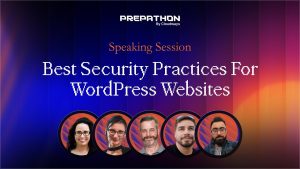
Automation only works once you have processes to automate. This Prepathon 2024 panel shows how agencies automate maintenance to grow recurring revenue.
🎙️ Speakers
▸ Aurelio Volle — Co-founder & CEO, WP Umbrella
▸ Maciek Palmowski — Security Community Manager, Patchstack
▸ Brent Weaver (Host) — Director & Coach, UGURUS
✨ Key Takeaways
✦ You need processes before automation, automate the boring, repetitive, error-prone tasks and let machines run them consistently.
✦ Don’t over-automate: if you can do it manually more quickly, don’t automate it, and watch for premature automation.
✦ Automation aids client retention, use it for NPS surveys, review collection, and regular maintenance reports that prove your value.
✦ Automate monitoring for uptime, plugin vulnerabilities (Patchstack), and especially backups, keep multiple copies and never store them on your own server.
✦ Test that backups actually work by restoring to staging on a schedule (GitLab’s incident is the cautionary tale).
✦ For performance, automate image optimization (Imagify, ShortPixel) and cache clearing after updates; use Cypress or Playwright for end-to-end testing.
✦ Automating at scale multiplies mistakes, one typo can delete sites, so check automations regularly and never test on production.
Brent Weaver: Maurice and Brian, you, or, I’m sorry, Bayan, you got your entries in there. Looks like we got four groups competing for that AI business idea, the Cloudways swag, the hosting credits, and planting a tree in each of your teams’ honor. So we’re really excited to see what Mario comes up with in terms of who the winner is for that later on today. So we will be announcing the winners from all of our contests here in a couple of hours.
So, all right, next up we’re going to be talking to a couple of amazing panelists. We’re going to be talking about automating WordPress workflows, maximizing recurring revenue for agency success. So this is going to be a round table panel, and so we’re going to be welcoming a couple of amazing people to the stage. Aurelio Volle is the co-founder and CEO of WP Umbrella, where he empowers web agencies and freelancers to seamlessly manage WordPress maintenance and demonstrate the value of their work to clients. He’s been leading WP Umbrella since April 2022. I read also on your profile that you are building in public the company that you wished you got to work for when you were an employee, which I love that mission, that’s absolutely amazing. We also have Maciek Palmowski, he is currently working as security community manager at Patchstack, which is a vulnerability scanner for WordPress websites, can’t have enough of that in the world going on right now. So welcome both to the program, we’re going to be having a good discussion here around automating WordPress workflows. So welcome, guys.
Aurelio Volle: Hi, thank you, Brent, so, be here.
Brent Weaver: Yeah, great to have you guys here. So let’s get started. First kind of question for us to jump into, can we quickly talk about some benefits of automating workflows for agencies besides time savings, just so we set the scene for today’s session?
Aurelio Volle: Can I start, Maciek? Because I think, of course you can, because I think I need to say something before speaking about automation. Because at WP Umbrella we see how thousands of agencies are working, basically on a daily, weekly, monthly base, and what I can tell already is that if you want to have automations you need processes, and then you can automate these processes. And I think we have a very diverse patchwork of agencies, and some of them, some of them apparently are working with a lot and very good and very thorough processes, and so they can automate them and they can scale their agencies. But we also have a lot of agencies that do not have any processes, they do backup weekly, they do backup daily, they do plugin update on Monday, on Friday, on Tuesday, they don’t read changelogs, you know. And when you do that, you cannot automate. And that was a kind of, I don’t want to kill the vibe, but when I was preparing the webinar I was like, okay, I want to speak about automation, and then I looked a bit at what people were doing, customer support and everything, and I realized that, okay, I need to really have a quick word on processes, because when you have processes you can do automation, and if you don’t have processes you cannot do automation. Sorry, I totally hijacked everything, Brent. And to answer your question, besides productivity, which is definitely a killer with automation, you can improve client retention, cost efficiency, and any other things. I’ve already talked too much, Maciek.
Maciek Palmowski: So first of all, totally agree about the process part, because to automate something you can’t just say, hey, let’s automate stuff, but you have to really know what. And apart from time saving, I like automations because machines kind of really love to follow orders. So if we say, hey dude, this, this, this and this, it won’t matter to a computer how long will it take, is it boring or whatever. For us, repetitive tasks are horrible because, like I said, they are boring, they are repetitive, and there is a huge chance that at some point we’ll start making mistakes. Machines on the other hand, they will follow us exactly as we ordered. So if we say to follow some workflow, it will follow it constantly, it won’t get bored. So this means that while we as humans at some point will start to get frustrated, bored, start making mistakes, a machine will repeat it over and over and over. And this is something very important about automation, we should always remember to automate things that are problems for us, that stand in our way, so we can focus on the things that are interesting. And as a side effect, yeah, the time saving is always a cool thing, but time saving when it comes to automation in most cases is just a side effect, a very nice one, but still it’s a side effect.
Brent Weaver: I almost feel like if I go in and start trying to automate stuff that I don’t have processes for, I might end up spending more time trying to figure out automations and trying to figure out, you know, what I should automate, or maybe automating things I shouldn’t be automating, and maybe that’ll cause some unintended consequences or problems. So I love that message of have the processes first, probably some really clear outcomes of, hey, I’m trying to accomplish this goal or objective, and then now I’m going to make automation kind of part of the how, not necessarily the what.
Aurelio Volle: And to complete, we have this one rule in our team at WP Umbrella, because devs and people who like to make websites, they like to play, and often you can over automate, and so we have this rule which is, if I can do it manually more quickly, then I don’t automate. And so basically we end up automating the things, like Maciek said, that are either very time consuming, either very dull.
Maciek Palmowski: Yeah, this is something, like, also developers love to optimize things, it’s very often called the premature optimization, and very often we can also find something like premature automation, where we start automating things that we will use just once, but we think that maybe somewhere in the future we’ll try it again.
Brent Weaver: So it’s like, I don’t, if you’ve seen those like Rube Goldberg machines that like, you know, make a, you know, I just imagine somebody spending, you know, days and days building something that, you know, makes a cup of coffee or something that, you know, doesn’t take him that long anyways. Aurelio, you mentioned client retention earlier, and maybe just, because I know, I mean, I think people typically think, okay, I’m going to save time with this, or I’m going to contact more people, or I’m going to do things like that. How have you seen automation help around client retention?
Aurelio Volle: To me there are like two low hanging fruits. The first one, you can use automation to get customer feedback. So for instance, agencies, they have two jobs, they build websites, I mean, they can do many other things, but as far as I’m concerned today, they build websites and they maintain those websites, which is where they earn a recurring revenue. When they build the websites, they could automate like a survey to get NPS, to get customer feedback, and when the feedback is positive they could automate another step which would be to collect a review, and so they would end up with many reviews on Google, on Trustpilot, on G2, which matter for marketing, and this is very good for client retention.
For communication more importantly, most of the time agencies and their clients, they don’t really understand themselves, because your client, it doesn’t know about the existence of WordPress maintenance, and it doesn’t really understand why he should pay every month to have a website online that he has already paid for. And you can explain them, and the sooner you onboard them on WordPress maintenance the better, definitely, and you should not just say, sell, pardon, a website, but you should start talking about WordPress maintenance in your initial quote. But then you have this lack of understanding, because your day on a daily basis is to make websites, and the job of your client is very different, and you need to have regular contact points about WordPress maintenance. Hey, this month your uptime rate was 100%, hey, this month I updated like 20 plugins on your WordPress website, and if I don’t update this plugin your website is going to be slow, it’s going to be hacked, and you are going to lose ranking, and so you are going to lose clients, and so you are going to lose turnover. And this kind of reporting on all what you do about WordPress maintenance, it can be automated, for instance, self-interest here, with WP Umbrella, but there are a lot of other very good tools with which you can send, pardon, reports to your clients and create a regular touch point. And those touch points, they are on the one hand an opportunity for you to prove the value of your work, but more importantly, they are also an opportunity for your clients to communicate with you and to tell you that something is not going well, or that something could be improved, and so you can act, and there is no frustration, and you can increase client retention.
Brent Weaver: Love it, love it. NPS surveys, getting that detailed feedback from clients. Maciek, what are some of the most critical WordPress workflows that agencies should prioritize for automation, and why?
Maciek Palmowski: So first of all I would say there are no set rules here, because every agency has its own problems, or every client has some sort of critical problem. So let’s say that there is a client with an e-commerce site, so the most important thing for such a client will be automating checking if the website is constantly working, if it’s fast enough, or even creating some test checking periodically, is adding products to cart constantly working, because that’s how they earn money. So having something like this automated and checked constantly in the background will help you sometimes to, you know, kind of pop out of the blue and say, hey, we found there is a problem on your website, but don’t worry, we fixed it already, it’s fixed. So it’s great, the client will be like, whoa, I didn’t even have to contact them, they fixed it for me.
But on the other hand, yeah, this is an e-commerce one. If we would have some other website where the central point is, I don’t know, a contact form, then we should automate checking, is the contact form working. Or if we know that, for example, our developers have a problem with something, with some API or whatever, or they know that some API is kind of problematic, constantly check everything related to the API in the background. Why? Because, yeah, it will just happen automatically in the background, you don’t have to worry about it, until the point when something will stop working, but at least you will know that something isn’t working. So yeah, it’s always my favorite answer when it comes to all the IT questions, it depends, but really it does depend. I mean, there are some things that we should like constantly check, like, yeah, if the website is working, about the performance, isn’t it kind of going down, are certificates working, things like this, so those are kind of the usual things. But all the rest, it really depends on you, on the flow, on all the services connected. But still, overall, it’s always cool to learn that something isn’t working before the client notices, because it can, I mean, you will look so amazing in the eyes of the client, that, oh my, this company, they aren’t doing anything else, they’re just looking at my website constantly, and if something went wrong they just swooped in and fixed it, amazing people.
Brent Weaver: I think I’ve unfortunately been in meetings with clients before and discovered that a contact form or an email opt-in form or something like that is actually nonfunctional, right, and so I think, you know, looking at your client’s goals, looking at the things that matter most to them and saying, okay, hey, these are the things that we’re going to make sure that we’re constantly automating and checking to see if these are working. Any specific like tools or plugins that you recommend for, you mentioned a couple of use cases there, one was the add to cart one, one was the checking if the email forms are working correctly, any recommendations if our audience hasn’t yet implemented something like that for their clients? I’m just thinking about Black Friday Cyber Monday coming up, lots of people are trying to generate leads, lots of people are trying to generate revenue from sales, the last thing they want is to be, you know, sending a Black Friday email and their cart doesn’t work.
Maciek Palmowski: Yes, so as a developer I would recommend one of those two tools, either Cypress or Playwright. Those are kind of the standards when it comes to end to end testing. End to end testing is kind of giving order to your browser, go here, click this, check if something happened. So thanks to this, you can kind of simulate the fact that you go to a website, try to sign in, then go to contact, then try to click on send email, and check if something pops out. And like I said, those are kind of the standard right now, and they’re pretty easy to use, I would say. Overall end to end testing is quite simple. So yeah, those are the two, and I would really recommend kind of trying to learn them and kind of start adding them into your flow, so you can kind of automate it and it will be just running in the background, you don’t have to worry about it.
Brent Weaver: Aurelio, I’m just looking at the question we’ve got up on the screen here, how can WordPress tools automate security monitoring and incident response, any thoughts on that one?
Aurelio Volle: Yeah, of course, and I just fully agree with Maciek, monitoring, performance monitoring, it’s a kind of a must, something that you have to do, and you have to discover issues on your client side before they do, because it’s funny, because Maciek spoke about how nice it would be to be good-looking in front of an agency, to prove that, hey, I knew. I actually have a very negative story, I think you look super dumb if your clients discover before you that the website is down, and there is nothing worse than discovering it from your client. So you need to automate monitoring when it comes to security for sure, uptime, plugin vulnerabilities as well. And when it comes to plugin vulnerability, Patchstack is definitely a killer, which is why WP Umbrella is fully integrated with them. We also do like an uptime monitoring. But I think there is something super critical that was not mentioned so far when it comes to security, which is backups, because you need a safety net, and you need more than just one safety net.
And when it comes to backup, we are processing dozens of thousands of backups overnight at WP Umbrella, and we have a very good understanding of what are good practices, what are bad practices. And one of the truths about backup is that the backup of the hosting providers is always the best final stop. The second rule about backup is that you need two or three backup alternatives, the one of your hosting provider, another one in the cloud, and if you are kind of a control freak, which is very good when it comes to backup, you can download those backups and store them from time to time on a hard server. And the last rule in my opinion about backup is that your backup should never be stored on your server. And I would strongly, I mean, we do backups at WP Umbrella and I might have a bias, but maybe someone in the panel can confirm, but storing backup on your own FTP will just slow down your server, and I would run away of all backup plugin that does that. And which is also like the thing I would automate with a WordPress tool, so backup monitoring, and probably plugin vulnerability detection.
Maciek Palmowski: Yeah, and I would also add that, it’s also, well, it might sound a bit funny, but it’s also important to automate testing if the backups are working. Because there were a lot of companies that were sure that they have backups, until the moment when they had to use those backups, to learn that, well, they only had gigabytes of useless files on their server. GitLab was one of those examples, when one of the developers made a mistake, he mistook a production database with a staging one, and he kind of deleted it, but no one was stressed because they had backups, right? So it turned out they didn’t have backups, I mean, they had a lot of files that weren’t working. They managed to kind of regain a lot of those files thanks to different things, because at GitLab just part of the data was inside of the database. But this is kind of the example, from time to time it’s worth to create an automation that will just download the latest backup, unzip it, try to install it on a staging server, compare it with the production, if it works, it works perfect, if it doesn’t work it will send you an email and say, hey, take a look, take a look, because probably something is wrong. And the, how to put this correctly, the cheaper your shared hosting provider is, the more likely your backup will not work, because backing up a website, even if backups are incremental, is a heavy process, and you need like a server with a nice bandwidth, you need a server with storage so the process can be accomplished.
Brent Weaver: So, like, if we’re talking about helping agencies generate recurring revenue, just kind of a follow-up question here for myself, like, when we’re trying to sell a client on, you know, we’re going to do automated backups and backups of your backups and we’re going to be testing your backups, I’m just thinking, if I’m a typical, you know, e-commerce or small business owner, you know, how do you see agency owners make these types of services relevant to the client? Right, I mean, it’s like, I think as agency owners we’ve seen the worst thing that can happen, but I think a lot of business owners might not really be exposed to like how bad something can be if you lose your entire site, or if that database gets replaced with the wrong database, right? Sometimes business owners are like, why do I need to back up my site, right? I mean, how do you see agency owners building this as something that’s valuable for the client?
Maciek Palmowski: Oh, that’s overall kind of, selling automation is quite difficult, and I mean, until the moment something goes wrong, very often we can hear a lot of ideas why we don’t need, I don’t know, why don’t we, we don’t need testing, why we don’t need backups, why we don’t put whatever, until the moment something breaks. So, not that I recommend kind of trying to destroy something on purpose just to prove the point, but the truth is that, yeah, there is the saying about backups, that there are two types of people, one who makes backups and other who will start making backups. So, and that’s kind of the thing, because very often we try to be over optimistic about ourselves, that, yeah, this probably won’t happen to us, or we don’t have to worry about, I don’t know, testing something, because our developers are so great, or we can keep an eye about those vulnerabilities because we only use trusted plugins. No, that’s not true, in the end it’s not true, sometimes you will fail, sometimes something will slip through the cracks of your, I mean, it’s kind of not a process because you don’t have one, but yeah. So in many cases it’s, sometimes you just have to wait until something bad happens, and then the client will realize, yeah, we should pay those extra, I don’t know, $5, $10 a month for, I don’t know, backups, or this vulnerability testing or whatever.
Aurelio Volle: I think you have a lot of analogies that exist with, for instance, car maintenance, you know, you have to check your car on a yearly basis, you have to do some checks. I think we all know someone who didn’t back up, or, you can’t see my phone, but I’m sharing, someone who didn’t backup its iPhone in the cloud and lost all the pictures. I mean, I think it’s super easy to make people realize, and I would disagree with you Maciek, I think it’s super easy to make people realize that they need a backup, because you can do so many analogies with the real life. But then you have to go down with your customers and explain them, why do we need updates, and why updates can go wrong, and you have to explain them that technology is evolving, but the devices we are using today are not the devices we were using like two, three years ago, the screens are tinier, the screens are bigger, we have new technology, we have new plugs, and we need to keep moving. And when we keep moving, we break eggs, which is why we need backups.
This is one thing, and the other thing is, like, when it comes to e-commerce, I think it’s a very easy calculation, what’s your turnover during one day, and you break it down to one, two, three hours of outage, and then say, okay, this is the cost of what you could lose, and this is the cost of a backup, and it’s definitely worth to pay like a good backup subscription so you don’t lose orders. And it’s definitely worth to monitor your security and many other things, because if you are making, I don’t know, 500k with your e-commerce store, what’s the point of saving like $20 a month, you know?
Maciek Palmowski: You know what, $20, but to be honest, you really get the point when it comes to e-commerce. E-commerce clients are much more reasonable, because it’s much easier to use the argument you just said, how much do you earn, and how much it will cost that your website won’t work for a day, for two, or whatever. It’s very easy to show the numbers. It’s more difficult when we are talking about websites where sometimes it’s not that easy to calculate. But the truth is that money is very often the easiest way to kind of explain things, that, yeah, you earn thanks to your e-commerce this and this each day, so you know how much you can spend on something, because you know what will be the cost. So yeah, with e-commerce it’s much easier, and I must agree that e-commerce customers were always easier to handle when it comes to implementing things like backups, like automations, like things like this.
Brent Weaver: Yeah, awesome, let’s move to our next question here for you guys. What are the key elements of performance workflows that can be automated, and how do they contribute to overall agency efficiency? So, key elements of performance workflows that can be automated, what do you guys think about that, maybe start with you, Aurelio.
Aurelio Volle: Coming back on the first words of Maciek, I think when it comes to performance you should automate the thing that you hate, and top of my mind, images optimizations, you know, what would be the point to optimize all your images one by one when you can just plug a plugin, Imagify, ShortPixel, I mean there are dozens of them, they are all very good, you just upload an image and you don’t really have to think about it, and your pages will load faster, your server will be lighter. This is the one, and the other one would be, to me, to automate cache clearing when you do an update, which is something for instance that we do at WP Umbrella, because we allow people to update hundreds of plugins on hundreds of websites in like just one click, and we have a tickbox, and we have integration with all major cache plugins including Breeze, the one of Cloudways, that allow people to clear their cache automatically after an update. And at the end of the month those two tasks, like manually optimizing images and clearing cache, they are so boring, they drive me crazy, and you can automate that, and there is absolutely no added value to have those tasks performed by your human.
Maciek Palmowski: Exactly, totally agree. I would also add, another important thing is to kind of constantly monitor the performance, so let’s say Google PageSpeed, because it’s some way to measure performance of a website, it’s not perfect but it gives you a number, and check it after each change on your website. So every time when the developer touches something, they push a change to a website, check if the performance changed, because then you can pinpoint, at some point something started going down, because sometimes it may be related to the change, and sometimes it can be related to the change in the algorithm, so it wasn’t on our end but just on the algorithm. But still you kind of have a number, you don’t have to aim for 100%, it’s not about this, it’s more about kind of seeing the trend, and seeing if for example in the long run, let’s say, is the decision that we are, the new features that we are implementing, are slowing down the website, because we see that after each update we are dropping by point after point after point, and after a few months we lost, I don’t know, 10, 20 points in the page speed. And if we wouldn’t monitor it constantly, we might not see it, and this way we kind of see it already, and we could see that after each deploy we are having the worst score, probably even the developer will think, okay, something is wrong, maybe let’s check it, maybe let’s spend some time on making sure. And of course the things that you mentioned, I mean, really, Aurelio, manually optimizing images today, I just couldn’t imagine it.
Aurelio Volle: Sorry, it makes me think about two things. One is that you can also automate website translation, you have nowadays plugins like, I’m thinking about Weglot, where you basically install the plugin, connect your API, click on one button, and your website is available in like so many languages, and this is also a time saver, and a huge opportunity for agencies to upsell a new service, which is website translation, and a new market, which is, once again, so relevant for e-commerce owners. This is one thing, and the other thing is coming back on performance monitoring and the bottleneck it can show. I see that so many agencies are feeling bad about the fact that the website of their clients are a bit slow to load, or at least that there is room for improvement, and so they don’t want to communicate about this, and I think it’s a mistake, because it’s a huge opportunity to actually upsell a performance optimization. And I think when there is a problem, it’s way better to address it and say, okay, maybe I’m responsible, but you know, the technology has changed, nowadays we can do this, we can do that, and upsell a performance optimization, rather than keeping a very slow website for your clients, and in the end you will just leave.
Brent Weaver: Sure, if you all have questions for our hosts, let us know in chat or use the Q&A panel, we’re talking about automations for websites to help improve recurring revenue for agencies. We go to our next question here, where do maintenance plans or care plans fit into the automation of agency workflows, and how can they be optimized? Where do maintenance plans or care plans fit into the automation of agency workflows, and how can they be optimized? Maciek, we’ll come back to you on this one.
Maciek Palmowski: To be honest, I really hope that people who take care of maintenance also automate those things, because I kind of couldn’t imagine kind of hiring someone who is doing maintenance by hand, one plugin update at a time, just go through hundreds of sites every month. Yeah, it would be, yes. So I mean, like, in general, we should try, when it comes especially when it comes to maintenance, automate as much as possible, because, like I said at the beginning, we should try to automate those boring tasks, and let’s be honest, maintenance is, yeah, it is one of the most boring tasks there is. I mean, okay, I wanted to say there is nothing exciting about pressing update plugin, but with some plugins it is quite exciting, especially to learn what will happen in the next few minutes. But kind of in general the whole process is kind of boring, right, because, yeah, update plugins, check if the website is working, and the best way it’s kind of, I mean the whole process should be, do a backup, update, check if working, update again and again, so it’s really a very automatable process. So yeah, I really hope that people who are taking care of maintenance of our websites are automating those. So this is how I think that, yes, automation fits this, like, totally, this process should be automated, it’s kind of like we are buying automation for our money, because really, if those people will be doing most of the jobs manually, it’s such a waste of time, resources, everything. So yeah, maintenance, automate whatever possible.
Brent Weaver: And earlier you mentioned, you know, you want to be automating your backups, but you also want to automate to check making sure that the backups actually work, and so I think that might be a component that several agencies may or may not be overlooking, that they’re automating maybe plugin updates, they’re automating maybe some testing or whatever, but then also maybe automating that their automations are actually working. I can just imagine, you know, having an automation in place to update all of my plugins across 100 plus websites as an agency, and maybe turns out that automation is set up incorrectly, either not updating the plugins, or updating the plugins and breaking the websites, and then their website being down and not finding out about that. So are there any kind of things you caution an agency in terms of how they approach automating at scale?
Maciek Palmowski: This is also something that I mentioned at the beginning, computers really love to follow our orders, if we ask them to do something they will do something, and the problem is that we are still creating those orders, and again, I said it, that we make mistakes, so it’s very very simple to create a flawed automation that will maybe by accident delete all of our websites. I did it, something once on the staging side, but I did it, yeah. It’s like I said, it’s really easy, it’s really simple, you just have to make one typo, it happened. So yeah, this is, because, yeah, automation is kind of a double-edged sword, right, because very often when we automate something and at the beginning we see that something is working, we kind of forget about it, because, yeah, it happens there somewhere in the background, it works, it always did. And that’s why I said about those tests, this automation to test backups if they are working, sometimes we kind of have to, I mean maybe we shouldn’t automate it, we can kind of do it manually from time to time, just add a calendar reminder to check our automations if everything is for sure working. Because, yeah, we often forget about stuff that we don’t longer have to take care of manually, right, because it happens, it works, right, no one checks it. So yeah, checking the automations is very important, and because, like I said, it’s very easy to make a really dumb mistake that can really cost us a lot, like I said, removing your website, one typo, that’s simple.
Brent Weaver: Yeah, I feel like I’ve had situations where, you know, earlier you’re talking about NPS surveys as an example, right, like where we’re automating an NPS survey and we set up an, you know, it’s just happening, and then we kind of forget about it, and then all of a sudden we really aren’t getting NPS responses back, and the automation might still be firing, and we’re actually kind of filling up somebody’s inbox with lots of emails about NPS surveys, but we’re actually not getting any of the responses back. And so it’s almost like you have to have some really good checks and balances of like, hey, we’re doing this automation thing, but it’s actually not creating the business result, and kind of remembering that you have some of those things, whether it’s taking up, you know, processing power, it’s loading your server, or it’s, you know, a bad customer experience where maybe the timing or the email copy needs to be worked on. But it’s easy to like set up the automation and be like, all right, done, I’m out, and not actually check to see if these things are working.
Maciek Palmowski: Or, let’s be honest, the coolest part about automation is kind of creating them, and again, maintaining, like always, maintaining is a boring part, and sadly we also have to maintain those automations that maintain our websites, it’s a horrible vicious circle, but sometimes we have to do it.
Brent Weaver: Aurelio, any thoughts on this, how do maintenance plans fit into automation for agencies? I mean obviously WP Umbrella, it’s a big part of your value proposition, so any thoughts on that?
Aurelio Volle: Yeah, I mean it’s exactly what we do, we allow agencies to maintain hundreds of websites from a single place. So you have no idea, I think on a weekly basis I speak with an agency owner who has like two people of his team doing updates manually every Friday, and this is such a waste of time, money, for an added value that is very low. And I’m sure that in the audience there are people that are updating their many many websites manually on a weekly, monthly basis, and I think it’s a huge mistake, and I think there are so many good tools, of course there is WP Umbrella, but there is ManageWP, WP Remote, I mean you have like tools that are dedicated to help you automate these tasks, and they are working well, and I would strongly encourage everyone to adopt one. So that was the first thing, and the second thing with automation, and it’s very related to WordPress, because WordPress is a kind of a box and you plug many many other boxes to this box, and this box, the foundation, are the hosting provider, if I can say, and the more boxes you connect and the weaker are your foundation, the more likely you are to have bugs on plugin updates or on backups, which is why I’m coming back again on the necessity to have a reliable tidy stack and processes. And if you have good foundation, so if you have good hosting providers, if you have the right set of plugins, if you don’t have too many plugins, then automation can work. If you try to automate something like a website where nothing is working, your automation is not going to work, and so you should really pay attention to what you want to automate, and you should start by automating things that are easy to automate and that will have the lowest impact possible on the other tiny boxes I described when I started this very weird analogy.
Brent Weaver: And that’s actually a good segue to this question, this will be our last official question from this session. What areas for errors or caution should an agency look out for when automating a workflow? I feel like I’m almost like brought a little bit into like the CrowdStrike, you know, like an extreme example of automating and distribution of a security update that went to, you know, millions and millions of computers, that obviously, you know, if it didn’t work on one caused a really bad situation. But like in the more common like day-to-day experience of an agency, what are the areas of error or caution?
Maciek Palmowski: So first of all I would say, do not delete your website by accident, that’s one of the most important things, never do this, especially on production, on staging it’s still okay, but on production never. But on the other hand, yeah, for example about backups, always be sure that you not only create backups, but also make sure that you are managing the old backups by deleting them, because you can learn that you don’t have space, and in the end you don’t have backups. That’s one thing. Also, especially if you are running sometimes some more, let’s say, longer tests that require a bit of power, and you kind of have to do it on the production website, make sure to run them not during peak hours. Also sometimes disable some automations when you know that there is bigger traffic, for example Black Friday is coming, right, make sure you remove everything that is not crucial for your website working, and this goes to automations too. So yeah, there is, again, it kind of will depend on your website, right, because you kind of will know the best what is the most crucial part, so make sure that you won’t mess it up.
Brent Weaver: Maybe that’s like the automation t-shirt, right, like, whatever you do, don’t mess it up. Aurelio, what’s your thought of areas of caution or error for agencies when it comes to automating workflows?
Aurelio Volle: What Maciek said about like Black Friday coming and the impact of automation and performance, a must, and I think we should always keep in mind that we do automate things for productivity, so do not over automate, don’t create automation that will make you lose time because we have created them while it would have been a two click operation. That would be the only thing I would add, because Maciek’s answer was just like the most perfect one.
Brent Weaver: Awesome, deleting websites is really a bad thing.
Maciek Palmowski: I know.
Brent Weaver: And yeah, don’t mess up your automations, and definitely don’t delete websites, especially on production.
Maciek Palmowski: On production, like I said, on staging it’s cool.
Brent Weaver: You guys, this has been awesome, this has been fantastic. I’m coming up here, we’ve got a session called unlocking growth, leveraging AI in e-commerce for online store success. Before we get to that, here real quick, Aurelio, how has your experience been at the Prepathon this year?
Aurelio Volle: Fantastic.
Brent Weaver: Awesome. And Maciek, any words of your experience on Prepathon 2024?
Maciek Palmowski: I also like it, I really like it, and I already added it to the calendar, and I hope that maybe next year, Aurelio, maybe again we’ll meet here and chat about something else, I like this very much.
Brent Weaver: We’ll have to make sure that we check in to make sure you didn’t delete any sites on production in that 12-month period. We’ll also make sure that our audience here, I’m sure, will have at least a year of nobody making any automation mistakes, fingers crossed. So, you guys have been amazing, thank you for participating in this year’s Prepathon. Folks, we are going to take a short quick break before we come back and talk about leveraging AI in e-commerce for online stores. You’ve been absolutely fantastic, let’s give our panelists here a little bit of love here at Prepathon, let’s see some of those emojis, some of those thank yous, our team always loves seeing that appreciation come through for our amazing guests that have given up their schedule to come here and chat with you at Prepathon. So thanks again, Maciek and Aurelio, we will see you guys soon.
Answer a few questions, and we'll present you with a personalized tour of the Cloudways platform based on your answers.