EXPLORE CLOUDWAYS
Experience lightning-fast loading times and seamless platform
View Demo >PRODUCTS
CLOUD PROVIDERS
SUPPORTED APPS
WHO WE SERVE
PARTNERSHIP PROGRAMS
Lifetime deal: 75% OFF
Advanced Support
POWERFUL FEATURES
DISCOVER
WHY CLOUDWAYS
 Read Case Study >
 Jesse Tutt
Founder & CEO

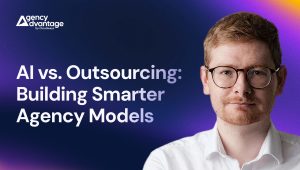
The biggest AI shift for agencies isn’t technological, it’s managerial. In this Agency Advantage 2025 session, an agency growth architect explains how to thrive through leadership, partner networks, and redefined roles.
🎙️ Speakers
▸ Tim Kilroy — Agency Growth Architect, TimKilroy.com
▸ Host: Elizabeth Zurn Lujan — Co-Founder, Vinrock Media
✨ Key Takeaways
✦ AI is a force multiplier that makes hard things easy, but it doesn’t change the agency’s core mission: creating messages that carry meaning and move people.
✦ This is a management challenge, not a technical one, build your agency experience around AI rather than feeling you must build the technology.
✦ AI can’t be your strategist, earn client trust, or lead a team; those human skills are the differentiator as the cost of execution falls.
✦ You can’t be great at everything, lean into your one strength, because a “good enough” secondary service quietly erodes client trust.
✦ The agency-of-record model is dead; position yourself as the strategic architect connecting a curated, mutually beneficial partner network.
✦ Don’t rebuild AI from scratch, treat it like electricity and plug it in; bespoke tools rarely beat commercial ones like Klaviyo.
✦ Be transparent that you use AI, but you don’t owe clients the “how”, like spreadsheet formulas, it’s just a tool; they care that the result works.
Elizabeth Zurn Lujan: Welcome, welcome everyone. Welcome back. We have already had some great sessions today and we’re about to continue it, so gather on back, we’ll get started here. Thank you so much to all the guests who have been here so far. I am Elizabeth Lujan, I am the co-founder of Vinrock Media, and just like you all, I am working to integrate AI into my agency, and so I so appreciate everything that we’ve learned so far, and I’m excited for this next topic. So we are going to look at the new agency model, AI automation and strategic partnerships for 2025 and beyond. And we’re going to learn about that from Tim Kilroy. Tim is an agency growth architect who helps agency founders transform their toughest challenges into scalable growth. So, Tim, welcome, we are very excited to hear from you. There you are, Tim. Welcome, welcome. We’re so excited to hear from you about this new agency model and how it’s changing.
Tim Kilroy: I’m not gonna make it up as we go along. It’s gonna be awesome. And by the way, all of you people that, like, in the word search, you were just making up names, like, you were just throwing together letters. Those aren’t real. All right. So, you ready to rock? Let’s do it. Okay. All right. I’m gonna see if I can share my screen here. Here we go. All right, that’s not working. Let’s try this again. Here we go. We’ll do it this way. Oh, right. Fine. Okay, here we go. You all see that? That’s exciting. There we go.
All right, so we’re talking about a brand new agency model, right? This is like, the world is weird. So, what are we going to cover today? We’re going to cover who the hell am I, the fact that we’ve been here before kind of, the way things are changing, the impact, your actual new way of thinking, and then the actual expression of what an agency looks like in this age of AI.
Now, first of all, let’s start with who am I? So I’ve been doing stuff in digital marketing since 1997, which means, yes, I am really freaking old. But that actually gives me really good perspective for this. What I do with agencies, I’ve consulted with over 300 of them. I’ve got a bunch of various programs, from GTMOS which helps you generate a consistent lead flow, to Gen Plus which actually helps you generate real social authority, and then Fire Yourself From Sales where we get sales off of the founder’s plate. But let’s jump in right now and let’s talk about this.
So we’ve been here before, sort of. So, most of you were probably too young to remember, you know, exactly when the internet started, and that was a long time ago. I mean, I’m old enough to have actually used a typewriter to type things, but that’s crazy. But I think the real technological change started when, you know, the internet was here, and that was going to kill everything. It was going to just kill everything that you could imagine. There was going to be no more books, no more print. There’d be no more billboards. Everything would be digital. Well, we are now roughly 40 years into the internet and that didn’t happen yet. There are more books published in the last year than there ever had been before. WYSIWYG website editors were going to kill developers. That didn’t happen. There are more developers than ever before. XML and Python and machine learning was going to make everything simple and really easy. And guess what? That didn’t happen either. So there have been these sort of existential threats and sort of enormous sea changes before, and honestly, sometimes the hype runs hotter than the reality.
Now, I really think that this time AI is different. And I really do think it is, because it’s a completely brand new way of operating. But what does it really change? Let’s really think about that for a minute. All of us in one way or another are involved with marketing. Even if you are someone who spends their life down deep inside of databases moving things with Python, you are impacting the outcome, which is fundamentally a marketing message. So the idea that we are actually creating and displaying messages that are moving and have impact on many, that hasn’t changed. AI might be really great at a bunch of stuff. You know, it’s really good at analyzing data. It’s really good at brainstorming. It’s really good at coming up with a bunch of ideas that are, at this point, kind of average. But it doesn’t replace the fundamental thing that all agencies, regardless of what channel you manage or regardless of where you sit in an agency, our entire idea, our entire reason for being is to create a message that has a meaning, to create symbols that have meanings, to create images, movies, pages, all of those things. We are imbuing them with meaning so that they will be moving for somebody, that they will convince somebody to do something that we need them to do or want them to do. So AI doesn’t change that mission in any meaningful way. It just gives us a different tool set.
And with that tool set change, with that sort of media change, this becomes much more of a management issue for your agency than it does a technology issue for your agency. And I know that’s weird because it’s so easy now. Anybody can build an agent. Like, I built an agent and I have negative tech skills, you know? I built an agent that sort of takes a conversation and turns it into a blog post, into a LinkedIn post, into a video script. Like, cool, nifty. That was fun and exciting, but that isn’t the promise of AI. Democratizing the ability to make an agent is not the promise of AI. The promise of AI will allow us to do things at a much faster, much more complete way. But again, right now AI is not a technology challenge that we are facing. What we are doing is we are thinking about how to manage this new technology. So our goal is to build our agency experiences around this new technology, not to feel like we have to create this technology.
What we really think about is, AI is now a force multiplier. It’s not magic, right? It does not do stuff that has not heretofore been possible right now. What it does is it does things a lot faster, which makes things feel possible that previously didn’t feel possible, but it isn’t. These are things that have previously been possible. They were just really, really flipping hard. So AI now allows hard things to become easy. That doesn’t change the fact that we need to do those things. And so that does not change the outcome of what you were trying to create as an agency. You are trying to create revenue, experiences, and acceleration for your clients. AI does not change that mission. It just changes the way we do it.
So, some of the things that are incredible here are, AI makes analyzing data so much easier. That is really exciting because you can take complex data or sort of unstructured data and do cool stuff with it that you probably couldn’t do otherwise. That is amazing because one of the most important things that an agency can do is feed good data back to their clients, especially if you’re on the performance marketing side. And if you can leverage AI to actually get a more complete picture of performance or traffic or customer databases, whatever, all of those things are so helpful because their predictive capabilities allow you to actually create more strategy. And we can also iterate constantly. Nothing ever has to be seen of as done because we can really change out variables thousands of times in a very short period of time. So this actually has fundamental impact and unlocks so much for so many agencies. CRO, copy, design, development, all of that stuff is going to start to be able to scale without any real human limitations, which is really, really super interesting. We don’t really know what that looks like ever in the history of humanity. So being able to scale one person’s idea significantly beyond their capabilities is really incredible. And for the marketing community, one of the things that is really amazing is that AI will allow us to bring relevance at scale. And the thing that consumers are looking for, or business partners or people or prospects, they’re always looking for relevance. And that is something that is dramatically different. The fact that we are able to create relevance at scale in a way that has never been done before, that changes who you are as an agency. That changes your opportunity. Doesn’t change what you’re doing necessarily, but it does change the opportunity.
All right. So, what can AI do? Now, I know that there’s a lot of super technical people here and there’s all sorts of amazing stuff that I don’t understand. But if we think about this from an agency management perspective, what can AI do? It can make you faster, right? So, it can increase your ability to serve more clients. That’s great. But we don’t necessarily just want to be faster. We also want to be better. So we want to make sure that we’re leveraging AI to make our work more complete, doing more research, providing more data. Those things are incredibly important. AI is a great brainstorm partner, and this is where your innate creativity comes into play, because AI can expand on that and amplify your creativity and start to put together things that you may not have thought of yourself. But I think the way that AI is most useful right now is it challenges your thinking if you use it appropriately. If you’re just using ChatGPT, ask it why you shouldn’t do this thing, or why this is wrong, or what’s a better idea. And if you instill that challenge thinking into your organization, AI is a really incredibly powerful tool to accelerate your development as somebody who can accomplish that mission, as an organization that can accomplish that mission.
And one of the other cool things that AI does, and this is a very softer, this is soft but it’s real. You can make your team feel like they are capable of amazing things. They always have been capable of amazing things, but now you’re giving them tool sets to make them more amazing. And if you can help them feel like they are living in the future and doing things that they could not possibly have done previously in their careers, they’re going to love you for it. So, weirdly enough, AI can make your team happier because you can give them work that is more rewarding. That is such an unbelievable advantage to AI. And this is something that you must really think about as you are building your way forward in this new world, because you still need a team in order to get great things done.
What are things that AI can’t do? It cannot become your strategist. It will tell you that it can, and someday it might be able to, but it can’t. AI is never ever going to tell you what to do. It’s only going to try to be helpful to do the things that it thinks you want it to tell you about, because it’s got that sort of sycophantic element to it. So it cannot become your strategist. You are still the driver of strategy. You are still the driver of direction. You have to define the mission of your agency and your client engagements so that you have a clear direction, so you can organize your actions to accomplish it.
AI, I’m going to say something that’s pretty controversial. AI, from a management perspective, from a leadership, from an I-run-the-organization or I-run-a-team or I-run-my-client-engagements, AI is never going to be able to think more completely about the human experience than you can. It might be able to crunch more data and come up with more options, but AI cannot think better than you. It can just provide you with an infinite number of options for you to choose from. And so we are still in charge of how we are acting. AI will never make your clients happy. It might drive better results. It might give them more information. It might make reporting really easy, but it will never make them trust you more. It will never make them more loyal to you. It will never make them value your services more. That’s entirely on you and your team.
And finally, and arguably the most important thing from an agency perspective, AI cannot give your team a direction, and AI cannot give your team authority to make choices on their own. AI is never going to replace agency leadership, team leadership, or individual leadership. And so these are the things AI is going to inform all of the choices that you make. It will not replace or guide you to a choice. That’s still on you. And so as we move forward with AI being able to do more things more easily and more quickly, you have to sharpen your skills as a leader, and you have to sharpen your skills as a client partner. Those are the things that you need to work on as an agency, because the ability to create great work, the value of that over time will diminish, because the version of work that is good enough sort of rises, like everybody will be able to meet that at some point in the future. But being able to lead your team and clients, that is what you do as an agency leader, and leading your clients to the results that they want and need through the application of great strategy and great execution, those are the things that AI cannot replace.
All right. So agencies are being disrupted. I mean, they aren’t really being disrupted, sorry. Now, I don’t know, that Mark Zuckerberg recently in strategy, that honestly, he sees Meta as just plugging into your client’s back end and doing all their advertising for them, and they just connect and pull money out. It all works magically. Well, that might happen someday. I don’t know. But that doesn’t actually disrupt the idea of an agency, because Mark Zuckerberg is only thinking about Meta properties. There’s other properties, there’s other ways to engage with customers. So, the agency is not being disrupted, it’s just being reconfigured.
So, here’s a couple of agency truths. Number one, if you want to go fast, go alone. So, if you want to build something, we need something quick and dirty, go ahead, build an agent yourself. If you need something that’s really good and sustainable, you need more human brains thinking about it. So even though we do have the rise of small teams generating extraordinary amounts of revenue, that small team, they’re still a tribe. And we may in fact see, you know, companies that are just one person and a bunch of agents, maybe, I don’t know. But in order to be a sustainable, thriving enterprise that provides value above and beyond execution and data analysis, you’re going to need more people. You’re going to need people to go with you.
Number two, and this is something that is so hard for agencies, just accept it right this second. You can’t be good at everything and you shouldn’t try. And not being good at everything, we’re going to get into this a little more deeply. The fact that you can’t be good at everything is the thing that frees you to reconfigure yourself in a new way. And finally, you don’t need to build AI stuff yourself. If you want to and you’ve got the skills to do so, awesome, go ahead and do it. But every platform you work with, every tool you work with, every interface you work with will have some sort of AI built in. So you don’t need to know how to build it. You just need to know how to use it.
All right. So let’s jump into this whole idea of if you want to go fast, go alone, if you want to go far, build a tribe. Now this is sort of age-old wisdom. I apparently, it came from an African proverb, I’m not sure. But let’s be real. The agency of record model, you guys, that died years ago. There are still some large, actually I don’t know if only a handful of brands that I can think of actually have an agency of record, which means that they basically run everything through one agency. That just isn’t the case today. Brands have a portfolio of agencies and data providers and in-house providers, both small and large brands, by the way. So your goal, and it doesn’t matter what service you are providing. If you are in fact building sites and building digital experiences, you still need to connect to different data sets, different marketing teams and different perspectives. And so every single aspect of what we do as agencies is connected to somebody else. It may just be a client. It may be a client and a contractor. It may be a client, a contractor and an agent, but we are all connected to something else. And why that is beautiful is that you are now supported by these connections. You’re not tethered to them. You are supported. And just like in this bicycle peloton, having a bunch of people working with you means that you don’t have to face the headwinds all yourself. At some point, if you were this guy in the black shirt who’s in a head, and you are building the website, as soon as we need to connect a data set to it, and we were working with somebody who owns that data set, they suddenly jump into the lead and we get to slipstream for a while. So, you don’t have to do everything yourself. And that’s a beautiful thing, because the world is just super complex. There’s just too much for any one brain or one account team or one agency to manage.
And you might be so great at one thing, but then you kind of slow down on something else. You know, for instance, my last agency, we were so freaking good at paid search. We were outrageously good at it. And we were really good at creating collection-based landing pages for marketers with big catalogs. We were fantastic at both those things. And then we started doing Meta ads. They were Facebook ads back then. And we were okay at them, but we weren’t as good at them as we were at paid search. We just weren’t. Like, I didn’t get it. Our team didn’t get it. We didn’t have the creative team, we were not as good at it. And I learned, after cross-selling paid social services into multiple clients, that it doesn’t matter how good your original service is. If your secondary service is a noticeable step down, your client starts to lose trust in you. And the agency client relationship is only based on trust. It’s not based on result sets, by the way, because result sets are kind of fungible. Like, you can get great result sets from a bunch of people. You really get that long-lasting successful partnership with a client because of trust. And so if you try to represent yourself as something that you’re great at everything, everybody knows you’re lying. I mean, you might not know you’re lying, but everyone else does. And so lean into what you are great at, and certainly try to become great at other things, but you don’t have to be great at everything, because being great at everything means that you’re just pretty good at a bunch of stuff. Because every one of these platforms, every kind of marketing media, every kind of site type, every kind of design type, has its own cadence and language and insight. And you can’t be as good at all of them as you want. So don’t try. Lean into what you were great at. And I’ll explain to you in just a few slides how we actually leverage that to make the whole agency conflagration better. And yes, conflagration means catch on fire. But we’re going to make that better.
So, finally, you don’t need to build AI. You’re not Sam Altman. You’re not Elon Musk. You don’t need to build this stuff. What you need to do is be aware of it and really start to think about AI like electricity. Like, you don’t have to know the difference between alternating current and direct current, and 240 volts versus 120 volts, or whatever, or impedance or ohms or resistance or capacitors. You don’t need to know any of that stuff. You just need to know, this is a tool. What can I do with it? Where do I plug AI into what I know how to do so that it makes it better or different or more efficient? And there’s such a real emphasis right now on trying to build something yourself via extraordinary agents and, you know, Make.com workflows and Zapier, MCP and all that sort of stuff, and it’s so exciting because you can do stuff that you couldn’t do before. I want you to approach that carefully because it is a distraction. You know, I know of agencies that have built their own email sending platforms. They’re not as good as Klaviyo. I have worked with agencies who have built their own analytics dashboards, analytics collection devices. They’re not as good as things that are commercially available. And so be careful of bespoke, because it’s possible. Only make something bespoke if you cannot find it anywhere else. Otherwise, just figure out where you need to plug in.
All right. Now that we’ve talked about this, the fact that, you know, you need a tribe, you need partners, and you also need to understand where your advantage is, what you’re great at. And you know that it’s probably only under extraordinary circumstances that you should create something new, something that’s never been developed before. And this is the old model of the agency world. We would try to envelop our client’s needs inside of an agency. Every single thing that they would need for development or for marketing or for retention, we try to circle it into a single offering. And, you know, that has worked pretty well. Most dev agencies, when they’re building websites, they work with WordPress or whatever, and they build something for that client, and that’s okay. But the issue comes up when we end up with this idea that there are more integrations, more data fluidity, and more emergent opportunities than ever before. And so we can’t likely encompass everything that a client needs inside of a single service.
The new model looks something like this. There’s client needs, and it gets assisted by two, three, four, maybe five agency services, different services, different agencies. You might have a design agency who’s coming up with branding and concept. You might have a dev agency who’s actually creating sites. You might have a UI/UX agency who comes in and goes through the user journey. You might have a marketing agency that wants to customize pages. You might have a retention agency that wants to bring all loyalty data into every experience that the client has. And these are things that need collaboration, cooperation. And you also need to work with the client team, because so many clients today are keeping some portion of marketing in-house, some portion of development, some portion of content. And so we can no longer wrap the client in a circle. We have to realize that we are connected to the client and we need to engage with other folks.
And what really makes this different, and this is really challenging, because most agencies just want to do stuff. They want to execute their process to create the results that they know that they can create. And there really has been the idea that you should be good at a single thing, right? You should be good at social advertising, you should be good at paid search, or you should be good at development, or you should be good at copy. And those things are still true, as we talked about. You need to know what you are great at. But so many agencies today only look at the relationship between maybe a client and a platform, and they’re optimizing that relationship. And what they are missing is the fact that in today’s world, since data is cheaper and easier to analyze, creative is cheaper to create and iterate, dynamic content is actually easier now than ever before, all of these things influence what you do inside of whatever channel or construct you are managing. And so your goal as an agency no longer is to come up with the most effective Facebook ads marketing campaign. Your job is to understand how a really well-executed Meta ads campaign impacts the entire business of your clients. And so, even if you are just building the most simple Shopify site, your entire focus isn’t just on making the site good. It needs to be on making your client great. And so you will have to extend and expand your thinking to accommodate the needs and inputs of other folks.
And this is an enormous management problem, because suddenly you need to add other inputs into your way of thinking, because your agency is going to be expected to generate other outputs. It might be a data stream that informs a customer data platform. It might be a user experience that informs retention activity. All of these things are interconnected. So we can no longer think about ourselves as a single-pointed entity. We are in fact this brand new thing, as we create the architecture to drive our clients’ success. We’re actually the head of a staff of all of these people, of all of these entities, and it could be two partners or it could be a hundred. Who knows? But the way that you leverage this as an agency owner or as an agency leader is that in order to generate this aggregation of talent, thinking and experience, you have the opportunity to come in strategically and leverage the people that you know, the business data experiential connections that you have made, to bring an entire solution to your client, and you can set yourself up as the architect. You are bringing the blueprint of how all of these things work together, and you and your network amplify each other’s expertise, and you create mutually beneficial relationships.
And what I mean by mutually beneficial, so if you are a site developer, you know you really ought to be connecting with people who are doing SEO and who are doing paid advertising, because you can build in what they need for success into your site design. So they help you improve your product, and you are delivering to them a site that will impact their work as well. And you will also have the opportunity to do some sort of revenue share or referral sharing. And it is really important in this idea of leverage that you talk to your partners about the fact that this needs to be mutually beneficial. This cannot be where you are architecting something and consistently referring work out. It needs to work both ways. And so you’re going to have to be picky about who’s in your network, because that has to be the standard. And there’s a lot of people in this world who don’t think that way. But the great thing right now is, your key to driving incredible success with your clients isn’t the people that you’ve been able to hire. I mean, they help with the stuff that you do better than anyone else. But to amplify that success, it’s who you can bring to the table and who can fit into the architecture that you set up. Strategic partnerships are your tribe. They are the thing that makes your value bigger, and you are able to build around the mission, not just who’s in your org chart.
And this is something that I really want you to think about, is that that knowledge, the things that you know how to do and the things that other people know how to do, multiplied by AI, multiplied by the quality of your curated network, your trusted network, that equals massive impact. And your partner network takes a cognitive load off of you, because you don’t need to know every last thing about this channel that you don’t use yourself. You can bring this partner in. They get to be the expert. The fact that you brought the expert in looks really great for you, and the fact that you had already accounted for them in your architecture of success, well, that is defining the value that makes you irreplaceable. And we’ve really changed from this idea of a hierarchical org chart, where we’ve got these departments and all that sort of stuff, to this idea that we are a network that communicates and grows and is amplified by using AI to recognize patterns, to aggregate data, to iterate creative, to create new experiences that can be shared amongst the network. So, I want you to be really thinking this way. You’re no longer just an agency. You are a networked hub of intelligence. And that, my friends, is exactly today’s agency model. It’s a huge management and approach challenge. It isn’t a technical challenge. And that’s it.
Elizabeth Zurn Lujan: Tim, thank you. That was wonderful. I got a ton of nuggets and also this really good vision. This actually puts a name to some changes that I’ve been seeing happen in my agency. And so it’s really nice now to have a framework around it and know it’s not something to resist, but something to lean into.
Tim Kilroy: Yeah. Yeah. You know, really, the reason why people have always thought, like, I can’t work with other agencies, they’re going to steal my business. Well, if you’re really great at what you do, they aren’t going to steal your business. And your client is going to love you if you bring in somebody who is great at a thing that you’re just good at.
Elizabeth Zurn Lujan: Right. Right. That’s that kind of abundance mindset.
Tim Kilroy: Exactly.
Elizabeth Zurn Lujan: Yeah, so critical, because the cost of quality execution will be dropping quickly.
Tim Kilroy: Yeah.
Elizabeth Zurn Lujan: We have a couple questions in the chat. So we’ve got about 10, 15 minutes here for questions. I have a list of 10 questions, but I’m going to go to a couple that are here in the chat real quick so we can do those, and then I’m going to try to get to mine as well. So, first, Michelle here just asked, how do we go about vetting partner firms to ensure that they perform at the caliber that we want, to match our brand and our reputation?
Tim Kilroy: Just the same way that you would vet a new hire, you’re going to want to vet a new partner. Talk to them, you know, don’t go find them at the last minute. Make proactive networking and partnership part of your business development strategy. You know, creating great partners is just as important as getting new clients. And so, carve out part of your week, get to know them, meet them, talk to their clients. And a great place to start is with the agencies that already work with your existing clients, because you can talk to your client, like, hey, I’m thinking, are these guys awesome or what?
Elizabeth Zurn Lujan: That’s great. That’s great. And Nicholas also mentioned he usually looks at live metrics as opposed to PowerPoints, so you can see exactly what’s going on. I have a question about budget impact, and it has to do with this abundance idea and working with other partners. Are we going to see that now, because in order to really excel as a business, our clients need to have multiple agencies involved, right? Are we going to need to start saying, hey, our budget threshold is higher maybe for their total spend, because you can’t get by with just one little marketing agency contract, or what are you seeing more likely to be happening in terms of budget sizes that agencies need to be looking at that their clients have available?
Tim Kilroy: So, that’s a great question. So if you are putting yourself in a strategic position, and especially if you are working in some kind of media or acquisition agency, you really need to be thinking, okay, all of the channels that your client is engaging with, like, you should have a reasonably good sense. And just asking your client, by the way, is a really good way just to find out how much are they spending. And then, okay, I’m going to say something controversial here, but since we all know that attribution is totally fake and not real, and it might be directionally correct, I don’t know, but you have to talk to your client. You don’t have to insist on it, but you should say to them, hey, you should be budget fluid, so that your marketing budget moves according to where the opportunity is. And that shouldn’t necessarily, by the way, impact the fees that they would pay. So, let’s imagine that, you know, you’re great at Meta ads, and you’ve got somebody else who’s great at search ads, and the total budget’s $100,000 a month, and right now they’re spending 70 on Meta and 30 on search, but then Meta, you know, stops, what flows down, and they take away $20,000 worth of media, like, they shouldn’t necessarily knock down your fee structure.
Elizabeth Zurn Lujan: Right.
Tim Kilroy: And so, I do think that the variable compensation is probably, the variable compensation should be a minor part of everybody’s pricing strategy.
Elizabeth Zurn Lujan: Okay. So you should have another element that is kind of being paid for this management relationship strategy element of things, as opposed to managing ad spend or something.
Tim Kilroy: Yes. Because, you know, right now, that sort of relationship management strategy, you know, big thinking piece, everyone gives that away for free, right? They just, you know, they think it’s what you have to do in order to get the opportunity to manage the budget. And, you know, that’s less true now, because, frankly, campaign management is complex still, but it’s a whole lot easier than it used to be. And it’s going to continue to get easier, because no platform wants you effing around with their stuff.
Elizabeth Zurn Lujan: So it sounds a bit more like this consultation element, strategic consultation and leadership element, is going to come to the forefront for agencies. How do you scale that from a staffing perspective? Like, I understand that if you’re a solopreneur, but how do we make our people that we used to just have writing blog articles now become these masterminds?
Tim Kilroy: Well, first of all, they don’t have to be masterminds, right? Because you can ask ChatGPT. There’s a lot of repeating patterns here, right? So, you’re going to see the issues and be able to recognize a framework. And so the advantage is that, and this is an agency-by-agency advantage, is that it’s going to be your framework for creating these strategic solutions, and about which partners and when to bring them in. And so the person who used to write blogs, well, they may not be able to do that, but also ChatGPT already took their job, so they’re, you know, they’re plumbers now and making a lot more money. But I think that it really is this idea that the execution pieces are still super important, but they aren’t in fact the most important thing, because the cost of execution is declining.
Elizabeth Zurn Lujan: And how do we navigate that with our clients in terms of how much transparency is there about what AI is doing, what I’m doing, how do we talk about our value differently, you know?
Tim Kilroy: Yeah. So you should be fully transparent about what you were doing. You don’t have to be terribly transparent about how you were doing it. But so, as a for instance, like, you know, we should be spending more on Meta. You know, your client’s going to say, okay, why? Like, do you have to tell them that you put in two years’ worth of performance data into ChatGPT to get this thing out? No. But you can say, hey, listen, you know, we’ve been tracking this and here’s the results set. So they don’t need to know how you’re making the sausage. They just care that it tastes good. And, by the way, using AI is no less valid than using formulas in Google Sheets, right? It’s the same thing, it’s using a tool to accomplish a goal. And so AI does not cheapen your work. It actually allows you to think about the work that you ought to do rather than the work that needs to get done.
Elizabeth Zurn Lujan: So, as it’s becoming more and more important, like the trust that you talked about, right, and the leadership skills, and not just the doing, right, but the overseeing and the strategy, to an agency owner who’s like, geez, I just was really good at getting people the best cost per click and that was kind of it, and I don’t know how, like, I don’t feel like I’m a leader, I don’t feel like I’m a strategist, what should they be doing to kind of make that transition into the strategic mindset, the leadership mindset?
Tim Kilroy: Read Extreme Ownership by Jocko Willink. That’s really good. That sort of helps you think about it. Talk to other agency owners who might be a little bit further along, especially those who are no longer involved in delivery, because what’s really cuckoo is, as an agency owner, your job is not to do the stuff. Your job is to create teams and processes that do the stuff, and so, you know, your job as CEO is to run the organization, not do the stuff. You can also hire people like me.
Elizabeth Zurn Lujan: And, as a coach, is that what you’re saying, like finding coaches and mentors, right?
Tim Kilroy: Right. And also there’s a bunch of great newsletters, my newsletter and community, Agency Inner Circle, that’s really good. I write it, so I think it’s good. But there’s also a bunch of great newsletters. Peter Kang from Barrel Holdings, he writes a great newsletter every week called Consumed. You know, so there’s a lot of people putting out incredible thought leadership that isn’t going to tell you exactly how to execute, but it is going to show you what you need to learn.
Elizabeth Zurn Lujan: Great. Well, Tim, this has been really incredibly helpful to me and I’m sure to all of the agencies that are here in the chat, and in the session. Are there any things that I didn’t ask you that you feel like you want to be sure that you kind of pull out a little bit more for people?
Tim Kilroy: I think the big thing is just remember that your job as an agency leader. Oh, the name of the book, it’s called Extreme Ownership by Jocko Willink. And by the way, I would suggest, Jocko Willink is a former Navy SEAL who now runs a leadership company. And I would suggest getting the audiobook, because his voice is so, like, they talk about fighting in Fallujah and they talk like this, and it feels like it’s right there. It’s amazing. But that, I think, is a really good book. Yeah, another book that I would really recommend is Dare to Lead by Brené Brown. She is just about the most emotionally smart leader that I have ever encountered. But those two books will help you understand how to find leadership in yourself and what other people need in order to be led. And I’ll put those right here.
Elizabeth Zurn Lujan: That’s great. And the amazing thing, in, you know, you think you’re coming into an AI conference and you’re like, we’re going to learn all about the tech, and what we’re learning about is the human skills, right? These soft skills are becoming more and more important as the tech becomes more and more capable. That’s a really helpful takeaway for me.
Tim Kilroy: Yeah, and that’s completely different, when I was asked to come here, I did not think that I was going to be speaking about this.
Elizabeth Zurn Lujan: Well, I thought it was really helpful and it was so clear. So, Tim, again, thank you. Thank you a million times for all your insight today. Next, we have just a minute or two, so if anyone needs to go grab a water, take a quick break, you’ve just got one or two minutes to go do that. And then when we come back, Brent is going to host us again, and I believe that our topic is from spray and pray to strategic growth, how AI agents are powering account-based marketing for agencies. And that’s with our guest Christian Bach. So again, thank you, Tim.
Tim Kilroy: Thanks, guys. You can find me at timkilroy.com, where I’m all over LinkedIn. Feel free to connect. Love to talk to you. And also, if you want to check out the Agency Inner Circle, there’ll be an edition out this afternoon. Is that right? I might, I haven’t written it yet, so I might even write it about this. Who knows? We might be in it.
Elizabeth Zurn Lujan: All right. Well, I’m going to go there. I’m going to sign up for that right now. And again, thank you. I’ll check out that Agency Inner Circle. Thank you, Tim.
Tim Kilroy: Thanks, guys.
Answer a few questions, and we'll present you with a personalized tour of the Cloudways platform based on your answers.