EXPLORE CLOUDWAYS
Experience lightning-fast loading times and seamless platform
View Demo >PRODUCTS
CLOUD PROVIDERS
SUPPORTED APPS
WHO WE SERVE
PARTNERSHIP PROGRAMS
Lifetime deal: 75% OFF
Advanced Support
POWERFUL FEATURES
DISCOVER
WHY CLOUDWAYS
 Read Case Study >
 Jesse Tutt
Founder & CEO

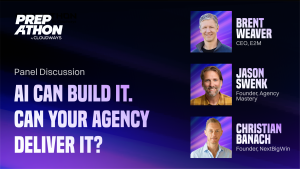
A Prepathon 2026 panel on agentic commerce, how e-commerce changes when AI shopping agents, not humans, do the searching, comparing, and buying.
🎙️ Speakers
▸ Katie Keith — Founder & CEO, Barn2
▸ Valentin Radu — Founder & CEO, Omniconvert
▸ Host: Brent Weaver — CEO, E2M
✨ Key Takeaways
✦ AI agents ignore persuasive copy and calls to action, they want structured product data and trust signals.
✦ Brand matters more than ever: LLMs work from a buffered shortlist, so reputation gets you cited.
✦ Make stores AI-ready: complete product data, readable shipping and returns, and don’t block AI crawlers.
✦ Loyalty shifts from stores to brands, since agents find the cheapest source of the brand you name.
✦ Roughly 60% of 5,600 sites benchmarked weren’t AI-visibility ready, a large open opportunity.
✦ Optimize for two conversions now: being recommended, then being transactable.
✦ People still trust agents most for known brands and refundable purchases; commodities go first.
Brent Weaver: And welcome back. Thanks again to our awesome panelists Mike, Ajay, and Aurelio. Always love hanging out with those guys talking about the future of our industry. So I hope you got at least a couple of good takeaways and nuggets from those amazing panelists. Up next, we’re going to be talking about how your next customer might be an AI. So we’re going to welcome our other two panelists onto the stage and let’s give them a warm Prepathon-style welcome. Let’s get those emojis flying, let’s get those comments coming, we’re excited for this next session. So first up we’ve got Katie Keith. She’s the founder and CEO of Barn2. Katie, welcome to the program.
Katie Keith: Hey, thanks for having me on.
Brent Weaver: Awesome. Excited to hear your perspective on this topic. And Valentin Radu, founder and CEO of Omniconvert. Welcome to the Prepathon 2026 stage.
Valentin Radu: Hello Brent, and hello everyone, and I’m glad to make this happen together with you guys.
Brent Weaver: Yeah, awesome. Good to see you again, it’s been a while.
Valentin Radu: Yeah, that’s correct.
Brent Weaver: So sounds like things are going well. This first question we’re going to open with, for Katie. E-commerce has traditionally been designed around a human shopper searching, comparing, and clicking. What changes when an AI agent starts doing those things for the customer?
Katie Keith: Yeah. Well, everything is completely different, because if you think about it, most of us have spent years creating and optimizing e-commerce websites for humans. And while humans will probably still continue to visit websites, the AIs are going to be an increasingly important part of your audience over time. So that means they don’t care about your conversion optimization and your fancy calls to action and your newsletter signup and all the things you’ve worked so hard on. They care about structured data about the products, and some other factors that might be different to the human. So it really changes your priorities, and we need to rethink things.
Brent Weaver: When you say they care about data, can you give me some examples of what you mean by that?
Katie Keith: Well, if somebody is in an AI asking about a product, then the AI is going to look at lots of different e-commerce websites and decide what to recommend. And AIs need to see various data about the product, its attributes, the price, things like the delivery, cost, timescales, returns policies, how reputable the store is. They’re looking for facts, not feelings about, does this have a nice design or something like that. They care about the factual side of things in order to make that recommendation.
Brent Weaver: So you’re saying that my persuasive copywriting skills might only work on the humans, and that the agents might have some immunity, or they might kind of see through those tactics and go, you know, I know what you’re doing, and they just kind of filter out some of that stuff that maybe has worked traditionally well on a human audience.
Katie Keith: Yeah, it does appear so. Writing is important because that affects the credibility and the professionalism of the e-commerce site. So if there are lots of typos and it’s not professionally written, then the AI is not going to think the product’s good quality either. But beyond that, it’s different. You’re not using motivational psychological copywriting in the same way. You need to focus more on the information you’re providing the AI and things like trust factors.
Brent Weaver: Interesting. And come to think of it, an AI has unlimited time in some ways. So while I might be a rushed consumer, I might not do all of my fact-checking and looking at Reddit and looking at the review sites, AI ostensibly has infinite access to those types of things at the snap of a finger. So much easier for it to make a split decision on which product is better, not just based on the website’s information but also the collective signaling of what people are saying, what businesses are saying about those products, which is a totally different way of shopping, I think.
Katie Keith: Yeah. And if you put the user first, as we always should, that’s what should make it a much better way for the user to shop for certain types of products, not everything, which we can discuss later. Because the user doesn’t have infinite capacity to look at thousands of similar products. That’s what the AI should be good at.
Brent Weaver: I love that. Thank you, Katie. Valentin, let’s shift gears here. What does an AI agent need from an e-commerce website before it can confidently recommend or purchase a product?
Valentin Radu: I think it’s trust. And the paradox is that branding becomes even more important than ever before. So the irony is that we are now preparing the websites for the machines to be readable. We do these FAQs, we do the citations, we do the Reddit, whatever amplification we want to do. But the fact is that the most important thing stays the brand. So if you have a good reputation, if people remember that you exist, if people review you on social media and on Reddit, and those things are being made organically, then the machines will be able to find that kind of information. Because there were plenty of articles from the SEO and AEO community that revealed that all the LLMs have actually a buffer. So they are not accessing, they are not crawling every time the entire internet to find if your brand exists. So if they are looking for a certain product or service, and if you are already in the shortlist, then you will get cited.
So besides branding, of course, the good old saying that you need to ship what you deliver, or to keep your word, so those things which are as old as trade itself, must be there. So you need to fulfill your promises so that you can have happy customers. Which of course doesn’t mean that you don’t have to do all of those nitty-gritties of technical improvements over your website, getting cited, having the right response times, having the schema ready, and the FAQs and whatnot. But I think at the end of the day, if you want to nail this new game of agentic commerce, you have to have a brand, which means that you need to exist on social media and to fulfill the promise that you’re making to the world.
Brent Weaver: I feel like just even listening to both of you as an agency, I get excited, because I feel like all this means is commerce is in a way getting more complicated. There’s more things that we have to pay attention to as a business owner. It’s not good enough just to put up a website and start running some traffic. If we really want to tap into that agentic market, we really have to be paying attention to a much bigger landscape of what’s happening online, and how consumers and agents will be making those purchasing decisions. Which I feel like the more complex it gets, the more nuanced it gets, the better it is for agency businesses to bring in that expertise, which is exciting. Coming back to you, Katie, for a WooCommerce store owner, what does it mean practically to make a store AI-ready?
Katie Keith: Well, in terms of what’s on your store, it’s about making sure that everything is in order so that the AIs can and will read it. So there are small quick wins you can do, like optimizing your robots.txt and your llms.txt, which basically tell the AIs what bots can do and point them to the best content that you want it to read. But more importantly, you need to make sure you’re not blocking the AI bots, including training ones, depending on what you sell. So in July we discovered that our hosting company, not Cloudways, was blocking OpenAI’s training crawler, which is not something we had requested. And so our site was naturally not showing up in OpenAI training data. And training kind of doesn’t sound important, but I think it really is, because AIs don’t do an online search all the time. It’s like you were saying a minute ago, that they aren’t searching the whole internet just for you. They’ve actually stored a lot of information from their training crawls.
So sure, if you’re a newspaper or something, you probably don’t want your content being crawled by the AIs and given away for free. If you’re an e-commerce site, you absolutely do, because your product is the thing that people purchase, not your information in that sense. So make sure that AIs can, and are not being blocked from, your site. If you’re using WooCommerce, it’s already pretty good at the product data stuff, but you need to make sure it’s complete. Add everything you can. And another mistake that people make is that they bury information away in things like PDFs, or they might only display the shipping information on the checkout, which is no use to the AI, who needs to see that at a much earlier stage, so that when they recommend a product they can tell the user what the shipping policy is.
One thing you can do is have more readable content on your product page, like your actual full returns policy and shipping. And for example, at Barn2, we have a plugin called WooCommerce Product Tabs, which lets you add extra tabs like a returns tab and a shipping tab to the product page, which is just text that AIs can read. So don’t hide it away, don’t put it in PDFs, and think from the merchant’s perspective. And my last tip on that is connecting your site to things that actually allow people to take the next step and make that purchase in the AI, which isn’t really a thing yet, but it’s coming soon. So like Stripe will do this with WooCommerce shortly. So if you use the official Stripe extension, then once that is released, people will actually be able to pay with Stripe to buy your products in AI without ever visiting your website. And if you’re on Google Merchant Center connected to WooCommerce, that’s going to happen too. So that’s going to be really cool. Although I don’t think that’s a thing quite yet.
Brent Weaver: Very cool. So reducing, if you know, hey, a certain part of our market’s going to be agents, what’s the quickest way to enable an agent to purchase your product, and so tying that directly into a merchant API or something like that, which is just fascinating to be around. I mean, how exciting that is if you have a product that goes viral, or goes viral amongst agents, just how fast a business might be inundated with orders if something trends within an AI ecosystem, is really fascinating to think about. Let’s go to Valentin next. We’ve spent years optimizing websites for conversion rates. Do we now need to start optimizing for AI decision-making as well?
Valentin Radu: Yeah, of course we have to do it. But the priors for that would be first to have your website be able to be found. So you need to have the agents able to find you, which means that the products and the policies need to be discoverable by the AI search systems. Then they have to understand exactly what you sell, which means that every product should expose machine-readable SKUs, variants, price, currency, availability, descriptions, images. So as Katie said here, the persuasion doesn’t cut it, you just have to have the information there. And if you’re smart enough and add other things like the reviews or some praise from your customers, that can certainly help as well. And the information needs to be trusted. So the price in the feed should be exactly like on the website. You can’t say that it’s 99 and on the website it’s 109, because that will decrease your score and your trustability in the eyes of the agents.
Then you need to have them understand the commercial rules, which means shipping costs, returns, whatever. So you don’t have to be vague here. And we have recently launched an e-commerce benchmark where we are analyzing the readiness, the AI visibility, and whatnot. And we’ve understood that 60% of the websites weren’t having the basics ready when it comes to AI visibility. And that was made on 5,600 websites, so the sample size was pretty significant, which means that there is a huge opportunity in the market. So that’s like that joke with the shoe salesman, right, nobody’s wearing shoes in Africa, or, good news, nobody’s wearing shoes in Africa.
Brent Weaver: I haven’t heard that saying, but I like it. So out of 5,000 randomly sampled sites, 60% were not at all set up with any kind of AI visibility, AI optimization.
Valentin Radu: Yeah, they haven’t got the foundation ready, which I think is the opportunity here.
Brent Weaver: And I think that’s a big opportunity, but I’m actually surprised that 40% are also optimized. I’m actually impressed that that number also feels kind of high. I mean, 60% obviously feels like a really big opportunity, but to know that at least 40% of businesses online that are selling right now are actually optimized for AI, also feels, that number feels more optimistic than what I would have guessed.
Valentin Radu: Yeah, Brent, we are living in this post-pandemic, whatever, times, where the supply is here and the demand is here. So it’s clear that companies need to level up their game, which means that AEO and AI visibility and whatnot, this is an opportunity for them, and that’s why some of them are very well equipped for this.
Brent Weaver: Yeah. That’s going to be my new definition of this era, it’s the post-pandemic whatever era. I love how you said that. I want to shift into a conversation topic around trust and data. Coming back to you, Katie, what happens to brand loyalty when the customer delegates the shopping decision to an AI? And I feel like this kind of happened a little bit with Amazon in terms of brand loyalty, like all the weird random brand names, people became very unloyal to most brands for most common everyday things. But what’s taking that to the next level, what happens to brand loyalty in the age of AI and agentic shopping?
Katie Keith: Yeah, it’s a funny one, and Valentin touched on this earlier, that brand is super important. I think interestingly, loyalty to the brand will stay strong, and loyalty to individual stores might get weaker, because a lot of brands, say a clothing brand, are available on many stores. So you know you like that brand, but you don’t actually care where you buy it from. So you’ll still be wanting that brand, and the AI will find out where it’s cheapest, that ships to you, and so on. And so brands that people ask for by name are going to win, because that will stop the AI looking at all the alternatives. So you need to be that brand that people remember. Ways to do that include, well, really, marketing channels you own are the future. We’ve got the demise of Google SEO and all of that stuff, it’s all changing, and you need to own your marketing channels, which helps you build brand, such as, Valentin mentioned about social media, things like building an email list, so that whenever someone does purchase from you, you try to get them on that list in a legally opted-in way of course, and then you can market to them and build your brand, so that hopefully they’ll bypass the AI and always buy from you next time, and if not, they’ll at least know to ask for you in the AI.
Brent Weaver: I feel like there’s an opportunity, and this is just some speculation, so I have no idea if this is true, but I feel like because AI has access to so much information and can make judgment and recommendations based on somebody’s history and preferences and what they know about an individual shopper, I could envision myself asking for a specific brand of a product, and for an AI to, even in that moment, make suggestions of alternatives that I might be interested to look at. If I said, hey, get me some Prada sunglasses or whatever, I could see my agent saying, I hear you on the Prada sunglasses, and here are some great options for that, but because I know you, and because I know you’re going to an event or doing something, here’s a brand that you might consider that might actually get you more of what you want in terms of attention or being noticed. I feel like there could be an opportunity for businesses to not just invest in their brand, but also in the association they might have with other brands. Because I do feel like AI can find those niche products maybe more elegantly, because they might know how to look for something that I personally am not searching for. Whereas Google, if I go to Google and type Prada sunglasses, it’s just going to serve me Prada sunglasses, exactly what I want. But I feel like AI has an opportunity to maybe suggest some things that I don’t even know that I want, but I might actually be willing to look at. Any comments on that?
Katie Keith: Yeah, I think that’s about making it genuinely better for the user. It’s almost like if you had an executive assistant who was doing your shopping research. If they’re really good at their job, they would do exactly as you’ve described, and that’s what AI is trying to replicate in a more efficient way. So I think that’s good. Sometimes it’s not appropriate. If your washing machine’s broken and you need a specific part, it’s going to recommend the part that is compatible. Whereas if it’s something more lifestyle-y, like with your example, then that’s a good thing that can enhance the shopping experience.
Brent Weaver: I feel like that idea of the executive assistant, like just buying a gift for somebody, I could see going to Google and saying, hey, I want to buy this thing for my spouse or significant other, whereas you might give that to an experienced executive assistant, and they might say, I hear that you want to buy this thing over here, but based on what I know about your wife or your husband, this is what I bought instead, trust me, it’s going to go over much better. There’s that filtering effect that I feel like AI might have the capability to do, of purchasing or recommending what you really need, not necessarily what you might think you need. Valentin, any comments on that?
Valentin Radu: Yeah, I think one aspect that is definitely important is, if we look towards the future, we’ve been seeing a lot of innovation on the B2B side. So the companies were innovating into this space. But now the consumers are going to build their own agents, and maybe there will be a lot of shopping agents that we as consumers can delegate our tasks to, and of course these agents will know us. I don’t know about you guys, but my Gmail and Slack and all of those things are accessible through my agents. So imagine that at some particular point there will be some companies on this planet which will suggest, you know what, this is a B2C shopping agent, you install it, and we’ll guarantee that you’re not going to waste time, you’re always going to get the best price, and basically they will do, we will delegate the shopping to them. Because who wants to shop online, I mean, let’s get serious, who wants to waste time on the apps and on the UX and whatever for commodity products?
But if I’m buying an aspirational brand, then I want to look at the options, because that gives me the feeling of control. But what I think is definitely important for e-commerce owners, and we as a community, we have to be aware about the fact that there is this tectonic shift happening. And there will be a lot of people that we lose, and not enough that will win. And that means we need to become agile in the way that we are doing our craft, because we are in a shaking environment right now. It’s not like anything is certain, there is a lot of uncertainty. But what we know for sure, and with the risk that I’m repeating myself, we have to ship undeniable value to this planet, to the other humans eventually, no matter if the agents will translate what’s there. And another thing is that in this attention economy, it becomes way more important than ever to have this capacity to draw people’s attention first, and then to fix the machinery so that the agents will find you. We are still selling to emotions, we are still triggering emotions and aspirations to human beings, and we also do the homework of the technical aspect so that the agents will find us.
Brent Weaver: This is a question from our audience, Arthy Goyle. He asked, if an AI agent is comparing a hundred products, what makes one product stand out? Katie, any perspective on that for Arthy?
Katie Keith: It’s a combination of the credibility, the AI knows it’s a good store to order from and a good quality product, which goes into all the trust and everything, reviews and all that, and matching to the customer’s unique needs. And this is where again the data becomes so important, because in AIs, customers often ask for something really really specific. They’re not just talking high-level, I want some Prada sunglasses. They’re saying something really specific, that niches it right down to, not the model necessarily, but what look of sunglasses they like, the shape, how heavy the frames are, the exact shade of the glass and the frame, all of those details. So that means that the more low-level data you’ve put into your meta fields about the product, then that allows the AIs to really target that to you and know that that meets your needs very closely. And again, as Valentin was saying, that most sites, only 40% are properly optimized for AI, well, that’s an opportunity, because think about how lazy your competitors probably are in entering all of that fine-grained data for their products, that the AI wouldn’t know how closely it meets the user’s needs.
Brent Weaver: So there’s kind of an opportunity to be very forward with AI visibility type of improvements to the website, to the product catalog, to how you’re communicating to your customers and also to the LLMs about what your business does. Valentin, coming back to you, this is a question about conversion. E-commerce teams obsess over clicks, conversion rates, and customer lifetime value. What does the conversion funnel look like when the first interaction happens between two machines rather than a person and a website?
Valentin Radu: Yeah, so we discovered that AI visibility is not the same thing as AI agent readiness. Being recommended is one conversion, this is the conversion to be recommended. So when it comes to conversion rate optimization, it’s not only about, it’s not like the humans are not buying anymore, we are preparing ourselves for what’s going to come next. And commodities are in big danger right now, because you don’t want to waste your time judging if your AI has found the proper windshield for your car, this is the windshield and you trust it. But the CRO, the conversion rate optimization right now, has this initial funnel. So being recommended is one conversion, and then being transactable is another conversion. So at the end of the day, it’s like a blend between what SEO and CRO used to be, in one go.
And now when it comes to getting yourself cited, to optimize for agents, it’s a different game, because you have the technical game, and you have the content, and you have the readiness part of it, and then you have the social aspect. You have the reviews, you have all these social signals that allow the agents to say, okay, this brand has a good reputation. And the fact is that, according to the current research, it’s clear that what is changing when it comes to citation are the URLs. But only 3% of the brands are being changed on a week-by-week basis. So Bright Edge made this research, and they found that the citations are moving when it comes to the URLs, but not the brands. So if you don’t have a brand which can be cited and recommended by the AI, you are just tweaking the machine. You need to be there, you need to capture the attention of the human beings that start to talk about you on YouTube, Reddit, you name it.
Brent Weaver: Katie, could AI agents eventually change how e-commerce websites themselves are designed and developed?
Katie Keith: I think so. At some point we’re going to start getting data about what proportion of our sales are coming through AIs versus customers browsing our website, and I think that’s going to change our priorities. Initially, the majority are still actually visiting our websites, even if AI recommended in the first place. But if we discover over time that people are never even visiting our websites, we’re naturally going to stop investing in the design and the conversion rate optimization factors for humans, and put those resources into optimizing more for AIs. But I think that’s not yet, that’s at least a couple of years away. And it’s also going to depend on the industry. For example, people enjoy shopping for certain types of products. People enjoy going onto a clothing website and browsing the products. Yes, sometimes they might want to go onto AI and ask for something really specific they’re looking for, but other times they just want to see what their favorite brand is selling that season. That’s not going to change. So for those types of products that people actively enjoy browsing, I think things won’t change so much. The types of products in contrast where you can do it entirely agentically, and you know what you want and you just want the AI to sort it out for you, those sorts of websites will become less worth investing in in the user experience.
Brent Weaver: It’s interesting. So I kind of feel like when you go to a store and a salesperson approaches you and you just want to browse, right, you don’t want to talk to, I hate that. And I feel like that’s part of, somebody said the other day, we’re not going to have user interfaces or something, and I was like, I feel like humans do enjoy that passive participation, whether it’s passive participation in content or passive participation in shopping. We don’t necessarily want to prompt all the time. Sometimes you just want to mash the button and just kind of browse and scroll, and I think we enjoy going to stores and looking at the clothes and touching them and avoiding the salesperson, if you will. There’s certainly sometimes you go in and you’re discerning about a purchasing decision and you need to have that information, you’ve got some objections, you’ve got some concerns about something, but you might want to ask those questions. I was just shopping at the airport as I was traveling back from India, and I went into a shop and I was doing everything in my power to avoid eye contact with the salesperson, I just wanted to browse. And I think people will still enjoy that forever, as long as there are people, I think we’ll enjoy browsing. Valentin, coming back to you for some practical advice. If you’re an e-commerce business owner watching this, what is one thing that you can do today to make your store more discoverable and trustworthy to AI systems?
Valentin Radu: The one thing, so I have a magic wand, then I have only one shot, right? One shot. Oh my god, this is a tough one, because there are so many competing things that you can do. I guess I will fix the basics, to be honest, because the other part with the branding and whatnot is something that requires a lot of investment and time and continuous experimentation. So the first thing that I would be doing, I would be analyzing my store for AI visibility. I would be working with agencies and plugins like Katie does, and basically I would be making sure that I can be found, my website is visible, is machine-ready to be discoverable, and all the agents can transact with my website. Because all the other work will not help, and you gave me one shot and I’ve used it to argue against my initial thesis.
Brent Weaver: Yeah, because I mean you need to crawl before you walk, right? So Katie, what do you think, if you’ve got one thing that you can do today to make your store more discoverable, what’s your take on that one?
Katie Keith: If it had to be today, I would optimize things like llms.txt and just check that the AIs can actually crawl, and there are tools you can use for that. I think there is much more you can do that takes more than a day, like getting mentions across the internet, which we haven’t covered very much and it’s really important, but today I would make sure the AI bots can actually use my site.
Brent Weaver: This is a question from our audience, can a human in the loop help retain the humanity of the shopping experience, and how can its data be used for the most human, shopping-friendly outcomes? This is coming in from Paul Filio. So, can a human in the loop help retain the humanity of the shopping experience? Either of you have a perspective on that?
Valentin Radu: Yeah, I think it can for sure, but it’s heavily dependent on the price to do that, to be honest. Because if you’re selling commodities, where, don’t bother me with too much data, they just want to change something or restock something, then a human in the loop is just going to add more friction. And if you’re selling luxury or things that have a longer purchase cycle, then a human in the loop can make the process more trustworthy. So basically at the end of the day it’s about the product. Now, this is a general question, but if we can focus on one specific product or category of products, we can definitely understand if this thing can be done. But as a rule of thumb, it’s all about the AOV and the margin that you can capture, because if the CLV can justify having a human in the loop, then do it.
I used to work with a Belgian company called Kazidomi, they were selling vegan whatever to the planet, everywhere. And their AOV was €120, and this company hired people from Madagascar which were speaking French and were extremely cheap, and guess what, their CLV skyrocketed, because you had someone calling you and saying, thank you for becoming our customer, you are our first-time customer, if you need anything, that’s what we can offer you. And basically that positively affected the purchase.
Brent Weaver: Very good. We got a few minutes left here. Would you trust an AI agent to make a $500 purchase on your behalf today, or what would it need to prove first? So Katie, what’s your take on that first, would you totally trust an AI agent to make a $500 purchase for you today?
Katie Keith: Today, no. Right now, based on the performance of the AIs that I have used for shopping so far, I would use it to research and suggest and shortlist, I would then verify the recommendation and make the purchase myself. For one, it’s terrible at finding, I live on the Spanish island of Mallorca, not everywhere ships there, even Spanish websites don’t always ship there, and AI is terrible at figuring out if they would send it to me at all, or for an affordable price, I don’t know why. So if it’s still falling over at basic hurdles like that, then clearly I can’t trust it to make a large purchase on my behalf.
Brent Weaver: How about you, Valentin?
Valentin Radu: 100%, I will make it happen, and I actually bought a mattress completely automated, because I knew the brand. So if I know the brand, if I know the website already, if I know that I can get a refund, why not?
Brent Weaver: So you’re comfortable, but you’re comfortable in the context of giving it some very specific direction, like, I want you to go buy me a mattress at this website. You’re not just saying to AI, go buy me a mattress anywhere you’d like.
Valentin Radu: No, no. The AI is very good at surfacing options, and if you’re familiar with the brand already and you have this type of familiarity, it’s about saving time. So it saves me the time to analyze, compare, open five tabs, but I knew what I wanted already. I was familiar with the brand, I was familiar with the website, and I knew that I can get a refund anytime. So I just told Perplexity, go get it, Tiger.
Brent Weaver: So you’re comfortable having it automate or do the labor of the actual purchasing process, but you’re delegating, whenever you are delegating as a business owner, you’re always delegating stuff that you trust will be even better made, without the friction and the frustration, by someone that you’re hiring. So at the end of the day it’s the same thing, you can delegate if you trust that person. What’s the most expensive thing that you have delegated to AI, Valentin?
Valentin Radu: Oh my god. I’ve delegated the decomposition of something like 60,000 ads at once. And our engineers actually forgot the cron job, so we’ve paid something like $8,000 extra because it hasn’t stopped for days. But lesson learned.
Brent Weaver: Okay. Well, life is definitely full of lessons, some are more expensive than others, so $8,000 certainly recoverable at some level. Katie, how about you, what’s the most expensive thing you’ve delegated to AI?
Katie Keith: All sorts, but I’m always in the loop still. For example, I put it in charge of researching Shopify apps I might want to acquire. Well, that would be a multi-thousand purchase, and it would have come up with the initial shortlist of which apps I’ve contacted, with data behind it that I am trusting. But I am obviously doing a lot of due diligence and researching and talking to real people before I make a decision. I did not just say, go out and acquire a Shopify app for me.
Brent Weaver: Well, so we’ve got two different approaches there, a little bit more conservative human in the loop, show me options, still making that ultimate judgment, and Valentin a little bit more cowboy, letting AI run the advertising on his behalf. This is our final question for both of you. What will e-commerce teams be talking about in two years that most merchants aren’t thinking about today? So Valentin, we’ll go back to you on that one. In two years’ time, how come we haven’t seen this coming, that’s going to be the thing that they will see. And what that thing is, unfortunately, I don’t know, but I do know that a shift is going to come. Maybe the websites will become a bit more obsolete, I don’t know. Maybe these agents will take over more than 2.5% of the e-commerce purchases. I don’t know what’s going to happen. How about you, Katie? What will e-commerce teams be talking about in two years that most merchants aren’t thinking about today?
Katie Keith: I think that our analytics is going to significantly change to include analytics about our performance on AI. This is very basic at the moment. For example, the DataForSEO API, which I recommend using to create your own reports, can pull through some things about AI and how people are searching for different topics, your visibility on AI, but not in an e-commerce sense. I think that is coming in the future. And in the same way we currently look at our conversion rate from organic traffic, for example, and hyper-optimize those things, I think we’ll be doing that based on data about AI in the future.
Brent Weaver: It’s fascinating. And just to think about it, Sam Altman had said AI models are doubling in power every six months. So I was like, okay, what does that actually mean? That means in two years the models will be 16 times the power, however you define power, in two years. So thinking about how commerce, try to predict, how will commerce function when AI is 16 times as capable as it is today. I’m not sure personally, I don’t have that answer, but it is fun to speculate and try to guess how things might be working in 2028. We’ll see, only time will tell. And we’ll be back here on the Prepathon in two years, we’ll have a couple of touch points between now and then, but I do anticipate the Cloudways Prepathon will still be happening in two years. So it’ll be fun to see how things have changed, we’ll check back in on some of those predictions. So Katie, thank you so much for hanging out with us today. Valentin as well, thank you both for joining us on this panel. It was great to learn your perspectives on how to handle your next customer being an AI. So we will be back here shortly. Thanks again for hanging out with us.
Valentin Radu: Thank you. And yes, maybe, Salah says AI will be the hoster after two years. Brent, we’ll see.
Brent Weaver: Maybe I will license my likeness to the Cloudways team and I will just operate, I will be on a beach sipping a fruity cocktail of sorts and my agent will be here on my behalf. So we will see. Although I promise you all, if you see me on here, it is me, I will make that promise and commitment to you today. So thanks again for hanging out with us. We are going to stop for a quick short break, and then we will come back here in just a moment for a fun activity. So stay tuned and we’ll be right back here with Prepathon 2026. Thanks so much for hanging out with us.
Answer a few questions, and we'll present you with a personalized tour of the Cloudways platform based on your answers.