EXPLORE CLOUDWAYS
Experience lightning-fast loading times and seamless platform
View Demo >PRODUCTS
CLOUD PROVIDERS
SUPPORTED APPS
WHO WE SERVE
PARTNERSHIP PROGRAMS
Lifetime deal: 75% OFF
Advanced Support
POWERFUL FEATURES
DISCOVER
WHY CLOUDWAYS
 Read Case Study >
 Jesse Tutt
Founder & CEO

The day-one closing Prepathon 2026 panel on how AI is reshaping WordPress development, and why developers become orchestrators rather than disappear.
🎙️ Speakers
▸ Miriam Schwab — Head of WordPress, Elementor
▸ Raitis Sevelis — Head of Product, WPBakery
▸ Narek Torosyan — CEO, 10Web
▸ Host: Danish Naseer — Cloudways
✨ Key Takeaways
✦ AI continues WordPress’s original mission of accessibility, now via natural language and connected agents.
✦ A Formula One car doesn’t make you a driver: AI changes the workflow but still needs expert developers.
✦ Cheap building means far more sites get built, so developers move up rather than out.
✦ AI handles the repetitive 80%; humans own planning, architecture, accountability, and the client relationship.
✦ Be an educated consumer of AI, check how it builds custom fields and templates under the hood, and push back.
✦ Agent-ready mostly means the fundamentals: clean semantic HTML, schema, robots.txt, and stable URLs.
✦ The future WordPress developer is a product-thinking orchestrator who understands the client’s business.
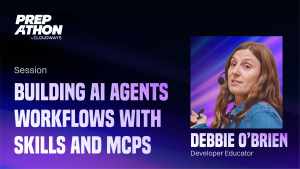
Danish Naseer: Hello Prepathon viewers, I am back. You were listening to Debbie on the agentic developer, orchestrating AI workflows with skills and MCPs. We have the last panel discussion of day one. So hope you are active in the chat. We have a banger panel. We have people from the page builders, and we will discuss WordPress development, like, AI is changing WordPress development, what happens to developers. So without further ado, we can start the panel discussion. My first panelist is Miriam Schwab from Elementor. Miriam is Head of WordPress at Elementor and a longtime WordPress entrepreneur and community contributor. Miriam, welcome to Prepathon once again.
Miriam Schwab: Thanks for having me once again.
Danish Naseer: Thank you so much for the time. The next panelist we have is Raitis from WPBakery. He is the Head of Product. He has been working in and around WordPress for more than a decade. So let’s welcome Raitis on the Prepathon platform.
Raitis Sevelis: Hi everyone. Happy to be here. A lot of heads here.
Danish Naseer: Yeah, everyone is head of something. And the third panelist we have is Narek from 10Web. He’s the CEO of 10Web, an AI-native website platform built around making website creation and management more accessible through AI agents. Narek, welcome to Prepathon.
Narek Torosyan: Hi everyone. Thank you for the invitation, Danish. It’s a pleasure to be here.
Danish Naseer: I think we can start the panel discussion right away. So I would like to start the discussion with the first question, with Miriam. You have been around WordPress from the agency side, the product, and now the ecosystem side. What feels fundamentally different about WordPress development in the AI era?
Miriam Schwab: Actually, I think in many ways where we’re at now is a continuation of where WordPress started. So WordPress started as a platform and a product that made it easy and accessible to almost anyone to create an online presence. And back then when it was starting, that was a very big breakthrough, because before that, to get onto the web it was more complicated. You needed to be comfortable working in HTML or coding. With WordPress you just needed to do the famous five-click install and get up and running, and out of the box you had a WYSIWYG editor. What you see is what you get, which also at the time was quite revolutionary, that it was accessible to everyone. When I would describe WordPress to people, I’d say, if you can edit a Word document, you can edit a WordPress web page.
And then as it evolved and developed, other products came along like WPBakery and Elementor to take that message further, which is, okay, you can manage the pages, but now you can actually lay out and build the pages without having to know code. And as the years went on, that still was the case, but I think both of our products, in some ways, but I’ll just speak about Elementor because I know us better, it became in some ways more complicated to use, because there was more and more features being added to our products and the learning curve became higher. So while it still was accessible, it was a little bit harder for people to get started and understand what to do next.
And what AI does for WordPress, in my opinion, is it takes it to the next level, which is that, connect your agent to your WordPress site, however you want to. We actually released Elementor 4.3, which includes our MCP and abilities, so go ahead and use it, it’s not in beta anymore. But however you want to do that, you can now communicate via natural language with an agent and basically make your dreams and vision come true. And so I think it’s not exactly fundamentally different, it’s become almost extremely accessible to anyone who feels comfortable enough connecting their agent to WordPress, which hopefully more and more people will, and also it will get easier. But now we have so many more possibilities and we all have many more capabilities, so it’s furthering the mission of WordPress, in my opinion.
Danish Naseer: Thank you so much for the detailed answer. I would like to ask a question to you, Raitis. AI can now generate layouts, code, and content directly inside WordPress development workflows. What does that change about the job of a WordPress developer?
Raitis Sevelis: I think that’s the question that’s been around since AI arrived. And like with many things, we humans in general have that thing that we are usually afraid of something that maybe we don’t know, something new, something we don’t understand to the full extent yet. But for developers, many are, let’s start with the elephant in the room, many people are talking about, okay well, AI is going to replace everything. But as we see now, AI is a tool, a technology, a mindset as well, that helps you get better in terms of being more efficient, in terms of having better results as well, of speeding things up so you can deliver more projects and so on. It changes the workflow, but not in the foundation, in a way that developers are there and the expertise, everyone is talking about the human in the loop.
It’s the fact that we can compare it with a Formula One car. The fact that you receive a Formula One car doesn’t make you a better driver. You still need a professional driver to race that car, and that has been true no matter what kind of technology is there for you. Is it AI, or was it a page builder? Because when the page builders arrived, that was the same story to some extent, like, okay, how does it change the workflow and the daily life of developers. So you use the technology to benefit from it.
Danish Naseer: Awesome. I have a similar question to you, Narek. As we know, AI website builders are making it possible to go from an idea to a functional website extremely quickly. So where does that leave traditional WordPress development?
Narek Torosyan: Yes. Miriam has already mentioned, WordPress already did this to developers once. So 20 years ago, every site was hand-built, and WordPress said that you don’t need developers anymore, you can just build your website from scratch, to business owners. The hand coders disappeared, but the ones who moved up, like, started building themes, plugins, agencies, and the tool that was supposed to replace developers actually created more of them than anything before it. And AI is the same move, but one level up. Building is going to zero, the site, the store, the booking, the CRM. We do it, you do it, others do it, and it gets better and better every month. So selling hours, building, ends the same way that hand-coded HTML ended.
But cheap building means far more gets built. Every small business, every idea that never got a site because it before cost something like $3,000, now gets one because it’s just cheaper. And every one of those belongs to someone who has no idea what AI can do this month. Developers work with these tools every day. They know what’s possible now, what’s still hype, where the AI is confidently right and confidently wrong. And that gap between what’s possible and what a business owner knows is possible is probably the new job for developers. So the one who keeps selling building will disappear, but the ones who move up will have more work than ever.
Danish Naseer: Awesome. My question to you Miriam: we are discussing developers and AI. So when it’s developers versus AI, what part of WordPress development do you think AI will genuinely automate, and what part still requires strong human expertise?
Miriam Schwab: I think that what we’re going to see, and we’re already seeing, is that the annoying repetitive parts of building and working with WordPress are going to be offloaded to AI, because we need to put ourselves in the picture where we really bring value, and the value is, let’s say, in the earlier stages of building a website, which is planning and strategizing it. And you may do that alongside AI, but you definitely need to be giving input and bringing your expertise. I always say AI is both very brilliant and very stupid, and so you can never just accept what AI says you should do. So you need to be part of that planning, even the visual side of it, again even if it’s alongside AI, pushing it in the right direction. But then once you have that all ready to go, why should you sit there dragging and dropping or coding the pages when you can just say, AI, here’s exactly the blueprint and prototype for the site, go forth and do it, I’m going to go get a coffee, I’ll be back. And then that annoying big part, like say the 80%, is out of the way, and then you come back into the picture and you tweak it and you improve it, and you make sure that it’s accessible and performant and all the other things, and that the content is appropriate and useful.
So it’s not exactly where the developers will be. I think we’re going to become more orchestrators of development, directing and orchestrating AI to get the results that we want. I think it’s great because it gives us all more capabilities and we can do more in less time. It ironically doesn’t mean we’re going to have more free time. I don’t know about you guys, but the more AI is in my life, the more I’m doing. I fill that vacuum with more stuff that I’m actually excited to do. But we fill it with other things. So I think the same for website builders, creators. As more and more people realize they still need a website, that the website’s important, they hopefully will see that they’re getting more work where they can take on more and deliver more and deliver better, and deliver things that they never thought that they could do before. I was talking to an agency owner, and he said now, at this point, if a client asks him for something, he never says no anymore, and he says yes with confidence because he can do it with AI. So we’re definitely important parts of the process. Human in the loop matters now, and I really think we’ll continue to matter. But we’re going to be orchestrators.
Danish Naseer: Awesome. And my next question to you, Raitis: at WPBakery, you have been experimenting with AI-powered workflows while keeping developers involved. What have you learned about where AI helps developers versus where it gets in their way?
Raitis Sevelis: Yeah. I actually first would, I like the note that Miriam mentioned about more work. I truly believe that at some point we will be able to transfer our knowledge into the cloud and train AI based on our knowledge, and that means that internally, basically we will be able to work after death. Yes, this is how immortality actually looks like in the future. So what we basically believe is happening next, is also what Miriam again mentioned, is that developers are the orchestrators. You use AI to deliver a website, but still you want, with your expertise, to adjust things, to maybe clean up the code generated by AI, because AI thinks different. It tries to guess what the next line of code is. So you, as a professional, then need to clean it up.
Plus, the workflow with you as a developer and AI can give you safety. So for example, what we found with WPBakery, you can generate a content element with any platform, is it Claude or ChatGPT, you generate the WPBakery element, you add it to the page, but you still can control which parts of that page can be edited using the simple input form. So that, for developers, gives the safety that clients don’t change the things they don’t need to change, because again, AI can be terrifying. If you give an end client access to completely change the website, then for a developer that could end up in more maintenance work than you would love to do. So the safety is definitely there.
Danish Naseer: And before we move towards the next question, I am requesting everyone who is listening, feel free to drop your questions in the chat. We have this panel, we are here to reply to you back. So let’s move on to the next question, and I have one question for Narek: if AI can create a functioning website from a prompt, what becomes the developer’s competitive advantage?
Narek Torosyan: Yeah. So, not just websites, but already apps, stores, CRMs, everything that you want, prototypes, building is no longer an advantage. The advantage, I think, is what’s around the building. The first thing that I mentioned is the knowledge gap that the business owner has about AI, what it can do, what it can’t, and how to handle it to get what you want. This is the first thing. And the second thing, I think, is the accountability. AI can give you a working site or an app in minutes, but it won’t answer the phone when the site breaks on Monday morning. And the client always wants a person who stands behind the result. They need someone who owns the result and the relationship, and that’s very hard to replace with a prompt. So it replaces the building, but the developers were never really paid for the building. They were paid because the client didn’t know what to build and didn’t trust anyone else to do it. So the developers still own that part, and nowadays it’s worth more, not less.
Danish Naseer: Awesome. Raitis, I have a question, like, do developers need to become more comfortable with APIs, JavaScript, AI tools, and automation, or will the platform increasingly abstract those things away?
Raitis Sevelis: Well, I believe that knowledge is power. The more you know, the more you understand that you don’t know, and any kind of knowledge that you can acquire is definitely something that you can use at some point, it can benefit you. And as everyone mentioned here on the panel, there is this human in the loop, that expertise is needed, and expertise is needed, as we agree, on the business level as well as on the technical level, because you need to be able to validate, to understand what AI is creating, to make sure that, especially with AI which is the new technology, you need to sometimes double-check the result. I mean, you can get the result, but how it is made, how it is working, it can be a little bit different from what you maybe expect, or what’s in the background.
So how can you validate the quality without lacking the knowledge about the fundamentals of website building? This is what distinguishes professionals from the people that use do-it-yourself platforms. So there’s nothing bad about it, there are many small businesses that maybe cannot afford agencies, developers, they have some idea, or maybe students that want to deploy a project, and that’s completely fine. So this is why people use such solutions, where you can quickly generate the website, but then comes the business needs. This is where your business scales up, it becomes bigger, it requires more advanced solutions, and this is where you require professionals to take care of those things for you and take accountability, because as you provide service, as you build the website, that’s also accountability, responsibility in front of your client. So you need to be able to take on accountability for something you understand.
Danish Naseer: Awesome. Miriam, your take on the same question, like, website on a prompt, what becomes the developer’s competitive advantage then?
Miriam Schwab: So I’ll continue what Raitis was saying. The first site that I built using AI by connecting MCP using abilities, AI, the LLM, built the site exactly as I wanted, but then when I went in to edit pages, they were not editable. And after that I developed a skill to always push AI in the right direction. But basically, AI can know a platform really well, and it knows WordPress really well because it’s open source. It’s had access to the code and content around it, there’s like 20 years of content for it to consume, and yet it still doesn’t necessarily make the right decisions, like from an architecture perspective. What I described is an extreme example, but I just built another site with AI using the Elementor MCP, and in some cases it chose to do, let’s say, custom fields in a way that works, but it wasn’t necessarily the ideal or best-practice way.
And so you need to be a very educated consumer of AI in order to make sure that what it’s deploying for you is done in the best way possible, or an ideal way, under the hood. AI loves to achieve its goal at all costs. It will go around, upside down, and whatever needs to happen to deliver what you want and make you happy. Except that it doesn’t mean that it did it in a way that is smart. It just did it in a way that got the job done, or at least in a way that it can say, I got the job done. So you need to know what’s going on under the hood, behind the scenes. You need to understand, in our case WordPress architecture, how the CMS is built, how things work together, what tool or approach is best to use for which use case, so that you can push back on the AI and say, why did you do it that way, and then explain to it how it should be done, and then it will do it. So that’s another example of where the human needs to be in the loop. It’s not just about QA, or being like, oh, that looks like the site I wanted it to look like. It’s about, well, how did you do the custom fields, how did you build out that page template, how is the menu built? Yes, I can see it, but can I manage it? So you need to know enough to ask the right questions and push back. There’s a lot of pushing back on AI that needs to be done.
Danish Naseer: Agree. Narek, does AI expand the WordPress ecosystem by bringing more people into it, or does it reduce the need for developers altogether?
Narek Torosyan: It depends. If it’s Lovable, no. But with a solution like ours, every AI-built site is a new WordPress website, the plugins, database, admin panel, everything. And every person who types a prompt is a new WordPress user, whether they open the WordPress admin panel or not. So the ecosystem grows underneath them. So when something gets cheaper, more people buy it. As I’ve already mentioned, previously the costs were too high, but now most, a website, a web app, or a CRM, costs almost nothing to build, and everyone who couldn’t afford one before will want one today. So the market doesn’t shrink, it just gets several times bigger.
And does it reduce the need for developers? For one kind, yes. So the ones who build the same five-page website, or the same store, for the hundredth time, for them, yes, that work is going away fast across the whole industry. But millions of new sites and web apps belong to people who don’t follow AI news, and the same developers will have different job descriptions. So they can just build that website for these businesses.
Danish Naseer: Okay. My next question to all of you, we can start with Raitis: we all are experimenting with making WordPress sites more accessible with AI agents. Could websites eventually need to be designed not only for humans and search engines, but for AI agents as well?
Raitis Sevelis: Sure. I think it’s no secret that everyone is talking about that. Many companies are afraid that the internet could become humanless. Everyone will be using agents to perform operations within the web. And then, I believe that at some point we will have an agent attached at our birth, that you will slowly raise together with you. So it’s not, probably there will be subscriptions for different skills as well. That’s how AI will monetize on us. But it’s happening right now, and it’s no secret that the companies that have websites that are not MCP-ready, agent-ready, they will basically start to lose the market. I have experimented with the airline companies and how agents can track flight tickets there, and you can instantly see the results, that there are websites that are performing really great, and there are airline companies whose websites are not adapted to that. So the result for them is actually losing the market potentially, because it’s not the favorite thing for someone to search for the best flight if you can offload those things, the things that Miriam mentioned, those boring things, to an AI agent. So that’s a win situation for you as a customer, and for the business it’s a win situation if you are able to offer that kind of service.
Danish Naseer: Awesome. Miriam, your take on the same question?
Miriam Schwab: So already the vast majority of traffic to websites is from agents or bots, and not humans. But that’s a trend that was starting before AI started to take off like it has. In the world of SEO, Google bots, etc., they were already crawling and scraping sites. So that’s not new, and we’ve had, for a long time, to address our sites both to humans and machines. I think that is continuing and it’s evolving in a way. We need to make sure that our sites are as accessible to agents as possible. And there’s a lot of conversation, and it’s not exactly controversy, but there’s a lot of discussion around what that means. So I think what’s happening is people think that there’s an easy way out, which is, I’ll just create markdown versions of all of my pages, like MD files, and my site’s agent-ready. Except that I actually spoke about this at WordCamp US, whenever that was, a few months ago, in August at some point, and I did a lot of testing and experimentation for that talk, and what I found was that agents do a very excellent job of viewing and accessing websites in their native format of HTML, and actually they will prefer that over us trying to feed them special files and formats that we think they need. They’re excellent at parsing HTML, and if needed, they will convert something to markdown in a way that suits their needs.
So after doing all that testing and experimentation, my conclusion, and people can disagree or find other results, is that in order to make your site agent-ready today, and it could change going forward, you need to make sure that it is accessible and machine-readable. So basically we’re back at square one, which is, build your site according to best practices. Make sure your HTML is structured properly. You have H1 headings, H2 headings, H3 headings in the right order, it’s semantic, add some schema, all that can help. Make sure you have a proper robots.txt file, because they do look at that. Make sure you have internal linking structure set up. All the good stuff that we should all be doing to make our sites better throughout time, except that now hopefully there’s more motivation for people to do it because they really care about agents being able to access their sites.
And you can use agents to do it, and I explain how in my talk at WordCamp US, you can go find it, but you can actually create a nice iteration loop where you’re always making sure, through agents analyzing your site, agents look at your site, tell you what’s missing, fix your site, and you can keep doing that, and you can have a site that’s very accessible. I do highly recommend keeping an eye on the agent-ready specifications, seeing what actually gets adopted by browsers and by agents. At the moment there’s only one agent-ready specification that’s been adopted, which is, make sure you have stable URLs, which just means make sure your URLs work. Okay, that’s not new. But keep your eye on it. We at Elementor are working to make sure that our product is always a step ahead and is agent-ready, so when you use it, you’ll be ready for this future. But in the meantime, just make sure your site’s machine-readable. Just make sure it’s proper HTML. Don’t make your front end React. Just do things that help machines read your site and you’re good.
Danish Naseer: Awesome. Narek, your point of view on the same question?
Narek Torosyan: Yeah. So what we are doing every day, we are opening Claude and asking it to do this and that, a lot of things throughout the day, and we don’t stop until the credits finish. And then go and take a coffee until it resets, or walk the dog until it resets. I can’t explain how much we work nowadays, and how much work we deliver every day with the use of AI, and with Claude, and of course with its browser use. A huge part of my work on my everyday job is doing different research, or doing some testing on the website or something like that, and everything I’m doing with AI and with Claude. And whenever I’m asking it, with Fable, to go and test something, it just goes to the website, makes all the clicks, does everything, and gives a full report on where and what problems we have, or it just gives a huge research. And right now we are using it for the purpose of research, but in one year or two, everyone will do this for ordering something, or for checking some information from a certain website. And making your website machine-readable is a mandatory thing nowadays.
We have created a solution that creates a help center, articles, and it goes to the website, goes through all the steps, makes screenshots, everything. And whenever it was failing, I was just going to our developers and saying that you need to make this part readable, so that I can automate the whole workflow. And I think this relates to anything that we do on our everyday job, and also for our clients.
Danish Naseer: Awesome. So if I can quickly add to what Miriam said, I really like that idea that, get back to the basics. We try to make AI to be as human as possible, so when we build websites we need to build websites for humans. The same old principle with the SEO, it’s about making the text interesting, the content interesting for people, then you will rank higher. So with AI, it’s the same. Make sure that your website is suitable for people, interesting for people, and that’s the key to success.
Raitis Sevelis: Awesome, yeah. Exactly.
Danish Naseer: I have two more questions, and these are very generic questions, but I think they’re worth asking here. So, is the future WordPress developer primarily a coder, an architect, a product thinker, or something else? And we start with, love. Can we say that? Was that an option?
Miriam Schwab: Yeah. I guess the question was primarily. I think, you know, the term Renaissance man. It was this concept from the Renaissance where someone knew a lot about a lot of things, wasn’t necessarily an expert in any one thing but knew a lot of different areas, and they were called a Renaissance man, of course not a woman, because it was who knows when, but a Renaissance person. And I think that’s kind of where we need to be now, which is where we have to have knowledge and understanding in a lot of areas, so that we can give input and push back and direct AI in the best way possible. I think in some ways this is the way things should actually have always been operating, which is, yeah, you might be a coder, but you can’t code in a silo where you don’t know how that code is affecting the product and being used by the end user. Like that kind of worked until now, where people had teams that were just segmented, but it doesn’t have to be that way anymore, and I actually think that’s not a great way of doing things, because you should have a bigger picture of what your product is being used for, regardless of where you fit into that process.
And so now, there’s still going to be people who are primarily something. We have an R&D team, they’re primarily tech, but their perspective is becoming more product as well, and non-developers are becoming more technical, in that they can actually submit PRs to our code that work and are great, because they’re coming from the product perspective, and even if they’re not coders they can do it. So take all of that together, and then think, okay, now how do we market this? What’s the messaging around it? How is this going to help our actual end users? And everyone should be thinking that way. So I think it’s not exactly primary. Every person’s expertise is going to become more valuable, but everyone needs to know more about everything else, which means we really can never stop working, and that’s, it’s going to work all the time. No, hopefully not. Hopefully we’ll all get a break at some point. But yeah, that’s how I see it.
Raitis Sevelis: There is something I keep on repeating to my students. When we talk about AI and the skills needed, it’s the systems thinking. So the ability to look at everything as a system, and scale down and scale up, use different perspectives. So this is about broader knowledge, to look at the website from a design perspective, from a business perspective, and see where and how you can apply AI, and be that middleman, I would say to some extent. And the same, the orchestrator that was mentioned previously, this is the key, this is how, now it’s not maybe web developer, it’s like web creator, this is how a web creator will look like probably in the future.
Danish Naseer: Awesome. Narek, your response on this?
Narek Torosyan: I would choose the product thinker slash orchestrator slash operator. So coding, as the main skill, is over as a differentiator, and what is left is the product question, like, what should this business actually have, and why? So the developer who can sit with, for example, a bakery owner and understand how they take orders today and design a system that fixes it, is the one who wins. Then they use AI to build it, and their coding knowledge to check it, fix it, and make it hold up in production.
Danish Naseer: Awesome. I have one last question, and the question is to every panelist: what is the one thing WordPress developers should start learning today, rather than waiting for the industry to force them to learn it? If you can go with, Raitis.
Raitis Sevelis: Oh, this one thing is really hard. Yes, so we were talking that you need to know those different things. So, but yeah, if there is just one thing, that’s of course, how to understand the business processes. Everything around business processes. So there you can then discover where and how to apply certain technology. Is it AI, or is there something else? Maybe you need additional UX skills there.
Danish Naseer: Awesome. Miriam?
Miriam Schwab: I’m going to say, not specifically WordPress developers, but let’s say WordPress creators, really start using AI to build your websites, manage your websites, maintain your websites. There’s quite a lot of hesitation in our industry to adopt AI for work, for various reasons, and they’re understandable, and it can also seem overwhelming, how do we get started. But I would like to highly recommend, just pick a thing that you do that maybe is annoying, or you don’t like, or takes a lot of time, and just spend some time figuring out how to replace that process with AI. We’re just talking here as if everyone is already using AI in their work, and I wish that was the case, and a lot are, and more and more every day. But from our own users, and just from conversations in the WordPress ecosystem in general, there’s hesitation, and sometimes even a lot of discomfort with the idea that AI is becoming a big part of our day-to-day and our work.
But it is, it’s here to stay, as long as enough data centers can be built to power it, I guess, or whatever. But if you don’t adopt it, you’re going to be left behind. I’m sorry, but I really think that’s the reality. And so figure out how to implement it into your workflow, just find a thing and do that, and then find another thing, and then turn it into a whole orchestration thing, and you’ll see it’s really fun. It makes things that are painful less painful, or not painful, and you can focus on the place where you really bring value, or the real reason you got into web building, which is creativity, bringing your ideas and vision to fruition, rather than, oh, I can’t get the thing in the exact right position and the pixels are off, like, leave that to AI, do the fun stuff.
Danish Naseer: Awesome. Narek, your point?
Narek Torosyan: Yeah. So the growth of AI is so fast and is so scary that I have a harder question for you, like, what would you advise your children to start learning today? That’s harder than this question, because we don’t even understand where this will hit to, and what it will hit. But if we come back to the developers, first I would say, be very good at telling AI what to build. This is the first one. And the second one, understand your client’s business better than you do today.
Danish Naseer: Awesome. Thank you so much for sharing your perspective around AI development, WordPress development. I think we are right on time, and I would like to thank each and every panelist for taking out time for this panel discussion. I would like to thank Miriam, Raitis, and Narek for taking out time for this panel discussion. We have a few questions, but we are on time to conclude. So once again, thanks everyone for joining. I think we are done with day one. There’s a lot coming for day two as well. We covered OpenClaw, we covered Node.js hosting, we covered the developer workflows, how they work, who owns the code, and we also discussed architecture. So that’s it for day one, but we are not concluding Prepathon. We have a day two as well. So stay tuned. We have different panels and sessions tomorrow as well, for the agency owners, for the agency customers, for those who are running agencies, for those who have e-commerce businesses as well. We will have Katie from Barn2, we have Brent Weaver, we have Jason Swenk and some others as well, and we have different activities as well, and at the end of day two we will announce the winners as well.
I would again like to give a shout out to our proud partners, WPBakery, E2M, Infinite Uploads, Agency Mastery, and there are others. And thanks to everyone who joined day one of Prepathon. Stay tuned for day two. We will start at 11:00 a.m. ET tomorrow, and tomorrow is the last day of Prepathon, and we will conclude it by announcing the winners of the activities and the leaderboard. So for today we are all set. We will meet tomorrow for day two with multiple panel discussions and sessions. For today I am just signing off for day one, and looking forward to seeing you all for day two.
Answer a few questions, and we'll present you with a personalized tour of the Cloudways platform based on your answers.