EXPLORE CLOUDWAYS
Experience lightning-fast loading times and seamless platform
View Demo >PRODUCTS
CLOUD PROVIDERS
SUPPORTED APPS
WHO WE SERVE
PARTNERSHIP PROGRAMS
Lifetime deal: 75% OFF
Advanced Support
POWERFUL FEATURES
DISCOVER
WHY CLOUDWAYS
 Read Case Study >
 Jesse Tutt
Founder & CEO

The day-two opening Prepathon 2026 panel on what agencies build after WordPress, from AI solutions and automation to new services beyond the website.
🎙️ Speakers
▸ Mike Szyszka — Founder & CEO, Reaction Digital
▸ Ajay Koshti — Chief of Web AI Innovation, E2M
▸ Aurelio Volley — Founder & CEO, WPUmbrella
▸ Host: Brent Weaver — CEO, E2M
✨ Key Takeaways
✦ WordPress stays the best choice when you need a robust back end; static sites may fit other tools.
✦ It’s AI plus WordPress, not AI versus WordPress, and security is now a proactive must in every stack.
✦ The technical gap has closed, so clients now expect strategy and measurable business results.
✦ Clients run your work through AI, so educate them on where it helps and where it “lets you fail at scale.”
✦ Agencies are shifting from selling websites to solving business problems: leads, CRMs, portals, AI assistants.
✦ Automation of boring, repetitive back-office work is a high-ROI service, often without heavy AI.
✦ AI-native workflows cut build time 30-70%, but a proper workflow beats a raw prompt for anything shipped.
Brent Weaver: Hello and welcome to day two of Prepathon. I’m one of the co-hosts today, Brent Weaver, CEO at E2M, and I’m super pumped to be hanging out with you all today. We’ve got a really packed and amazing schedule for today. I’m already seeing some hellos in chat, so definitely keep them coming, keep that energy coming. This year, Prepathon is all about the future is here. We’re going to build, ship, scale at velocity. So if that sounds like what you want for your business, whether you’re an agency, whether you’re a small business, this is the right place for you.
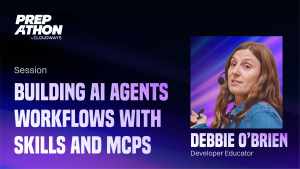
On day one, who all here was hanging out on day one? Did you all have a great time on the first day of Prepathon 2026? I hope you did. I’ve heard amazing feedback. Good to see Blake in the chat. Sidra, what’s going on. Arthy, Shabina, Paul, good to see you all. Looks like there’s a lot of good vibes today. I love the vibes. So on day one, we started the day with announcing Cloudways Node.js hosting. Hopefully that’s something that you are all super pumped and excited for. The promo is still live to get $20 hosting credit on the booth, so make sure you take advantage of that. We had a packed day. We had a discussion with OpenClaw on AI agents with Graham McBain. We discussed WordPress development, AI workflows with skills and MCPs. So much amazing nuggets and takeaways.
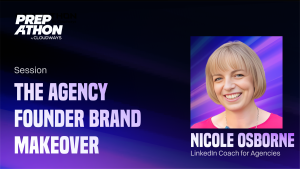
On day two, we’re going to be discussing digital agencies, agentic commerce. We’ve also got the agency founder brand makeover, an activity, and a winner announcement at the end. So you’re going to want to hang out for the entire day of Prepathon all the way up until the end to see those winners. So Nicole Osborne is going to take a look at your LinkedIn profiles and show you some practical insights based on the different types of agencies and services represented in our audience. And if you’re an agency founder or agency leader, we’d love for you to share your details, let us know, and we’ll get those profile reviews going. So the team is dropping a short form in the chat now. If that’s something you’re interested in, it will take a minute to complete, please share your LinkedIn profile, who you help, and your main service. You don’t need to be a Cloudways customer or have any specific type of agency. We’d simply love to see the variety of agencies represented in today’s audience.
So quick disclaimer, we updated our leaderboard points because we observed some spamming activities in the Q&A section. So asking spamming questions will cause actual questions to be lost, which is not good for live attendees. So please avoid those spamming activities. We are here to learn, we’re here to connect, we’re here to grow, and that’s what we’re all about today. So please do not spam the Q&A. We’ll disqualify you, you won’t get any points, you won’t get the rewards, all that good stuff. Quick shout out to some of our partners. Excited to give a shout out to my firm E2M. We’re a white label digital agency supporting over 400 agency partners. We’ve got WP Umbrella, we actually have Aurelio, their CEO and founder, hanging out with us today on our very first session. We’ve got WPBakery, Barn2, Infinite Uploads, as well as Omniconvert. So if you haven’t checked out our sponsor booth area, please take a moment to review our sponsors’ websites, their offerings, and make the most of your time while they’re here hanging out with you today.
So yeah, let’s get this show on the road. Our first session coming up is, WordPress is just the beginning, what will agencies build next? And so we’re going to be jumping in with our panel here in just one moment. So team, let’s get our panelists coming up on stage. Good to see you, Paul, good to see you, Fatima, Phil, Philippa. All right, Arthy, good to see you all. Look at that, and like that, voila, you all just appeared on the stage. In real life, people have to walk on the stage, now we just teleport. So our first guest with us here, Mike Szyszka. He’s the founder and CEO of Reaction Digital. Mike, you want to give our folks a wave?
Mike Szyszka: Hi everyone, great to be here.
Brent Weaver: Awesome. And then we’ve got Ajay, Chief of Web AI Innovation at E2M. Welcome, Ajay.
Ajay Koshti: Hey Brent, nice to meet you.
Brent Weaver: Awesome. I got Aurelio Volley, CEO and co-founder of WP Umbrella. Long time no see.
Aurelio Volley: I know. It’s been good to see you.
Brent Weaver: I feel like I get to hang out with some old friends here today, which is just a great way to spend Wednesday morning. So welcome, panelists. We’re going to be talking about WordPress is just the beginning, what will agencies build next? So I’ve got some queued-up questions. I’m also going to keep an eye on Q&A. So if anybody in our audience has a question for Mike, for Ajay, for Aurelio, we’d love for you to post those in Q&A, and I’ll do my best to bring those questions in live if possible. So first we’re going to start off with Aurelio. Your question is, WP Umbrella was built around helping agencies manage large numbers of WordPress sites. What does the agency stack look like when WordPress becomes only one piece of the solution?
Aurelio Volley: The million-dollar question, right? You have a crystal ball, I’m sure.
Brent Weaver: Today, Aurelio, you can see into the future, please.
Aurelio Volley: Unfortunately, I cannot, but we are starting to see trends. And what I think is that for the last 10 years, WordPress was the best solution for 95% of the websites and of the things that were being built. And you had a bit of Shopify, and you had a bit of Webflow, and a bit of whatever it was, custom websites and so on. But WordPress was the best way to build websites. And today WordPress remains one of the best ways to build some websites, every time you need a back end. I do believe that there is nothing better than WordPress. And when it comes to very quick static sites, maybe WordPress is not the best solution anymore, for many obvious reasons.
And when you have said that, if you’re an agency, you have to choose who is your ICP. What do you do for this ICP? Are you doing plumber websites for a few hundred or thousand dollars per operation? Are you involved in more complex stuff which needs a robust back end, which also needs processes? Because this is the thing, whatever you are going to build, whether it’s with WordPress or with AI or with both, because obviously today it doesn’t make any sense to oppose WordPress and AI, because WordPress is a very good way to use AI with Claude, MCP, and with all what’s going on. But the question is, how you are going to maintain what you have built. And with WordPress most of the agencies already have processes, and I’m not only talking about classic WordPress maintenance, plugin update, security, backups, what people put in care packages, I’m also talking about client relationship, about project management. Because the last thing an agency wants is to have the client that’s doing whatever they think is right to do with a vibe-coded solution.
And WordPress, for that reason, is also a good solution. And if you vibe code, which is also good, and if your client vibe codes, which is the prototyping of a website, which also allows you to ship much faster, you need to think about your processes, your project management stuff. Because you can see in big companies, many IT services are very against having local teams bootstrapping and vibe coding whatever internal tooling they want, because they know that at some point it will be a gigantic problem. And I think it’s not really like what’s beyond WordPress, because this is obvious, AI is a very good solution, AI can amplify WordPress, and it’s not like AI versus WordPress, it’s AI plus WordPress, and AI alone. But whatever you do, whatever you build, the only thing that’s going to matter is what result you provide to your client, and how do you maintain what you have built over time. And agencies are well aware of that.
Brent Weaver: So kind of simple sites, clearly there’s alternatives that might be better off for those businesses, but as their needs become more complex and you need more robust sites, you might have to end up redoing stuff and moving it over to a platform like WordPress. So just trying to make that decision, which is actually kind of interesting, because I feel like it brings me back to maybe more of what the market felt like a little bit pre-WordPress, that we had to evaluate what kind of platforms to put a client on, that there wasn’t just one platform that was ubiquitous in the market. And I feel like now WordPress maybe is no longer the default.
Aurelio Volley: And if I may add a very last thing very quickly, Brent, then I swear I’m done talking. There is one thing that must be added in every stack these days, which is something related to security, whatever this is, virtual patching, malware scanning, hardening. Security in 2026, and it’s not only about WordPress, it’s not about being defensive, it’s about being proactive, it’s about being super fast, and it’s really a race and a battle against bots. And that’s only what I wanted to say, because if you are working with WordPress, you need to invest in security, that is for sure, but it also applies to whatever you’re building.
Brent Weaver: Yeah, for sure. Shifting gears a little bit, we’re going to go to Mike on this one. You’ve been running an agency since 2008. What has changed most about what clients expect an agency to deliver today?
Mike Szyszka: Well, a lot has changed. That’s 18 years in agency life, which I think is like many lifetimes in some other industries. I think one of the biggest things that changed in what clients expect from their agencies is the amount of business and strategic support that they’re expecting. And websites and doing agency work for clients has always been tied to a business result, that’s not changed. But when I think back to the early days of the web in the mid-2000s and early 2010s, the gap for a lot of clients was technical. So what they needed their agency to come in and do was the technical piece. They didn’t know how websites worked, or even what the different platforms were. They weren’t familiar with domains, and email setup was even a little bit mysterious at that point for a lot of smaller businesses especially. So they were really looking to their web providers to fill a technical gap, and that meant that the service you delivered was much more mechanical in nature, and more transactional in what your delivery was.
Now I think that technical gap has been closed, and it’s been closing for years before AI. The popularity of self-hosted platforms like Squarespace and Wix had made it easier than ever for businesses to get websites online. Setting up your company email through Google Workspace and things like that are easier than ever. So we’ve seen the technical understanding of clients just grow over the years, and now with AI, everybody’s an expert, because you can go ask Claude, and of course Claude never lies to you, it’s always 100% right all of the time. But so there’s now the need for clients to have an agency that they can really trust to help them navigate these decisions, tell them when they need to go left or when they need to go right. And the technical delivery of the project is now the table stakes, because we can all, even as agencies, use AI to deliver more, better, faster, stronger, all of those things. So you have to just assume that every other agency is delivering things better, faster, stronger with AI as well. So now what a client really needs is that strategic edge to help them make the right decisions that are going to have a real measurable impact on business growth.
And I think in a lot of ways we like to measure traffic and things like that that are easy to show up in Google Analytics, but we need to be talking to our clients more about their revenue and their margins on that revenue. Because as we get into the work, hitting more AI and automation within the companies, we can help them drive their revenue higher, but we can also help them make a better margin on every dollar that they’re bringing in.
Brent Weaver: Love it. I’m always a big fan of not just building websites or managing websites, but actually helping businesses succeed. So I think that’s something that agencies can’t hear enough of. It was probably true five years ago and definitely true now that clients are expecting more from us. So I do feel like it’s interesting, Mike, I feel like we have this Claude chaperone now. You deliver something to a client, and the client takes it and puts it into Claude, and then comes back and says, all of a sudden our clients are coming at us with these PhD-level insights and conversations about the work that we do, which is definitely a new problem. It always has been, like, as long as you knew 10% more than your client, I felt like we were in a good place. But now I think we still know a lot more than the average business owner in terms of web and digital, but clients also have this really powerful agent at their fingertips where it almost seems like they know more than they might let on. So how are you dealing with that in your agency, of clients having now their own internal PhD CMO at their fingertips?
Mike Szyszka: Yeah, it’s definitely a challenge on the client relationship side. I think overall this is a good thing, because the more access to information our clients have, the more we can move our conversations upstream. And if we don’t have to onboard them to basic technical concepts and we can jump right into having higher-level conversations, then yeah, absolutely, I think that’s a net win for everyone involved. But I do think that the way we’re looking at it is, this is a new era of client communication and client management, and we need to understand and expect that our clients are probably running all of our work through AI. So in some cases you can literally run your own work through AI and say, if you were a client throwing this to AI, what would you push back on? So you can do a bit of that stress test yourself before things go out, so you’re prepared for that.
But I also think that this is an opportunity in many cases to educate clients about where AI is good and where it steers them wrong. And we’ve seen clients go really all-in on their AI answers, and then after a few weeks or a few months of just talking through what they’re getting back, and then they get the bill for all those conversations, they go, okay, maybe we’ll just trust you again. And I think one of the really unfortunate parts about AI is just how much it will pat you on the back for everything. And it will really let you run very fast in any direction, including the wrong way. And the way I talk to some clients about it, once there’s some trust there, is to say, AI will let you fail at scale. You can run really really fast in the total opposite direction that you need to be going in.
And this is where AI is a power tool for an expert. And I often relate it to, I always used to use home building and construction analogies in my web agency because I think that’s something people can relate to, but it’s kind of like giving a bunch of power tools to someone who doesn’t know what they’re doing. And in the hands of a craftsman, those power tools can build beautiful furniture, or build an entire beautiful home very quickly and efficiently. You give those same power tools to an IT-focused guy like me and I’m going to probably chop my hand off or something like that.
Brent Weaver: So make sure you have good insurance, Mike.
Mike Szyszka: Exactly. More than errors and omissions.
Brent Weaver: All right, we’re going to shift to Ajay. Good to see you, man, we were just hanging out in India for a week, so I’m back home now. But at E2M, you’re seeing agencies across different technology stacks. Are agencies still primarily selling websites, or are clients starting to expect something much broader?
Ajay Koshti: I agree with Mike, clients always look after outcome. They do not care if you are building with AI or you are using traditional coding systems, they care about outcome. But now I can see the creativity is happening, client expectations are not just the website now, they want us to solve the business problem. What business problem they are facing, they want us to help them with just, not with the website, but other business problems. So far a client may be asking, can you build me a website, but now you will start listening to questions like, can you help me generate more leads, can you look at my business and let me know how can I automate things and reduce manual work, can my website talk to a CRM, can I add an AI assistant to my website, can I create a portal that can help customers to review their data. So now you will be seeing this type of question. So the shift is happening from website to the solution, not only the outcome of a website but providing a complete solution.
So now clients will expect you to solve their business, just not the website. Website can be a part of their business, but there are other challenges as well. So where can we help the client, where can we solve this type of issue. I was looking at one survey where, I guess, 66% of agencies have mentioned that most of their clients have asked them to include AEO for AI search. So now clients are expecting these types of things for AI. Now new services have been introduced, like AEO, so clients are more interested that you work on those types of things. So these types of changes I’m seeing in client expectations. So from our side, let’s say there is a client or agency that came to us, and they come to us, build me a website. So far, what we were doing, we are just building a website.
Right now, what we can do, we can still use WordPress for content and marketing, but we can use AI for qualifying leads, we can connect a CRM for managing those leads, then we can automate followup emails, we can use React and Node.js applications for a customer portal. And now, like, WordPress has abilities, MCPs are there, so you can connect these types of tools using abilities and MCPs. Now this is easy. Earlier it was not easy and the cost was very high. Now because of AI, abilities, MCP, it’s easy to connect these types of tools and provide a complete solution rather than just a website. And I am seeing, when I talk with different agencies, I am seeing this change, they are asking for these types of solutions, not just a website. So now the question we were asking to a client, can we build a website for you, instead, what problem can we solve for you, this question we can ask the client. And clients are also asking us, these are the problems, how can I solve this problem using AI, or how can you help solve this problem, not just a website.
Brent Weaver: So one of the services you just mentioned there that feels like a very natural adjacent service to website would be AI search, AEO, GEO. Is there anything else that you’re seeing agencies request on behalf of their clients, or that businesses are, hey, now that we’re not spending so much on the website, what else can we do to grow the business? Any other natural services that you’ve seen work well for agencies beyond just AI search? Which, I think bringing up the AI search conversation is an easy win, because clients definitely have a high desire to get seen in LLMs. But anything else that’s coming up that’s consistent across all the agencies at E2M?
Ajay Koshti: Yeah, small automations within the client’s current system and processes. Apart from that, if clients are having a lot of SOPs, documentation, and everything, you can create an intelligent assistant that can help the client to get an answer. So these types of automations, these types of services, we are seeing clients ask us.
Brent Weaver: So going beyond even the website, looking at building them like a custom RAG or some kind of custom LLM internally for their business, or for their customers. So even starting to dip into the AI solution space, which I think definitely for web agencies is a very natural progression, to start talking to businesses about AI-based solutions. We’re going to jump to Mike now. If an agency has historically made most of its money from WordPress websites, what’s the most natural direction to expand from there?
Mike Szyszka: Yeah, this is my agency to a T. We’ve been focused on WordPress for a long long time, and that side of the business is still very much alive, and there’s a lot of WordPress work out there, including some really good mid- and high-end work to be done. But I think when you’re looking at expanding, I like what Ajay said there about getting into some AI assistants, and of course AEO and GEO are a big buzzword, which it’s funny because it’s really your SEO practices that are driving those anyway. Now Google Search Console has a new reporting section that shows you citations. So not in Analytics, but in Search Console you’ll see citations for your site inside of LLMs. So that’s a really nice way to show clients results of doing that kind of work.
But at Reaction, we’ve gone in a little bit different direction in terms of talking to clients about automation services. And this doesn’t always, in fact often does not, have a heavy reliance on AI. So I’m not talking about building an agent or a Claude skill or some kind of routine to execute a function. I’m talking about raw automation work, that could be done through Python or custom hosted scripts. We use n8n as our orchestration layer for all of our automation work. And to be honest, I think there’s really big money for agencies, but also really big return on investment for clients, to be doing this kind of work. And I think when you think automation, right away a lot of people’s minds go to social media or some kind of marketing automation, but I think the money is in the really boring stuff, like monthly reconciliation reports for a rental management company, or doing inventory analysis for a commodities trader.
And these are very labor-intensive tasks that any business that’s doing a minimum of one to five million a year in revenue themselves, they guarantee have tens of hours a week of repetitive work that’s going into crunching spreadsheets and moving data around and sending reports to different members of their team. So if you already have a trusted relationship with the client as being a solution provider to help their business grow, that’s a very natural in to start talking to them about automating their processes. And we’ve had to retool our sales pitch and our onboarding and the way that we work with clients on this kind of stuff, but this is becoming a really big part of our agency, probably 15, 20% already. I see this growing to 50% or honestly more over the next three years.
Brent Weaver: That’s awesome. Congrats. That sounds like you’re not pivoting but, like, natural tacks, right, looking at adjacent opportunities that your clients find valuable, which is good advice for other agencies. Going to jump to Aurelio here, bring you back on, man. Does moving beyond WordPress mean agencies need to become more technical, or can they build a strong business by orchestrating specialists and tools?
Aurelio Volley: I think they need to do both. And they also need to use AI to become more technical. But if you look at the big picture, what most of the people are doing these days, they do a bit faster what they were doing before because of AI, and probably for most of them a bit better too, like our emails are being proofread, our code is being shipped a bit more, faster. But if you want to succeed in the age of AI, the real question is, okay, now I have unlimited resources, I can have a team of 10,000 very talented people, what do I do with those people? And I don’t believe, as of today, in fully orchestrated stuff, and I don’t think that it’s what clients want either. They need real people, and this orchestrated team needs clarity and direction.
But the real question is, which services am I already doing and mastering that I can scale for real with orchestrated agents, because you understand what’s going on, and which new channel can I open quickly, close to what I know, and on which I can gain expertise very quickly, so I know what I’m going to sell to my clients. Make no mistakes, it doesn’t work in the end. AI is a fantastic amplifier, and if today you could raise $1 million, what would you do in terms of people with this $1 million? And if you are making websites, you are not probably starting to make movies, and it’s probably not what you should be doing with AI either. Ask yourself, I have $1 million tomorrow, who do I hire, and use AI to follow this path. But I wouldn’t do anything exotic with an orchestrated army.
And for instance, I built my own one-man marketing army, and what I do is what I was doing before, SEO, email marketing, outreach, and a few other things, but I do it at scale. And now I can, like what Mike said about your ability to process a lot of data and discover amazing things, and I think that’s what people should be doing.
Brent Weaver: Yeah. So being careful, I have seen a large number of really small businesses and small agencies build these extraordinarily complex, I kind of call them Rube Goldberg machines at scale, these, they do so many things, but then I ask basic questions like, is it actually creating leads for you, are you getting qualified people on the phone, is it helping you to increase revenue, are you actually seeing dollars come in? And the amount of people that don’t really talk after that, they’re like, well, I’m still figuring that out, and they show me these things that are burning millions of tokens and keeping lots of data centers very busy. But I think when you double-click on it a little bit, the amount of people that are actually using those things to create revenue at scale, or opportunity at scale, is much less. And I think it’s maybe because they’re jumping ahead instead of methodically approaching something, figuring out actually what works, what drives results, and then scaling it. It’s like, hey, let’s just come up with an idea and scale it, versus like, zero to one, one to 10, 10 to 100, then 100 to a thousand, then a thousand to scale. I think people definitely tend to jump a little bit far ahead. So I appreciate that perspective, Aurelio.
Ajay, this is a good question, man. I’m excited to hear your perspective on this, because I know some of the stuff we’re doing internally at E2M, but where are you seeing AI create the biggest improvement in agency delivery today, whether it’s development, QA, project management, content support, or something else? I know you’re very much involved in a web innovation squad at E2M, so what’s your perspective on that biggest improvement for agency delivery?
Ajay Koshti: I would say the entire delivery cycle. It includes everything, like development, QA, management, deployment, everything. But of course the biggest improvement today is still happening in development, because that is a large part of the entire delivery cycle. So the biggest improvement is development, where developers are using Claude or Cursor to develop the website, and they are saving time there. For QA, we use Playwright, or a Playwright Claude agent, and a combination of an agent and Playwright can visually compare your website, can create test cases, and track everything, create regression scenarios, and help QA members to analyze bugs. The same thing goes with project management. AI tools can summarize the project activity. If you integrate your AI with your project management system, you can track the progress of the work, website development, can identify blockers, and potentially you can find delays as well, where the project is being delayed. AI can suggest, okay, this project is being delayed.
Same thing, if you are working with design, you can use Claude Code, design, or Figma MCP for the design. And all these processes, design, development, QA, project management, content, from everywhere you can use these types of agents, skills, Claude Code, different types of LLM models, and can save time. So now I’m seeing, the real impact is not improving just one department, it can reduce repetitive work across the entire delivery cycle. So the important shift is, we are not just using AI as a chatbot tool. Now we are using AI as agents, skills, Claude, Cursor, these types of tools, to create different types of workflows. Now, just imagine there is a platform that has all the abilities, all the skills, to connect with WordPress. WordPress does have MCP, an agent can connect with WordPress, use WordPress abilities to develop a WordPress website using Figma. So you can use these WordPress abilities and Figma nodes can be used by the ability, and you can convert a Figma directly into WordPress. The same thing, the agent can use Playwright and verify the bugs in the website and create QA automation, and the last, you can deploy the website using automation of deployment.
So now it’s not only development, the biggest, but I can see everywhere the shift is happening, improvement is happening everywhere, like AI has created the biggest opportunity. So I would say we have started using AI as an execution layer inside the actual delivery flow. So now the developer role has been changing. So far the developer was doing execution, now the developer’s goal will be taking decisions, reviewing the work, and taking responsibility for the outcome. So final responsibility will be on the developer or agency, but AI can help to create everything, code, QA, and deployment. Yeah, that’s what I’m seeing.
Brent Weaver: Very good. Maybe real quick, Ajay, I’d love to hear, when we say the web development process has changed, what did it used to take to build a WordPress site, soup to nuts, in terms of hours, an average small business, let’s say a restaurant site, versus what it takes today?
Ajay Koshti: So there are multiple workflows. Let’s say from Figma to WordPress, earlier you were spending 60 hours. Now if you are using a workflow where you are using agents, skills, Figma nodes, that website can be converted into WordPress in 30 hours. Let’s say if you are using an HTML to WordPress flow, earlier you were spending 50 hours, now it can be done in 15 to 20 hours only. So different workflows, you will be seeing savings of 30% to 70%. And that includes QA as well.
Brent Weaver: I’m going to throw another question up here for our audience. This is from Paul of Filio a little bit ago. How does the evolution of AI used with WordPress change client expectations, for better or worse? So this is for any of our panelists.
Mike Szyszka: Well, maybe start with, has it made it better or has it made it worse?
Brent Weaver: Has it made it better or worse?
Mike Szyszka: I think it’s good that clients expect more from their websites, and I think it’s up to agencies to deliver more, because we have more tools than we had before. So I think that’s reasonable.
Brent Weaver: Aurelio, what do you think, better or worse for client expectations?
Aurelio Volley: I mean, I don’t run an agency, so I’m not sure if I’m qualified, but what we see in customer support is that even agencies do what clients do to them, which is, they copy and paste some chat transcript they have made to try to self-troubleshoot a bug or something, and sometimes we think that we are talking with the agent. And I think they are becoming more knowledgeable, which is very good. I think agencies are gaining knowledge with AI, technical knowledge.
Brent Weaver: Ajay, what do you think, better or worse for client expectations?
Ajay Koshti: I guess it is getting better. Now we are getting clear specifications, clear documentation. They might be using ChatGPT, AI, or something like that, but now we are getting clear expectations from the client. And now we can use AI, so earlier, this is taking so many hours, now we can build it in like 20% or 30% of hours only. So that’s being better while using AI.
Brent Weaver: Yeah, absolutely. I kind of feel like it’s like what happened with e-commerce when Amazon went to two-day shipping and now same-day shipping. A lot of traditional businesses were probably like, what, we can’t do that, but everybody kind of figured it out, the market evolved. And I think that’s something that clients have, I’m seeing lots of expectation emails from clients like, oh, I’m really surprised that it’s going to take that long, like, maybe pre-AI our timeline would have been five months, and now post-AI our timeline is a month, it’s like 20% of what it used to be, and yet still clients are saying things like, oh gosh, that sounds like it takes so long, that timeline is much longer than we thought it was going to be. And so I think there’s just this, clients have used AI, they’ve seen the instant magic of it, and they immediately think, oh, everything can get delivered with a prompt. Which, sometimes there’s some truth to that, but in a lot of cases you don’t want to launch that website that’s just from a prompt.
Mike Szyszka: Yeah, I think we’re in a bit of a euphoria state still with AI, and I think clients will come back down to earth on this, or the ones worth working with will. And I can think of a specific scenario where a potential new client came to me, they had built this app with Claude, they spent a year and a half working on this, and they just needed someone to get it across the finish line. And of course I used Claude to audit what they did, and it’s just held together with duct tape and glue, and it’s using local browser storage for all of its data. So every time you clear your cache, everything you’ve configured in the app goes away. Claude even itself revised the app five times and kept all the old code in there. And they’re in a regulated industry where data security and privacy is critical. So not only was this nothing more than really a proof of concept, they can go ask Claude the same thing and it will tell them, because that’s what I did. So I think that goes back to the failing-at-scale comment, where Claude allowed them to run for a year and a half in the wrong direction, building something that is not shippable, and now they’re not only faced with the cost of basically redoing this, but they wasted a year and a half of time. So I think these euphoria-back-down-to-earth moments will start to happen for more clients, and then they will go back to trusting their provider.
Brent Weaver: Yeah. For some reason I just got this image of somebody stranded on a desert island building a boat, and they think it’s this fantastic boat, but it’s really just a bunch of sticks held together, and they bring it to you to say, please turn this into a cruise ship or something. It’s kind of like googling your medical problems, you just, every headache is going to mean you have brain cancer or something, so eventually when you Google it enough. Ajay, you were about to say something?
Ajay Koshti: Yeah, I think you don’t want to launch the website created just by using a prompt or vibe coding, because it may create chaos while you deploy the website. But if you are using a workflow, like in E2M what we are doing, we have a senior developer with over 10 years of experience, we are taking their experience and creating skills and agents, and now those skills and agents are helping us to create a WordPress website. So if you are using experience from the technical developer, and then you are creating your workflows using different types of agents, front-end agent, backend agent, QA agent, orchestrator, then if you are using all these things and creating a website using AI, then you will like to launch this website, instead of just using AI for creating a website.
So yeah, AI can be useful for creating a website, but if you are following a proper workflow, not just a prompt or vibe coding. Same goes with application. If you want to build any application, the same method, you need to create a workflow using experience from your development team or your technical team, and convert those technical things into skills or agents, then create different workflows.
Brent Weaver: Love it. Well guys, I’m getting the signal from the team backstage that our next panel is coming up. So I just want to say thank you, Aurelio, thank you, Mike, Ajay, for hanging out with us today. I think WordPress is just the beginning, and it’s certainly not going anywhere. It’s certainly going to continue to be a really big part of the internet and of our agencies and our businesses, and a critical part of how we help businesses succeed online. But certainly there are now some alternatives, and there are some exciting new developments, and I just look at it all as opportunity. I look at it as opportunity for our clients, for our businesses, and I think if we take it in that lens, we’re all going to be okay and do just fine. So thank you again for hanging out with us, panelists. Appreciate you, and hopefully we’ll see you again on another Cloudways workshop here pretty soon.
Mike Szyszka: Thanks, Brent.
Brent Weaver: Bye bye. All right, Prepathon attendees, we will be back in just a moment. We have another session coming up, your next customer might be an AI. So if you’re interested to understand what that means, how that functions, definitely stick with us. We’re going to jump back real quick and we’ll be right back with, your next customer might be an AI. So stay tuned.
Answer a few questions, and we'll present you with a personalized tour of the Cloudways platform based on your answers.