EXPLORE CLOUDWAYS
Experience lightning-fast loading times and seamless platform
View Demo > [Free Event] Build. Ship. Scale. at Velocity. See What’s Next at Prepathon | Sep 22–23 Save Your Spot Cloudways Velocity is here. Deploy Node.js apps on managed, predictable infrastructure. Start Hosting Now
 PRODUCTS
CLOUD PROVIDERS
SUPPORTED APPS
WHO WE SERVE
PARTNERSHIP PROGRAMS
Lifetime deal: 75% OFF
Advanced Support
POWERFUL FEATURES
DISCOVER
WHY CLOUDWAYS
 Read Case Study >
 Jesse Tutt
Founder & CEO


Share your contact details and we’ll send a download link to your inbox.
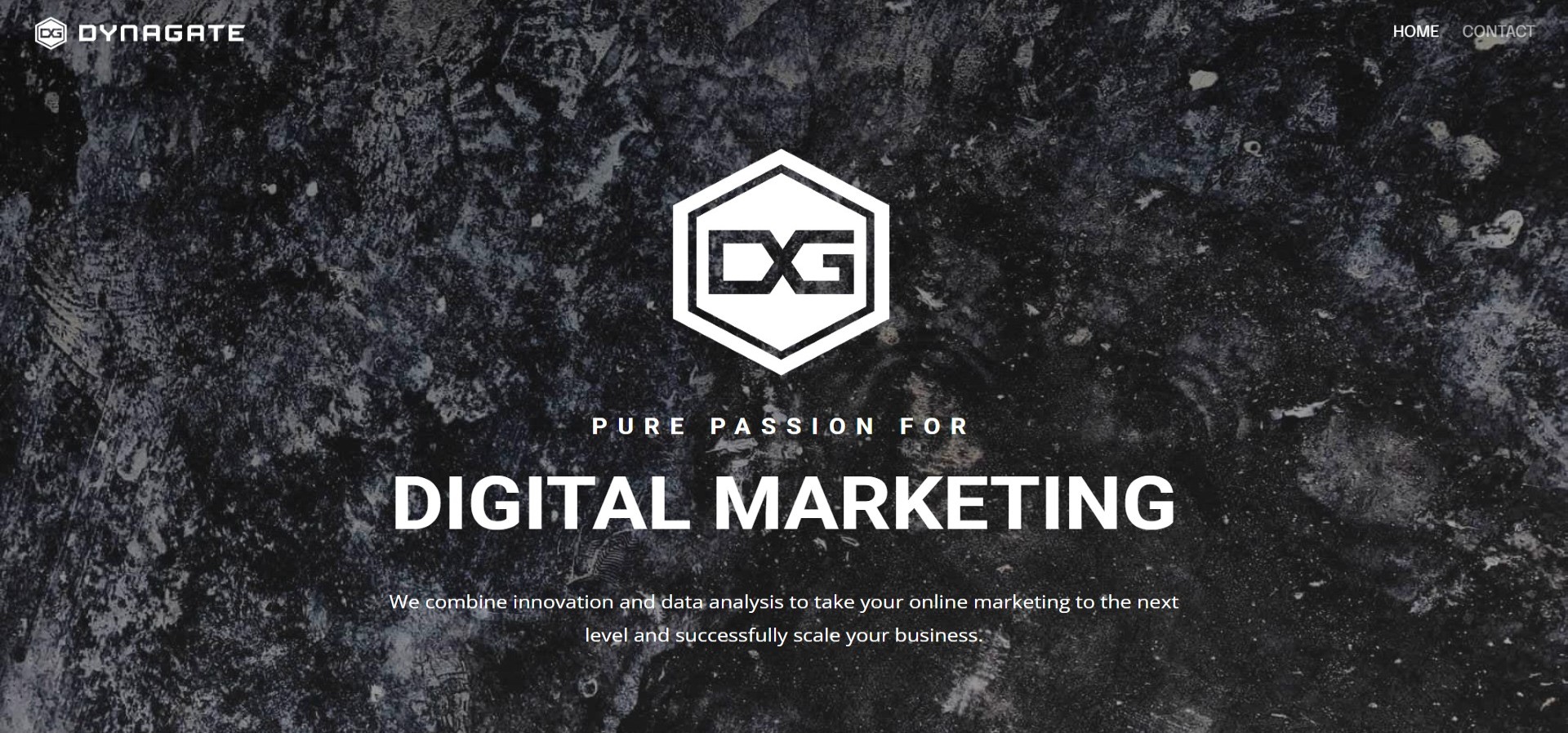
Dynagate is a digital marketing agency in Austria focused on e-commerce, building on WordPress, WooCommerce, PrestaShop, Shopify, and Shopware. It holds PrestaShop Expert Partner status and offers SEO, paid, content, email, social, and community services.
Most clients arrive with an ecommerce store that underperforms. Dynagate’s job is finding what’s broken, not rebuilding everything. That precision shapes its infrastructure: a handful of servers, a few dozen apps, and staging for each project.
That footprint grew in two stages: consolidating clients off shared hosting, then running AI agents as workloads of their own. The second stage brought new demands, and it’s worth seeing how Dynagate worked through them.
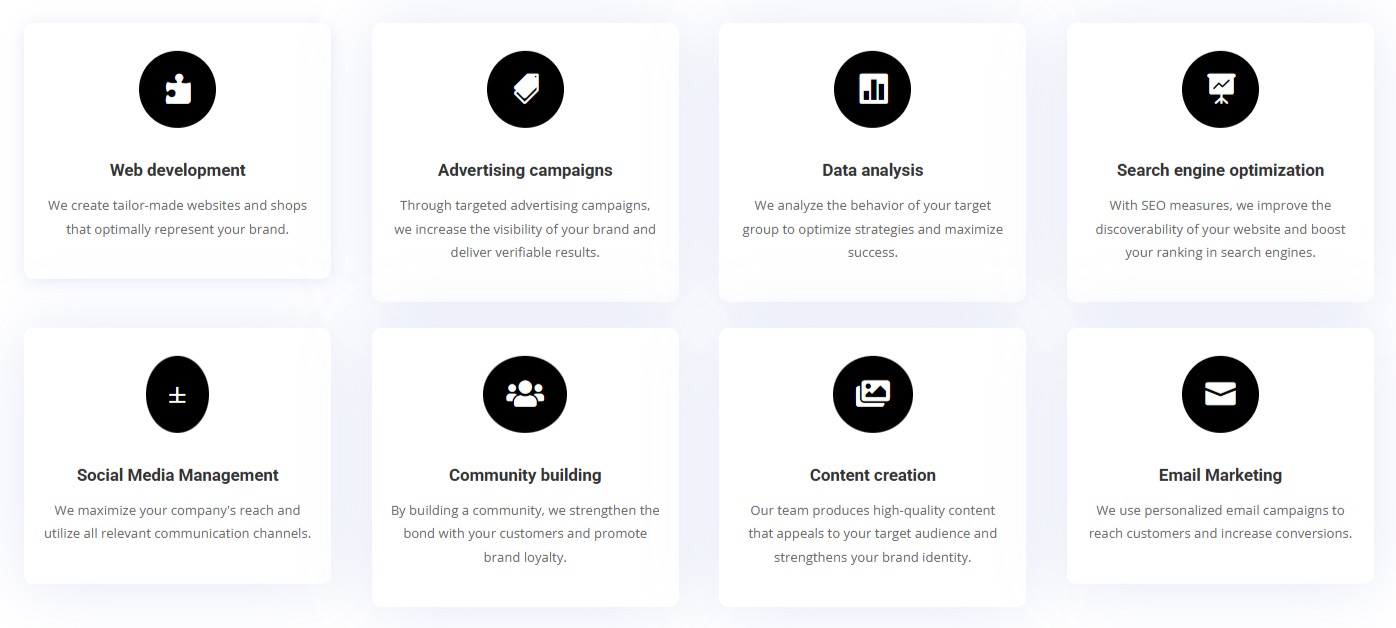
– Dynagate’s core services include web development, SEO, content creation, and email marketing. (Source: dynagate.at)
Dynagate’s SEO automation runs on OpenClaw, an agent framework responsible for scheduled crawls and rank checks that need to happen overnight, every night. For a while, that meant running it on a machine in the office, and later on a plain VPS, neither of which was built for continuous, unattended operation.
As Florian Haider described it, “every reboot, every failed update, every time something quietly stopped, we lost a night of data and usually only noticed the next morning.” Larger crawls on bigger client shops would occasionally take the whole machine down with them.
“I ended up doing sysadmin work for a system whose entire purpose was to save me time, which felt fairly absurd.” — Florian Haider
Two things made the situation harder to accept.
The first was keeping pace with updates. On a raw VPS, every update was untested territory, layered on top of routine patching and monitoring that nobody on the team actually wanted to own.
The second was that closed AI platforms weren’t a real option at all. As Florian put it, Dynagate needed “our own LLM keys, our own tooling and our own crawler logic” to handle the different shop systems and URL structures each client ran, something no generic platform could accommodate.
The choice came down to two paths: hire someone to manage infrastructure, or find a managed layer that still left the agent itself fully in Dynagate’s hands.
Dynagate moved its SEO automation onto Cloudways Managed AI Agents, giving OpenClaw its own dedicated instance while keeping full control over model choice and configuration.
Setup was fast. The instance went live, model keys were added, SEO data sources were connected, and the first content gap analysis was running that same afternoon.
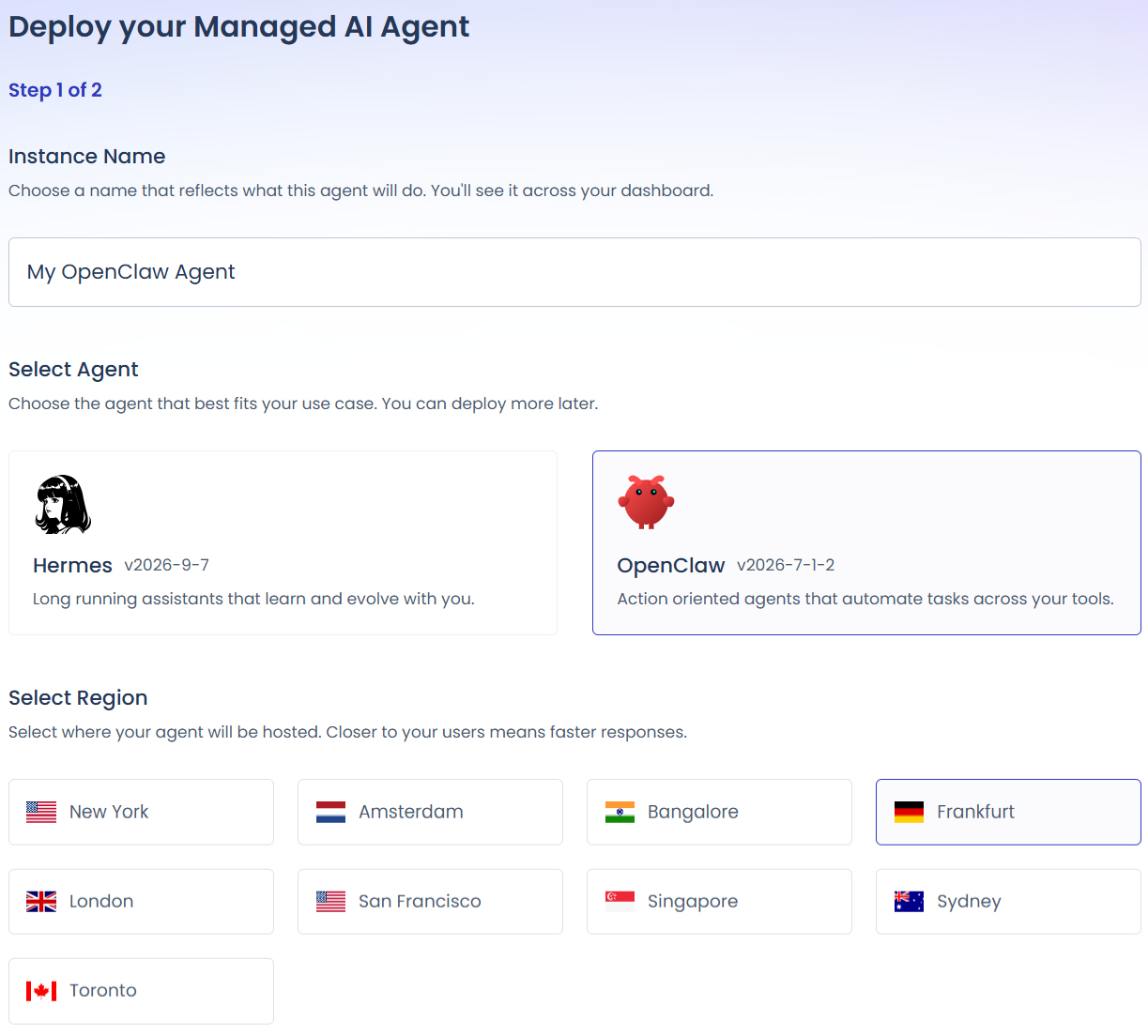
– Cloudways lets users deploy AI Agents in just a few steps: name the instance, pick an agent like OpenClaw & Hermes, and choose a hosting region. (Source: unified.cloudways.com)
What stood out to Florian was that bringing your own model keys was “treated as the normal case rather than a workaround.”
That mattered because Dynagate deliberately mixes models, running a cheaper option for parsing crawl and ranking data and a stronger one for content briefs and drafts.
“We deliberately mix models, a cheaper one for parsing crawl and ranking data, a stronger one for the actual content briefs and drafts, and keeping that flexibility is a big part of why the economics work for an agency our size.” — Florian Haider
Each agent instance also comes with automated daily backups, managed SSL, and validated version updates. Of the three, validated updates made the biggest difference day to day.
Florian had previously held off on updates for weeks, wary of breaking a pipeline that was finally stable. Now the team updates without a second thought.
The backups earned their keep the first time it mattered too, when a bad configuration change wiped out the agent’s working setup mid-project. Rather than rebuilding from scratch, Dynagate restored it and kept moving within minutes.
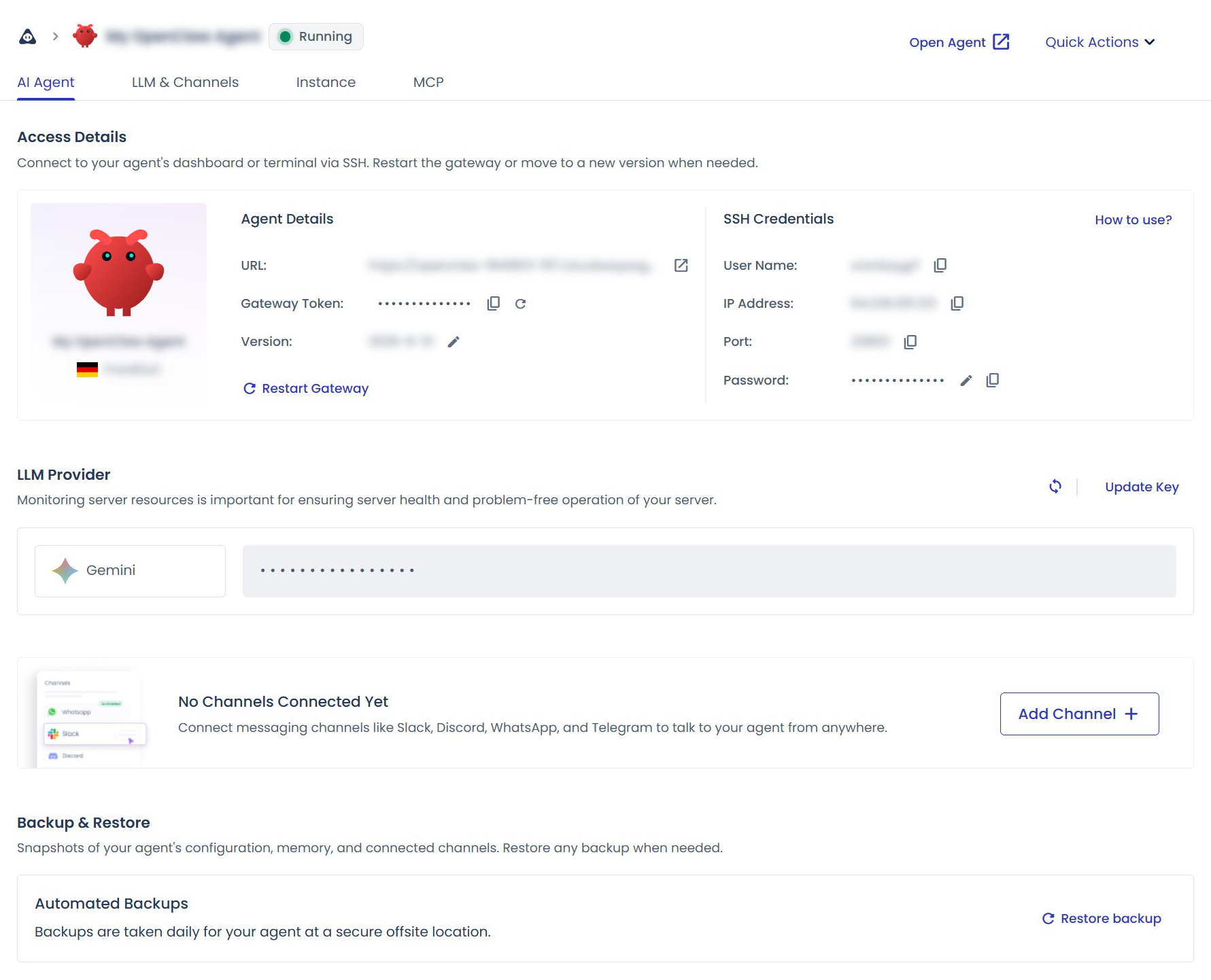
– Cloudways lets users manage an agent’s SSH access, LLM provider keys, and automated daily backups all from one place. (Source: unified.cloudways.com)
The shift also changed how the team works day to day. Heavy crawls and rank monitoring now run overnight without competing with the machine Florian actually works on, so he can close his laptop at night instead of leaving it running.
More importantly, the agent lives in its own environment rather than inside his personal setup. That means colleagues can adjust schedules and pull results without routing everything through him. As Florian put it, the automation “stopped being ‘Florian’s tool’ and became something the team uses.”
The clearest gains show up in content gap analysis. Reviewing competitor SERP coverage, clustering keywords, and mapping them against existing content used to take the better part of a working day per client, per month.
Now it’s a short review of output the agent has already prepared. The effect compounds for brands selling across several markets, since the same analysis now runs per language and per country.
Several other changes stack on top of that:
Technical audits moved from occasional checks to a full crawl per client every week, surfacing structural issues around faceted navigation and hreflang that shops tend to accumulate quietly.
Rank monitoring shifted from occasional spot checks to daily tracking.
Reliability improved from a few silent outages a month to no unplanned downtime since the switch.
Infrastructure cost stayed broadly comparable to what Dynagate paid before, while the maintenance time behind it largely disappeared.
On the client side, shops running this workflow are publishing far more consistently than manual management allows, a shift Dynagate is seeing reflected in non-brand organic traffic.
“It turned our SEO automation from a side project I had to babysit into infrastructure I can actually sell, and that’s the difference between a nice experiment and a real service line.” — Florian Haider
Dynagate now treats the automation as something it sells rather than something it maintains quietly in the background, a distinction Florian sees as central to how the agency’s SEO offering has matured.
Looking ahead, Dynagate plans to move from a single shared agent to one agent per larger client, each with its own instance and dataset. That approach keeps things clean as the agency grows and simplifies planning for brands running several country-specific storefronts.
The roadmap also pushes further into e-commerce specifics: product feed quality checks, product page content at scale, and internal linking between category and editorial content, areas Florian points to as still underused across most shops.
Eventually, Dynagate wants to give clients a direct, read-only view into their own agent’s audit and ranking output, in place of the monthly report.

Deploy OpenClaw on Cloudways Managed AI Agents with your own model keys, automated backups, and validated updates — live in minutes.
Try Managed AI AgentsShort but focused presentation of how businesses achieved their goals with our help

Cut Throat Marketing is a full-service digital marketing agency that’s...
Read Now
Lidia Crochet Tricot is a textile company that sells yarn...
Read Now
Ashish Dhamala is a core Laravel developer, who was on...
Read Now