EXPLORE CLOUDWAYS
Experience lightning-fast loading times and seamless platform
View Demo >PRODUCTS
CLOUD PROVIDERS
SUPPORTED APPS
WHO WE SERVE
PARTNERSHIP PROGRAMS
Lifetime deal: 75% OFF
Advanced Support
POWERFUL FEATURES
DISCOVER
WHY CLOUDWAYS
 Read Case Study >
 Jesse Tutt
Founder & CEO

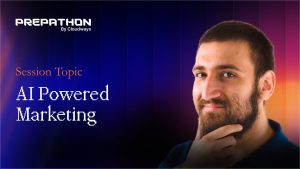
An SEO panel at Cloudways Prepathon 2024 on harmonizing AI with search, covering how AI changes query complexity and retrieval, why privacy-first analytics matter, how to keep brand voice in AI-assisted content, and how small businesses can compete.
🎙️ Speakers
▸ Dragos Gal — Global Head of Business Development, TWIPLA
▸ Koray Tuğberk Gübür — Founder & CEO, Holistic SEO & Digital
▸ Wenceslao Garcia — Founder & CEO, MarketGoo
▸ Host: Shelley Egan — Director of SEO, DigitalOcean
✨ Key Takeaways
✦ AI search handles longer, more complex queries without losing context, so SEO will change and adapt rather than disappear.
✦ AI can’t replace human judgment on context, intent, creativity, and ethics, that’s where SEO pros show their value.
✦ Privacy-first, cookieless analytics can capture close to 100% of visitor data while staying GDPR compliant.
✦ Keep brand voice by separating facts from opinions in your content, which also helps search engines parse and users read.
✦ Use AI tools for SERP analysis, entity checks, and competitor difficulty, but pair them with strategy, not just automation.
✦ For AI overviews and featured snippets, deep topical coverage can surface even lower-authority sites the rest of the web hasn’t covered.
✦ Invest in NLP understanding, branding, and user experience, and for SMBs, an authentic voice is the edge AI can’t copy.
Shelley Egan: Hi everyone, welcome, very excited to be here today. I have a wonderful session kicking off, harmonizing AI and SEO. For those who don’t know me, my name is Shelley Egan, I am the Director of SEO here at DigitalOcean, obviously a sibling company to Cloudways, so very excited to be here today. We have a wonderful full panel, I’m hoping we’ll bring our first panelist up on the stage, and I would like to welcome Dragos.
Dragos Gal: Perfect pronunciation, Shelley, thank you very much.
Shelley Egan: Awesome, thank you. I would love for you to give a little bit of background about you. You’re the Global Head of Business Development, and pronounce the company’s name for me.
Dragos Gal: It’s TWIPLA, it comes from the website intelligence platform. My background is emphasized more on the marketing and sales elements. At the moment, for three years now, I joined the TWIPLA team, the website intelligence platform, and we’re covering the website analytics side of things, but in a more complex way, which I’ll dive deeper into. But most importantly, in a privacy-by-design manner. At the moment we have more than 2.5 million installations worldwide, growing rapidly, so I’m glad to meet every one of you.
Shelley Egan: Very glad to have you here. I want to bring up our next panelist, we have Koray, welcome to the stage.
Koray Tuğberk Gübür: Hi, how are you? Thank you for having me.
Shelley Egan: Thank you for joining us today. I know you’re the founder of Holistic SEO & Digital, a digital marketing consultancy and agency, but I want to hear a little bit about your background, because I read a little bit about it, it sounds fascinating.
Koray Tuğberk Gübür: Thank you. My background is actually too long to explain in a few seconds, but I started years ago from the casino market, I was a PBN manager, then I lost 3,000 websites in the August update, August 1st, 2018, then I started to focus on the white-hat industries by starting to read the Google patents mainly. And I need to mention one more time dear Bill Slawski here, for helping me even if he’s not among us anymore. And then I was able to find some new methods for search engine optimization and I gathered them with a new name, which is topical authority, and it started to become a mainstream methodology and concept in the industry, after like 134 different websites were published by giving their names. Then our agency scaled, then we turned our agency into a kind of community and academy, and today we have over 35,000 members across different platforms, and around 2,000 of them are private members, which means paying members.
Shelley Egan: Incredibly impressive, a community builder, I love it. So we have one more panelist to bring up, we have Wenceslao.
Wenceslao Garcia: Hello, how are you?
Shelley Egan: It’s really great to have you here, thank you for joining us. Can you give us a little bit of background on you and the company that you work for, marketgoo?
Wenceslao Garcia: Yeah, I’m very glad about being here with the Cloudways team, because hosting has been my thing since I started a hosting company in Spain a long time ago. Then I decided to cash out and start helping SMBs more in the online marketing space, and finally I went back, connecting the dots, I went back to serving SEO. So what we do today, 12 years ago marketgoo is a company that is providing do-it-yourself SEO solutions or tools for SMBs, and pretty much we partner with hosting companies that white-label our solution. So we are a bootstrapped company from Spain, serving roughly half a million SMBs through our SEO tool through 30 different hosting partners worldwide, and I’m here very glad to participate with the SMB focus in mind.
Shelley Egan: Thank you so much, that is fascinating. Anything that enables SMBs to take control and do better SEO, I am all for it. So we’re talking about harmonizing AI with SEO strategies in today’s modern search environment. Kicking off, how can SEO professionals effectively communicate the value of their work in this era, especially where AI is perceived as potentially replacing traditional search? Who wants to take it away?
Koray Tuğberk Gübür: I can. So artificial intelligence relies on a bit of a different form of search when compared to traditional search engines. When you look at AI search, most of the time the queries will be much more complex. Every year, especially in Google, the average query length goes higher and higher, today we have more queries between two and four words, and after the AI integration the average query length will be much higher. Because of this, the search engines, especially Google, will need to start to change their information retrieval systems slightly. For instance, if you search for something like, what is the best cat food for a cat who is older than 10 years old, and just fold, and had XYZ sicknesses, and we can add a few allergies too, you can’t ask such a question to Google or Microsoft Bing, they will just choose two or three words from your query and tell you here are the results, find the rest by yourself. The advantage of AI search is that they are able to parse a very long, complex query into different pieces, and they don’t lose the context, which is an important improvement, and they’re able to create different documents, choose the most relevant sections, retrieve them, augment them, and then bind all these different sections by reinterpreting them. So this is a very good intelligence tool for our futures, but it also creates different types of issues.
For instance, when I search for “what is the best debt consolidation solution for veterans” you can get some results, but if I ask “what is debt consolidation for a farmer who is older than 40 years old and also an old veteran,” some banks literally might have two different advantages for two different occupations, and let’s say we have 3,000 other occupations, a music teacher, artist, or engineer, then most of the websites don’t have content for most of these sections. Most websites won’t open a new page for every occupation, and they shouldn’t. But AI search has to answer the exact query, or as an alternative they will use semantic closeness, let’s say we don’t have any info for teacher, then they’ll choose the second closest one, maybe mentor, maybe coach, they’ll semantically replace that concept and retrieve some other documents. So I believe in the future we will be having a kind of transition era, slowly and gradually. And I need to mention Matt Cutts here, because 14 years ago he said that we will be searching from our brains, and he was guessing it would happen before 2019, still I believe it didn’t happen that much, but maybe in the future the SEO will be done directly for our neurons, and I will enjoy that academic side. But I would like to tell everyone here, SEO is safe, it will just change and we will adapt and continue.
Dragos Gal: I would also add, and before I go forward, I’ll underline that my inputs will be from a perspective of website stats and analytics combined with a privacy point of view. A key point to mention is that the new EU AI Act mandates that all the data fed into the AI system must be GDPR compliant, this is one aspect. Then, SEO professionals should emphasize that while AI enhances efficiency, it cannot fully replace, in my humble point of view, the human touch in understanding context, user intent, and ethical considerations like privacy. For now, AI-driven SEO often relies on massive data sets, but as we move forward, privacy-first approaches such as cookieless tracking allow SEO professionals to demonstrate the value of strategies that balance privacy with data-driven insight. This means they can provide valuable, compliant user insights that maintain trust and enhance search visibility, rather than simply focusing on data quantity. Communicating this unique value proposition, where privacy and precision meet, highlights SEO’s evolving role in creating ethical, user-first search experiences.
Shelley Egan: Definitely a lot of considerations there, thank you. I want to point out, feel free to add questions in the chat, there’s also a Q&A and poll section, and if we can we will try to circle back at the end. I want to ask, what role does human expertise play in interpreting and acting on AI-generated SEO insights, to circle back to something you pointed out, Dragos?
Wenceslao Garcia: Well, the human expertise could be applied to all of these insights. It comes more from what the AI is not going to be as good at doing, as content intent or creativity, or even, I will say, going out of the experiments of the vibe path. I think that will be the biggest play the human expertise can play in the AI.
Shelley Egan: Very true. So what would you think are some key considerations when you balance AI-assisted content creation, especially to maintain brand voice and authenticity?
Koray Tuğberk Gübür: In my methodology, most of the time I have a few concepts, especially when it comes to relevance configuration. During the SEO Mastery Summit 2023 I gave an example from the stage, so I’ll tell two sentences from the point of a search engine or any information retrieval system. The first sentence will be something like, the financial independence consultants will help families achieve their financial freedom, or, families, consult the financial independence consultants to achieve financial freedom. In both sentences we basically say the same thing, but when you put these two sentences into any information retrieval system, you’ll realize they have different types of focuses in terms of relevance, because the order of the entities in the sentences is different. And usually training human authors is not that easy for understanding content like a machine does, because vectors represent mathematical, computational coordinates when it comes to natural language processing systems. So I am trying to create some GPT agents to help my authors use the AI and NLP systems to parse the document as a search engine will. I call this process micro-semantics, because we do micro changes like changing the order of the entities, or matching the modality in the sentence to the modality in the question, if there is a “can” question the answer should be “can.” For instance, Steven Baker from Google, he is the brain behind Google featured snippets directly, and he states that four-grams increase satisfaction for users, the four-grams means if there are four vectors in the question, that specific four vectors should be used also in the answer. Most of the time I am trying to implement these algorithmic rules in my content structure as much as possible, and AI is just helping me replicate it for millions of sentences across thousands of documents. And if you’re able to increase your relevance just with a small percentage per sentence, and your website has, let’s say, three million sentences, that small difference will be multiplied, and then it will be a macro difference, a difference your competitor won’t be able to analyze or imitate.
And when it comes to brand voice, most of the time I put branded opinion sections in the document in a different place than factual content. Usually the facts, opinions, perspectives, or expertise-related text spans are placed in a slightly different section in the document, so that the search engine can directly parse them and retrieve them with different systems, and it’s also easier for users, rather than reading one fact, one opinion, one fact, one opinion.
Dragos Gal: Maybe I can build on what he mentioned, bringing another perspective from the analytics side combined with the privacy aspect. Whenever you’re trying to generate content in an SEO format, a lot of the time you’re trying to look at what actually works at the moment. First of all, AI can surface trends, patterns, and opportunities at scale, but it lacks the ability to understand nuances such as brand voice, ethical considerations, or cultural sensitivity. And secondly, massively important, you have to make sure you’re collecting the impact of your current SEO, collecting 100% of the user insight and data, because in many cases we lose large portions of visitor information because of cookie-heavy tracking. I would start off by adopting a cookieless, privacy-first solution in order to max out the data-tracking capabilities. Yes, this is a privacy paradox in a way, because you are asking, so you’re using privacy-sensitive solutions but you’re capturing more data, in short, yes, because all the personal side of data is anonymized as tracking is done at the session level. This is a big trend out there as cookies are implicitly blocked more and more, see for instance the Safari browser case. To go even a bit further, I will bring into discussion consent tracking, because it is starting to be a really hot trending subject and can be easily done with the right toolset.
Shelley Egan: I honestly have seen so much data loss when we rolled out cookie consent globally, so it is a pain that is very felt, especially with us, our teams are extra sensitive towards making sure we respect privacy, so I think we’ve been more aggressive than most companies, but at a default of losing a lot of valuable data, so I totally get that. Koray, thank you for coming back in, I think we lost you right at a critical summary, so I would love to divert back so you can finish your thought.
Koray Tuğberk Gübür: Exactly, so basically, in terms of protecting the brand voice in the content, most of the time I put the facts and the opinions into different segments of the content, and it helps search engines choose a different language model for a different text span at the same time, and it’s also easier for humans to read, rather than reading one fact, one opinion. You can see the facts first, then the opinions, and according to the context of the question or the query you can first give the opinions then the facts, or first facts then the opinions. The order of these components, the nature of these text spans, will also allow you to be connected with the query in a better way.
Shelley Egan: I’m excited to test this. I don’t know about everyone in the audience, but I’m definitely setting up some tests with some of our content that we’ve been optimizing, so thank you for that explanation, it was fabulous. Anything else to add before we move on, Wenceslao?
Wenceslao Garcia: Well, I think we have a great representation and quite complex and wide views. As I said, I’m taking the flag of the SMBs, and in my case, when I see the challenges the small brands have in SMBs, I think one of the key elements of the success they’re going to have is based on the brand voice, on the authenticity. So I will encourage all SMBs to be more than their own and to bring more of their voice and their offerings and what they really differentiate in what they do into content, rather than relying on, I’m a busy guy and I’m going to rely on AI content creation or outsourcing that to other companies that are using this for scheduling or calendar. I can mention myself, when I post on LinkedIn I try to have a very authentic way to write what I write, and you can see, no AI is going to write that way or use the same authentic voice. So that will be my suggestion for the very small SMBs.
Shelley Egan: Wonderful. I’ve also pre-trained some of our chatbots with our brand guidelines and documentation and everything we’ve developed in-house and fed that in, so if you have that established or not, I would recommend doing that, it can be helpful. Obviously we don’t publish AI-generated content here, but we definitely use it to assist in creation and optimization, so it’s very helpful. I think everyone’s running lean teams so we can scale where we can and utilize resources the best possible. I am curious, how would you recommend that businesses actually leverage AI tools, especially with regards to competitive analysis or strategic planning for SEO, any tips, recommendations, specific tools?
Koray Tuğberk Gübür: I am usually not associated with any tool, and people know me for not mentioning tools that much, but since the question requires it, I will mention a few. If you want to read the Google SERP in a much wider way, you can use InfraNodus, it is a tool created by ex-Googlers, integrated with GPT. You can do lots of stuff there for YouTube SEO too, but in the context of Google you can do a simple search, then it gets all the results and creates a text graph, and gives you different contextual zones for this text graph, and it really helps you analyze the nature of the SERP in terms of teeny-tiny details. You can’t open 100 results for every query, but you can create a text graph from all of them and create content while analyzing that. And I have created over 50 GPT agents for my community, they have many different tasks, for instance one just focuses on named entity recognition, another helps you find the entities that you missed, so you can see what type of entities should be inserted in the document and in what way. Another one, you upload certain data, and again I need to mention a tool, but let’s say Ahrefs, Semrush, Moz, whatever you want, you can upload certain data then it creates an analysis to give you which of these competitors is less costly to outrank. To be able to be an authority on the web, first you should be able to outrank some of the smaller sites completely, and to understand which one is easiest you can do certain analysis, and if you chase side by side in a certain topic or industry it will be easier for you to move further rather than competing with everyone at the same time. There are many other agents, like syntax tree generator or metadiscourse auditor, but these are a bit advanced and might be complicated for a beginner. For simple things, you can check or do a simple backlink analysis, or upload your Search Console data and check which Google update hit the website negatively or positively, and compare with your competitors while creating a visualization. So some of these things are already done by my team every day, and our community uses them, so I suggest you check the GPT store.
Dragos Gal: On the analytics side, how to measure the impact of your content in respect to visitor analytics and visitor behavior, I would again restrain from mentioning specific tools, but I’ll give a quick hint at the end, ensure the usage of a privacy-by-design tool, especially in the context of tracking and monitoring user data. On one hand, you’ll be able to capture 100% of the user data, which increases dramatically the understanding of your client base. Then, instead of just copying competitors, businesses should focus on using these deeper insights collected through those enhanced understandings to engage in more personalized and privacy-conscious strategies that respect user data while remaining competitive. This balance is key in building trust and long-term loyalty with customers, while expanding on strategies tailored to enhance client avatars and buying personas. So I would recommend our viewers aim to search for cookieless website analytics on all search consoles out there, compare the data, and start implementing this privacy-by-design tracking of their content outputs.
Wenceslao Garcia: Again with my flag of SMBs, we’ve been working for 12 years now with the vision of trying to democratize SEO. Most of the very small SMBs, some professionals say that’s not possible because obviously this is a very complex topic, but for the SMB, we’ve been trying with a vision of how we translate all of this complexity, and ultimately the AI on technology is allowing us to get closer to the vision. So for these very small businesses that are not going to be savvy enough to extract the value of these AI complex tools, what I aim for is moving more into a much easier advisor that is telling them, okay, this is what is relevant for you, this is what your competition is doing, this is what you should be asking from your agency. Take into account that SEO for small businesses is a completely different animal than large-scale, so that will not be a specific AI tool, and I think we are looking for that kind of tool that is going to solve some of these technical struggles to understand everything.
Shelley Egan: Absolutely, thank you for that. So how would we adapt some of our SEO strategies to account for things like AI overviews, featured snippets, or voice search? Koray, you start.
Koray Tuğberk Gübür: For AI overviews, it’s a kind of new feature yet, and most of the time it is correlated together with featured snippets, and it is a very similar feature too, basically a kind of augmented featured snippet with some added context. One more time, Steven Baker is the brain behind these two, and he was directly the writer of the announcement of AI overviews as well, and he directly stated that getting the accuracy right is not that easy, and that’s why I believe they are switching AI overviews sometimes with “across the web” type of new SERP features, and they also started to bring some brand comparison SERP features. But in my opinion, to compete in AI overviews, the overall principles at least on the domain base won’t be changing that much. For instance, when I search for “best debt consolidation for a teacher,” the search engine will get certain sources, and before searching for the best answer from all these websites, they will look for the overall authority of these sources first, and there will be a question from the search engine’s point of view, if all the authority sources don’t have the proper or relevant answer, should I still show the AI overview by citing a low-authority or low-page-rank website. I don’t think these low-page-rank websites are getting that much traction from there. You can check your log files, you will see Google Other agent there, and I have some websites that have over 40% of crawl hits from Google Other. If you check the Google user agents page from developers.google.com, you will see they have brought some new user agents like Google Other, Google Other Image, Google Other Video, so they explicitly say Google Other is for research and development. If you are being heavily crawled by Google Other, it means they’re also testing your website, but usually what I see is less than 1% hit or over 40% hit, so it means they are prioritizing some websites to test.
And when it comes to optimization there, I have a concept called historical data. Probably you won’t be able to get that much click from this new SERP feature, but it doesn’t mean it is something negative. Even if you are placed directly in these answers, or if the search engine is using your source to generate these answers, it will still be helping you to gain more authority and more usefulness for the search engine, which will help you rank for commercial queries as well. For news publishers or display-ads websites it might be slightly negative, we need to accept it, but for e-commerce or SaaS businesses it won’t be that much negative. One more thing, as I said in my first answer, since the average query length will be too long and the combinations too many, small websites, by covering way more context, like debt consolidation for 3,000 different occupations, or 6,000 different liquors or cocktails from every geography and country, if you’re able to process all this information with a proper representation, you can outrank way more websites and appear in AI overviews even if you don’t have that much page rank or links, because most of the web is not prepared for this type of search needs yet.
Shelley Egan: Thank you, I’m definitely running to check my server logs. I want to say we’ve got about nine minutes left, so I want to get to what type of skills SEO professionals should be investing in to remain relevant in this AI-augmented industry. Dragos, any thoughts, or Wenceslao?
Wenceslao Garcia: Well, I think, as I said, we don’t work so much with SEO professionals, but if I have to look into SEO professionals, they have to stay up to date with the real dynamics of AI, the different developments of the search engines and the different players appearing in the space. And I think their main change is from being an operator of a tool, or having basic or specific knowledge about SEO and implementation, and moving more into the creativity, into the understanding, empathy, and those fields, being less technical and trying to be more on the strategic side.
Dragos Gal: Overall, and building on what he mentioned, I would say first and foremost focus on user experience, because AI increasingly considers user behavior in ranking decisions, and professionals should focus on improving site usability, personalization, and responsiveness to align with both AI-driven search and human preferences. For example, look at how long users engage with your content, repeat visits without intrusive tracking, overall satisfaction can indicate success in a privacy-conscious world. 360 overviews related to behavior can also increase the success of the strategies, so combining marketing funnels with session recordings can uncover incredibly interesting things. Within this paradigm you could watch the exact journey of your dropouts and identify potential blockages to the final conversion point, also the capacity to analyze groups of pages with similar URL patterns, like product pages with various variants, with the help of heatmaps or session recordings, brings everything under one roof for a real 360 overview of your visitors. So I definitely encourage utilizing complete platforms to marry the data together.
Koray Tuğberk Gübür: I guess I am the last one, but I can give a few simple points. Try to understand natural language processing, you don’t need to know coding to understand it today, you have GPT agents which are like a brain extension, if you don’t know something AI knows it, just try to use it like a part of your brain. And second, work on branding, because whatever the search engine algorithms are focusing on or however they are configured, they will always be favoring brands, and as long as you have a real function or a reason to exist, that specific website will be safe. That’s why e-commerce or SaaS businesses are not affected that much, they are creating a reason to be searched with their own brand name, creating a community around themselves. When it comes to display-ads websites or direct affiliates like a middleman, they don’t have that much of a function, and Google tries to reshape the web according to that. So focusing on branding and NLP together, and understanding where Google is going and what obstacles they will be having in the future, will be a great vision-improving contribution for your future.
Shelley Egan: Fantastic. One more question to wrap up, and then Q&A, though we’ve had such a fantastic conversation I’m not sure we’re going to get to attendee questions. I would highly recommend, the same chat lives during the next session, so speakers, if you could respond to some of the questions directed to you that would be amazing, if not, I highly recommend interacting with our speakers and following them on social. Last question, looking ahead, how would you envision the interaction between AI and human expertise shaping the future of SEO, any advice for professionals, SMBs, or businesses to stay ahead in this changing landscape?
Koray Tuğberk Gübür: To harmonize AI with human expertise, there is another tool, and I am not associated, Consensus, that app, you make a search and it gives you all the researches and the most relevant section of the research to integrate in your article, which you can use directly by citing them with different formats. And you can try to balance your angle in some scientific articles, let’s say you are creating a content network or website segment just for pregnancy, you can ask AI directly, for every week what type of hormones change in what direction, for what percentage, and what are all the researches that verify this. Human experts, we don’t have photographic memory, and even if you study pregnancy for 40 years you won’t be able to tell it from your brain, but you can always go to an AI and gather this information in the format and representation form you’d like. So it will be one of the goal points.
Dragos Gal: A really short snippet from myself, in a nutshell, prioritize high-quality content creation, because while AI can help optimize content, human creativity and expertise will still be critical for crafting content that resonates with the end user on the emotional and contextual level. Content that answers deeper, more complex, more personalized questions will continue to perform well, after you have understood 100% of the visitor data, this is basically the way to tailor the content. So the silver lining here, learn how to integrate data-maximizing, privacy-conscious strategies into SEO planning, this would be my best advice.
Wenceslao Garcia: I’m going to make one short, just focus on what AI cannot provide. Embrace AI and learn about AI, but focus on what AI cannot provide. And I will encourage, pretty much on SMBs, which has been my struggle through these years, SMBs are really busy managing their business, but I think those ones that are raising authentic voices and take care about the user experience are the ones that are going to be winning.
Shelley Egan: I absolutely could not agree more. Perfect timing. I want to give props to our next session coming up, we have a live site audit session with the brilliant Carolyn Shelby, she’s with Yoast. I want to say thank you all for joining us today, thank you to our panelists, wonderful discussion. I am very excited to rewatch and take away some notes and go back and revisit some of our strategies, so thank you so much for your contributions, we absolutely appreciate it.
Answer a few questions, and we'll present you with a personalized tour of the Cloudways platform based on your answers.