EXPLORE CLOUDWAYS
Experience lightning-fast loading times and seamless platform
View Demo >PRODUCTS
CLOUD PROVIDERS
SUPPORTED APPS
WHO WE SERVE
PARTNERSHIP PROGRAMS
Lifetime deal: 75% OFF
Advanced Support
POWERFUL FEATURES
DISCOVER
WHY CLOUDWAYS
 Read Case Study >
 Jesse Tutt
Founder & CEO

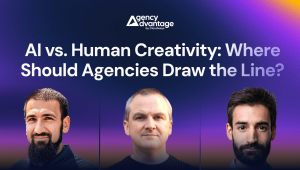
Redesigning teams around AI isn’t about replacing people, it’s about making them “team plus AI.” In this Agency Advantage 2025 panel, two SaaS leaders share real examples across sales, support, product, and marketing, and how to keep the human touch.
🎙️ Speakers
▸ Vito Peleg — Founder & CEO, Atarim
▸ Miriam Schwab — Head of WordPress, Elementor
▸ Host: Brent Weaver — CEO, E2M
✨ Key Takeaways
✦ AI is a “team plus-plus,” it takes on repetitive “paper pushing” so people can focus on high-value work, but it still needs human input, tone, and fact-checking.
✦ Don’t hide AI use or rubber-stamp its output; own it, and make sure it carries your brand voice or coding standards before it ships.
✦ Adopting AI hasn’t meant layoffs for these teams, it’s “everyone plus AI,” and Elementor is still actively hiring.
✦ Use the 10-80-10 model (Andy Warhol’s Factory): humans set the 10% context, AI does the 80%, humans sign off on the final 10%.
✦ Real use cases: AI sales role-play scored on MEDDIC, a product docs GPT trained on 7 hours of transcript, voice-agent job interviews, and OpenArt for YouTube thumbnails.
✦ Protect the human touch, keep real people on live chat and client relationships; a human should show up within a minute even when AI handles the back end.
✦ Prediction for 2028: expectations and quality bars rise, design tools move into the browser, and agencies win by taking on more complex work, as they did with responsive, Flash, and GDPR.
Brent Weaver: And welcome back, hopefully you got your Agency of the Future image submitted, we’re all chuckling backstage at some of the submissions that have already come through, so thank you for getting that done, looking forward to judging that contest. So up next, we’ve got two amazing panelists, we’re going to be having a discussion around redesigning teams around AI, not replacing them.
We’ve got a couple of guests with us, Vito Peleg and Miriam Schwab. Miriam is the Head of WordPress at Elementor and co-founder of Strattic, Miriam is a seasoned WordPress expert with 18-plus years of experience shaping the open web and speaking at global tech conferences. Vito is the founder, co-founder and CEO of Atarim, Vito is a former agency owner turned SaaS founder on a mission to make the web more collaborative for 25,000-plus teams worldwide, that is an incredible number. So Miriam, welcome, we got Vito in the house as well.
Miriam Schwab: Hey everyone.
Vito Peleg: Hi.
Brent Weaver: All right.
Vito Peleg: It’s actually 67,000 now, it grew a little bit since, like, when did you submit that bio, like 30 minutes ago?
Brent Weaver: Or was this like an outdated metric that we’re talking about here?
Vito Peleg: That’s probably for the team, so I need to chop some heads on the old number from the beginning of the year or end of last year.
Brent Weaver: Vito, you grow so quickly your own team can’t keep up.
Vito Peleg: Yeah, they can’t keep up, you know, what can I do.
Brent Weaver: You have to give them minute-by-minute updates, that’s a lot of teams.
Vito Peleg: Yes, I know, we’re juggling the usage, we have to redo our infrastructure.
Brent Weaver: All right, well, we got some kiddos, I feel like there was a news cast one time where the kids wrote it, and it was like, you know, now it’s like just another day at the job, running virtual studios. So Miriam, we’ll probably kick off here with you, team, I think we can get our panel questions pulled up here and get the ball rolling.
Miriam Schwab: I have the questions, so I can just go ahead and jump in. Let’s go with some foundational understanding here, what does it actually mean to redesign a team around AI? So with the advent of AI and it becoming an integral part of everything that we do, whether it’s personal or professional, but specifically professional in this case, we need to look at our teams and think, how can AI augment what we do and help us do things better and potentially help us do more?
In many ways AI acts as like an assistant to us that helps us, it can take on tasks, it can advise us, it can help troubleshoot, QA our work, it can do so many things for us that gives each of us many more capabilities than we had in the past. So when you look at a team it means, okay, this team, until AI became part of our lives, could do X, what can it do now with AI being an ongoing integral tool and component of the team? It actually becomes like a team member, but it’s like many team members, and I think that that’s what we’re looking at.
It’s not that people become redundant, because AI still needs to be guided by humans, it needs human input, it needs human creativity, it needs human fact-checking or just general checking in many ways, but it can just help us do more, produce more, execute more. And so that’s what it means when we are looking at redesigning our team, it’s not like changing the team, it’s being like the team plus-plus kind of thing.
And I’m interested to get Vito’s take on this as well, but have you found, I mean, there are sometimes maybe team members that just are taking the AI output and passing it through, like, I’ve seen some of that, where I think one of the things that I’m worried about is people not taking accountability for their own use of AI, that becomes potentially a challenge, that people are kind of quickly using AI but not necessarily having it come from their own opinion or their own, like, are they willing to stand behind that? So have you experienced that at all?
Miriam Schwab: I think that what we need to figure out is how to have a balance between, like, not be embarrassed to use AI and to use AI output, right, like there’s that side of things, is it something that we need to hide, it doesn’t mean that we’re less if we’re using AI, but at the same time, so, acknowledging that but not just acknowledging that we’re using AI, bringing that human aspect and component to it so that we’re not just AI paper pushers, I guess you could call it, where we’re just like, hey, I think I have this question, thank you, I’m not even going to read it, I’m not going to review it, I’m just going to throw it over there.
And if you’re using it, for example, for messaging or marketing, you need to make sure that the AI has your organization’s or your own personal tone of voice, does it sound like you, or does it sound like Bob with the suit, right, there’s different tones of voice for people and organizations. Or even if you’re coding, is it coding according to your company’s infrastructure or requirements? And so there’s nothing to be embarrassed about with using AI, it’s just a fact of life now and it helps us all do things in a better way, but in addition to acknowledging it, being like, I’m using AI, but I’m using AI while taking a look at it.
I haven’t seen many examples, well, at least not in our organization, people are pretty careful about brand tone of voice, let’s say in the marketing team for example, and especially with coding, because Elementor is so widely used, with over 18 million active installs, we cannot release code that has not been properly vetted and reviewed by AI plus humans. So it’s finding that balance and that kind of hybrid approach, I think that leads to really high-quality output that we can be proud of and that doesn’t look like cookie-cutter or templated.
Brent Weaver: Yeah, Vito, I noticed you didn’t have an AI chatbot put your kids to bed, so there’s still room, there’s still room for us humans on this planet, right. What’s your take here, what does it actually mean to redesign a team around AI?
Vito Peleg: So there’s a few things that we consider internally of how to implement this new level of technology that we all got access to pretty recently, a couple of years ago only. So the one thing that I keep mentioning to the team is, of course there’s like rituals, like we have an internal Slack channel where we share how we use AI on a regular basis, on a daily basis, “using AI daily” is the name of that, to signal to people that this is the expectation.
There’s two main components that we kind of look for when it comes to AI usage within the company. First of all, there is the 2x to 100x type of exercise, and this is trying to think of all of the different things that we do every day, how can we either 2x the productivity on the back of it, 100x, or between 2x to 100x it even. And I can give an example of a 100x task, back in the day when we had WP Feedback as a plugin, we basically managed about 15 different translations by different people that needed to translate this, and obviously we didn’t hire professional ones, it was the user that spoke German that was getting an email to help us translate this in the early days, and that created a really bad experience, and as we kept developing it just kept going back to this, so painful.
Now we have implemented a solution within our app that allows us to literally deploy a language within three minutes with the use of AI, as you mentioned, Brent, it’s important to add the context so it knows what you’re talking about, but that’s a literal 100x kind of task that we add in there. Another one, for example, connects to what Miriam was talking about, the knowing the tone of voice and things like this. At the beginning of the year we wanted to redesign our help center, and so in order for us to do this, I went off, did my research, some with AI, some actually visiting websites, I know it’s crazy, you know, but I did go into websites and looked at the implementations in different companies that we wanted to take inspiration from, and basically level up the entire docs.
What we found interestingly, there’s an average of about 80 documents for a SaaS product as part of the help documentation between multiple different platforms, and there’s a few categories that can repeat themselves, there’s a structure that I wanted to structure for all of these articles. Essentially, Brent, we needed to create 80 brand new articles in a short amount of time, it’s a lot of work to write all of this documentation, getting even to know the product that deep to actually write it in a quality way. So instead, what we did is, I recorded seven hours of me going through the product, clicking every single bit, not only saying what is there but why it’s there, how it came to be, and telling the story of literally every nook and cranny within the product itself. Seven hours of transcript ended up at about 400 pages that were fed into a custom GPT along with the strategy that I wrote around how to actually write this help center.
And so that’s what I delegated to the team, and it took about three weeks to do the initial bit of it, but then we were churning out articles at two and a half hours per article, it took two weeks to do 80 articles that are way better, and then people can go and check out some of these elements. It knows the product better than anyone else on the team, essentially, at this point, just because we took the effort and implemented the right context to begin with. And of course, as you mentioned, it wasn’t something that you just prompt and forget, prompt and post, it’s not that process. The way we talk about this internally is more like Andy Warhol’s the Factory, you know, he had this factory back in the 60s where he had a bunch of artists that would come in and he would delegate the work, and he basically had this 10-80-10 system, where he would go in, give the artist 10%, the first 10%, the idea, the context, what are the tools that they need to actually execute on this, the artist would go off, do the 80%, and then Andy would come in and give the signature at the end for the last 10%, again like you’re saying, that they can stand behind this. And so this is exactly the type of mentality that we’re trying to bring in, where the 80% is the AI, which basically on every task gives you a lift of 80% productivity, 160% productivity as opposed to just doing it yourself.
Brent Weaver: Yeah, I love that, and I feel like, I don’t know if it was Sam Altman who said, you know, AI is going to give the idea people a chance to shine, because you can have ideas like crazy, ideas, and you can use AI to execute them, and maybe you wouldn’t be that type of personality that would want to do the 80%, but like the 10 and 10, that sounds doable, I could do 10 and 10, for sure. Here’s our next question, how do you identify which roles or workflows are best supported by AI tools without eliminating jobs? Miriam, back to you.
Miriam Schwab: I think that the wonderful thing about AI is that it removes the need for us to do the kind of repetitive, not-so-creative work that we’ve had to do until now and spend time on. And so if we can, and that’s, I don’t think, where humans are bringing value, by doing those types of technical, procedural, I referred to paper pushing before, there’s a lot of tasks that are like paper pushing, getting information from here and putting it over there and that kind of stuff. So if you can analyze your workflows and your processes and see where this type of repetitive or not high-value, high-impact activity is happening, then you can look and see, okay, can AI step in there and take over that part and free us up to do the things where we really bring value?
It is related to what Vito was talking about, about the 10-80-10, which is, kick off a process, right, let’s say you’re working on a new initiative in a company or strategy or a product, so the first part, with some AI input potentially, but generally needs to be led by people. But then once you get to the part where there’s a lot of, let’s say, documentation and processes and Jira tickets, well, Jira does have pretty good automation in the system, but there’s still a lot of paper, I just call it paper pushing, I do a lot of that in my position, and that’s how I refer to it, it’s not literal paper, but you know, moving tasks along, moving things along, it’s digital paper. If we can look at those places and implement AI workflows that take the load off, I think that’s where we can really shine, while bringing the quality of the people in their particular positions to fruition and to the highest potential, because they can focus on that.
That can even apply to someone like a product manager, well, not a product manager, because product managers are creative people but they also have procedures and processes, but let’s say a project manager, which seems like a technical job, but they have to have an overarching view of a project and know all the stakeholders and communicate properly and things like that, and that’s where they can shine from that perspective, while maybe allowing the tasks and the automations take a load off so that they can really make sure that communication is fantastic across the board, everyone knows what’s going on at all times, updates are happening the way they should, timelines are being met, because AI is taking the load off where their input isn’t really super valuable.
Brent Weaver: I have kind of a follow-up question, and then I want to hear, Vito, your response as well. Have you created efficiencies in the business, I mean, have you had any kind of layoffs, or have you had positions that became redundant once you started using AI? Not to put you on the spot, Miriam, basically have you let anybody go because you were like, hey, we could do this better with AI?
Miriam Schwab: Oh, me? Yeah, like us? Oh, no, no. So what’s been kind of a relief, but also I think it’s the right approach to using AI in the company, is that rather than being like, we don’t need someone because there’s AI, there’s a strong encouragement for everyone to adopt AI in their workflows. So it’s not like you’re not necessary, but rather, let’s explore together how you can use AI to bring more to the table, to do more, to focus on the value that you bring. I mean, Elementor right now is actually also hiring quite a lot, you can, if you go to elementor.careers you’ll see that there’s a lot of open positions, that hasn’t slowed down because of AI, it’s changed maybe in the way that we approach it and the way that we describe positions, and we want AI to be a part of it, a part of the role and part of the person’s skill set, which we’re all developing as a skill set.
So AI is playing a factor, but it doesn’t mean we don’t need the people that we have or need the new people that we’re hiring, it’s that we’re all going to be, it’s going to be like Miriam plus AI, everyone plus AI, so we’re all like two beings in a way in every position, and I think it’s a really good approach, and hopefully it’ll continue that way.
Brent Weaver: Yeah, I’m gonna move on to the next question here for Vito, can you share some examples of how your team has integrated AI into everyday tasks, what worked and what didn’t?
Vito Peleg: It’s hard to think of something that didn’t work, honestly, at this point. I think maybe a little bit on the product side there were a few experiments that didn’t turn out that well, in terms of making sure that the code base has enough context, or that the AI has enough context of the entire code base in order for it to be efficient in some development tasks. But it still doesn’t, we don’t shy away from trying first of all, and I think it connects also to what Miriam was saying, to how we look at this as well.
We, all the expectations from each and every human around the world has risen, so in exactly the same way that back in the day we didn’t have a mouse and it was super clunky, and on CVs you would see people talking about their typing skills and how many words per minute and all of those kind of things, and now it’s just part of our day-to-day, we don’t even think about it, trying to work without a mouse sounds insane. And so this is how we try to look at this, and literally observe this mouse analogy internally so that everyone can lean in hard, and this is something we kind of picked up from the CTO of Shopify that I heard him say at the end of last year, he basically mentioned that he implemented a policy of lean into AI early and often. And this one-liner is something that I contemplated a lot about, because there’s opportunities everywhere, so it should be hard to not find examples in every single function that happens within the company or within our professional lives.
And if we look at a few examples of how we do this, I’ll try to give one per team. On the sales team, we’re using AI to do role-playing, so we have a team of the sales folks that pick up the phone and talk to prospects and book meetings, and then there’s the folks that run the demos and all of those kind of things. We created a GPT that allows them to train with the voice mode, the GPT knows our personas so that it can bring in the objections that our clients or prospects bring to the table when they’re on a sales call, and instead of waiting for the swings in real time, now you have like a batting cage, and every team member within the sales team can run as many plays as they want, and at the end they even get a score based on the MEDDIC methodology, which is the method that we observe within the sales operation. And so through that it gives them a ranking of one to 10 and how well they did, what should they improve, and then invites them to run another role-play to keep improving, so this is one exercise from the sales team.
On the support, we discussed that we actually don’t put support at our front, by design and exactly with the topic of this entire conversation. I think that in a world where AI is trying to replace some of those, like, pushing paper, as you mentioned, Miriam, I think that valuing the relationship that we can create with our users, with the prospects through chat, actually should not be muddied by AI too much, it can be supportive of the team but it’s not something that our customers engage with. They have a custom GPT, the one that is trained on the product, that if they want they can talk to it as much as they want, but when they click on the live chat a human will show up in under a minute at any given minute of the day, and so on the support it’s mostly on the back end but not on the front end, which is an important distinction for us.
On the product, I have a couple of examples with the translation that was a huge lift, running, basically building tests, building documentation, these are all standard things that happen within the workflow nowadays. On the marketing side, we have a different GPT that is trained on the voice, exactly like you were saying, Miriam, so that it can help us produce marketing copy that is in line with what we already learned from different elements, it’s trained on webinars and things like this. And finally I get on the YouTube side of things, which is, we just relaunched our channel a month ago, with a very ambitious plan of releasing, we’re not there yet, but the goal is to release 14 videos per week on the YouTube channel, which you both know is not a small goal to set. And so in order for us to actually make that useful, and the quality has to be top-notch, has to be quality content, we’ve designed a couple, again built up the strategy of how to approach this, what are the shows that we’re going to have, and then all of that was trained into what we call Adory Movie. You know, we have Adory Mate which is for the general team, Adory Money is for the sales team, and Adory Movie is for the YouTube use case, and we have these GPTs named and kind of like became team members, like you’re saying, to the larger organization. So it helps streamline the creation of scripts, it understands the actual structure with the hook at the beginning and the CTA at the end and all of the things that come in between, and so we fill in the gaps with our human knowledge, with our own skills, but it gives us the structure way better than trying to get it from scratch.
Brent Weaver: I love those use cases, I feel like especially the sales one, the role-playing, that’s just, as somebody who’s managed salespeople, it’s like, I always need to do call reviews, role-play with the team, but it takes a lot of energy, and if you can get AI to do that 24/7 whenever it’s convenient for the team member, that’s huge, and it’s way better than usually the person that wants to please, or not going to be too harsh.
Vito Peleg: So we set it on brutal mode, it’s very hard to get it, it’s very hard to close the deal.
Brent Weaver: I don’t know if I feel comfortable with that, it makes me a little nervous, Vito, I don’t know if I want to go do sales for Atarim. So, you know what’s interesting, I in my hiring process used to have these survey questions, right, I’d look at people’s resumes and stuff, but I really relied a lot on asking people to write unique answers to questions that I came up with, not things they can easily copy and paste from a cover letter for another organization, they were specific to our organization, so you could tell if somebody really slowed down and took the time to read it, you could also get a really good glimpse into somebody’s thought process when you could see their writing.
And obviously in the last year and a half this has completely been upended, because everybody is Ernest Hemingway now, everybody writes really well. And so we actually, you have a tool that started doing the job interviews, basically asking questions verbally through a voice agent, which obviously, I mean, I’m sure a smart, savvy AI person could still use AI with their answers, but obviously it’s a little bit harder to do that if you’re having a real live conversation with an agent where it’s asking follow-up questions, it’s very dynamic. And that’s been really helpful, where we can have, instead of, before I had time to do 10 interviews, we can have a voice agent actually go out and do 200 interviews, and we can sometimes find that candidate who maybe would have been a diamond in the rough. So I love some of these use cases.
Vito Peleg: That’s a 100x task right there, Brent.
Brent Weaver: Yeah, the stuff we should be looking for, and then we get this beautiful, like, score, some comments, some insights about how that person did in the interview. Which, speaking of, I’d love to hear about some AI tools or platforms that have had the biggest impact on your business, I know we’re all, I’ll speak for myself, I’m a little nerdy, I love a good tool, I love looking at all the cool tech that comes out. Miriam, what’s a tool or platform that’s had the biggest impact on your business?
Miriam Schwab: Well, I actually kind of checked before this to see what is the most widespread used AI tools, because everyone’s using different little tools here and there, like our marketing team is using ones for graphic designs and videos and things like that, but across the board it’s kind of like the standard answer, which is ChatGPT and Cursor, and those two tools at the moment cover the widest range of use cases and implementations at Elementor, they really do cover a lot of ground, both of those. You know, like I said, people have their favorite tools, their little tools they use on the side, like these other ones, sort of more specific with more specific goals or functions, but by far it’s Cursor and ChatGPT.
Brent Weaver: I feel like, I mean, you know, obviously ChatGPT is kind of eating the world in terms of functionality and tools and stuff, and I feel like a lot of the tools, I mean, there are very unique tools, but it’s like the wrappers on the basic tech, and they’re providing rails to maybe get some of these workflows like video and stuff done more effectively or smoother than you might do on your own through some of the major platforms. Vito, what’s your team seeing, what are you seeing as kind of your most valuable set of tools?
Vito Peleg: So, number one is ChatGPT for sure, we use that extensively, and we have almost 20 custom GPTs that are being used on a daily basis, some of them have been used thousands and thousands of times already individually. That’s like the core, and I think that everyone should have a subscription there, if you don’t have it yet. Then on top of this, one thing that I really like that we started using recently, I was talking about the YouTube strategy that we started deploying, and as part of this you got to do some exciting thumbnails, and it’s always awkward to take these photos, and you forget after the video. So instead, we found a tool called OpenArt, which is awesome for image generation, video generation, things like that, and you can train characters, essentially, so you upload like 50 pictures from one person from different angles, or any pictures that you may have, and then you can place them in the jungle. So there’s a video of Andrew that does our product training, to navigate through the dashboard, so instead of just putting a screenshot of a dashboard, it’s with the machete in the woods, in the jungle, chopping through and paving the path, and you could do some crazy stuff like this that looks pretty sweet. It’s still not, it doesn’t look 100% like us, but I guess we only know how we look like, and most people can’t really recognize the last 3% of how you actually look, if that makes sense. So yeah, and it’s getting a lot of nice traction, these funny images and funny thumbnails that we have there, a very powerful tool, super fast, a bunch of features.
Brent Weaver: Very cool, yeah, love it, I just wrote down OpenArt, definitely gonna check that one out, I’ll get a funny thumbnail of me in a forest using Atarim at some point, we’ll send that over. Miriam, how do you balance automation with human creativity and judgment in your teams?
Miriam Schwab: That is a very good question. Again, it’s making sure that humans are involved in the processes. I personally think that it’s really important that we not lose the human touch between ourselves and with our end users, as much as possible. In the end, people want to connect with people, whether it’s on their team or, like, end users want to connect with people at a company they like, they like to see familiar faces, we all like to see familiar faces and recognizable people, and have conversations with people that are actual people, it’s much more meaningful. And it’s not as scalable, obviously, as automation, but at the same time, if we want to continue to not just provide great products and great services, which is super important, but, like, the way I view products has always been that it’s 50% the product and 50% the services around it, including for SaaS products, and that can be the big value differentiator for any company or product, how human they are.
Until now it’s been easier in some ways to be human, even though we’ve been trying to scale so many different types of things that give us less time, but companies that focus on the human side I think have a big advantage, and I really hope that we don’t lose that. So, let’s say for CX teams, right, CX teams are going to increasingly use automation and AI to provide service to larger groups of people, that’s just how it is, but making sure that first of all the AI has our tone of voice, like I mentioned earlier, but also making sure that we know when to jump in as people to really connect with our users, whether they’re having an issue or whether it’s for positive things, like they just want to connect with us. So we need to continue to be accessible in that way, and not lose the humanity of our organizations as much as possible while scaling and while automating, so it’s like a bit of an art and a science I think, and we all have to still figure that out, but it’s really important for organizations to keep that in mind as much as possible.
Brent Weaver: Did you all see or read the headline, the MIT study that came out recently?
Miriam Schwab: Which one?
Brent Weaver: It was basically about people’s brain functions that were like heavy AI users and how it diminished, it decreased rapidly, like three weeks, three weeks of basically heavy chat usage instead of writing your own stuff, right. I think we’re seeing that, like, the neural pathways, it decreased from, like, I don’t know, I’m paraphrasing here, but let’s call it like 85 neural connections per second or whatever, down to like 40, by basically having ChatGPT write essays instead of writing it yourself. Which I thought was really interesting for this question about how do we balance creativity and judgment, and I would definitely encourage folks to, it should not be an “or” but an “and,” like, how do you continue writing and being creative and bringing yourself into your position, and also using the tools when appropriate to help enhance that versus replacing your own creativity. I think that’s something definitely to be aware of. Vito, is there anything that you guys are doing to kind of balance human creativity and judgment?
Vito Peleg: I think that, if we’re looking at it from a perspective of creativity per se, there’s been a bunch of revolutions throughout history where the definition of creativity has changed, and whether this is, even from storytellers to writers, that’s one transformation, but also when graphic design came in that is digitized compared to how it was previously, or art, like paintings versus photography. And even if we’re looking at it in a later stage, I think that a comparable example to this could be directions, because we used to remember how to get places, but now you can’t do it without the GPS or without the thing, you just don’t even think about it.
Brent Weaver: You just, are you hiding in my car, are you following me around, you know that I can’t get to the grocery store without putting the map in first.
Vito Peleg: Yeah.
Brent Weaver: They get into daycare every morning, I just can’t figure it out, it’s five minutes of walking around, gotta have Google Maps.
Vito Peleg: So I’m with you on the same page, I think that basically what we gain is different on the back of it, so maybe if we compare it to a previous experience then we might see some sort of signals like this, I haven’t seen the research, maybe it’s valid, but I think that it’s just changing, in exactly the same way that, if we’re talking websites here, back in the day we would code the whole thing up from scratch and now you have drag-and-drop tools like Elementor that streamline the exact same experience, so you don’t need to remember every single HTML tag and JavaScript string to make things happen, or CSS line, it just happens in a different, more intuitive user interface. And I think that this is, if we’re crunching this to what did happen, is that we just gained a new UI to experiences that we’ve already been doing, and that UI is just way more efficient, whether this is within design, with prompt-to-text, or with coding, and with writing, in exactly that same way, creating marketing copy, the place of creativity has just shifted from the actual creation to being the curator, to being the manager of the exercise, where you need to invoke a different type of creativity to actually make a difference, rather than working on every single pixel and the nitty-gritty of it, as we did just not long ago. But I think that this is just another layer that is being shaved off of our human experience, offloaded to a machine, so that we can discover a new one.
Brent Weaver: That’s awesome. I want to get into some questions around reskilling and mindset. I’m curious to hear about strategies that you use to upskill or retrain your team for AI-supported workflows. I know for us, like at E2M, one of the challenges that we’ve had is we’re all so busy with client work and doing the things that we’re supposed to do, that I think for the average team member it’s been difficult for people to kind of hit pause and take the time to reskill or upskill. I mean, I imagine this has been the case in any industry that has a major disruption, it’s like, back in the day the Flash developers, right, that were building Flash websites and stuff, they’d have to hit pause on Flash development to go learn some new technology, and that’s hard if you have the work and stuff like that. And we’re doing some interesting things, like we’ve got, we call AI-First Saturday, we’re hosting big conferences internally for our team, we got about 300 employees that are all coming into the office on the first Saturday of the month and kind of doing a group hackathon. But I’m curious what you guys are doing, Miriam, if you want to start, what are you doing to help upskill and train your team on AI technologies and workflows?
Miriam Schwab: One initiative that Elementor rolled out was bringing in trainers and some courses for our team to choose from and to learn from, covering a wide range of applications for AI, so that was really great. And in general, sharing knowledge internally that’s not exactly structured or formal, but that’s something that’s going on. Also, Elementor’s evolving into an AI-first organization, not just internally but in terms of our products, so we have the AI within our page builder for the typical types of things, like create an image, create HTML code, CSS, whatever, and content, but we have another product now called the AI Site Planner, and that allows people to prompt their way to a first draft of a website quite nicely. We have another very exciting, interesting product that we’ll be rolling out for early access in the next few weeks, and all of that, the fact that we’re building AI tools means that all of us are all in on how is AI being applied to workflows, particularly for end users, those workflows are often our workflows. So we’re learning as we build, kind of thing, which is a really exciting way to learn AI because you’re really getting your hands dirty, because it’s not just your own use, you’re creating products for other people’s usage.
And something that we’re going to be doing I think in the next few weeks is kicking off an AI organizational approach, I don’t know more than that, I know that it’s scheduled and that it’s going to happen, but it’s going to be a companywide, like, we are now an AI company. So it’s exciting times. And, you know, I think a lot of people might feel like this, but I personally feel I have a lot of FOMO about AI, because I’m like, I could totally be using it for more things and I’m not, because, like you said, Brent, we all have our day jobs, so we’re spending a lot of time on that and it’s hard to find the time to ramp up our skills, so we do it as we go along, but I’m like, I have FOMO, I’m like, oh, you’re all doing such cool things, why aren’t I doing those cool things with AI, now I have to do it too. But the crazy thing about AI is that it’s just endless, right, it can be applied in, and this is where I think the creativity of humans comes into play, because our challenge now is to figure out how to apply AI with its giant capabilities to everything we do. So anyways, we’re learning as we go along, with some structured, as we build for our users, and hopefully soon we’re going to see some more interesting things rolling out at Elementor to help us ramp up those skills.
Brent Weaver: And I think a huge part of those initiatives is just making space, right, I think that’s the challenge, I think Jeff Bezos says AI cuts across the horizontal of the organization, which so few things, at least in my career, have, you always have disruptions happening in marketing, or new techniques or strategies in sales, or finance has a new thing, but it’s very rare that you have something that literally every single person in the organization can benefit from making the time to spend some upskilling energy on. Vito, what’s your take on strategies, what have you all done at Atarim?
Vito Peleg: So we’re also going through a similar transition as Miriam was saying, I think that every SaaS product out there is having these considerations of where this will go next, and I think that Elementor has been very good at not just releasing things that are for the sake of AI, but actually thinking of features that do help day-to-day, by getting high on your own supply, as you’re describing there, and just making sure we solve our own problems, and we follow the same thing, hopefully in 27 days from now I can say that in 27 days there’s going to be a massive one coming from our side as well, connects very much to the discussion that we’re all having here, how to augment creative teams through AI, and with this there’s going to be essentially a repositioning of the platform with this brand new technology that just became available about two months ago. So it’s very exciting.
Within the company itself, there’s a few things that we’re doing to try and solidify this. So I’m a huge advocate of personal growth, and for many years, 5:30 in the morning, I have it on my calendar, “learn something new,” and every day I do that, I just learn something new for half an hour, for many years, and I try to bring that mentality over to the team as well. One of the things that we have to make sure that we’re on track with this is our individual development plans, and even, I wish we’d have done it even when we were smaller, because it’s so powerful, and it’s basically just a six-month cycle of identifying the gaps that you have within your abilities and skills at the moment, and just working towards them in a structured way with SMART goals over the next six months. And AI has become a significant part of that, because it, as you mentioned, Brent, it touches everything, it touches our day-to-day activity, it touches our ability to be effective and efficient in our day-to-day work, but it also means that we’re cutting-edge, and as a growing company it’s very important to not be left behind in these kind of ways. And I think that actually the smaller operators that are leaning into this technology right now have an edge over some of the large organizations that just a procurement process takes 18 months to go through, to onboard a new tool in this kind of way, so we do have an edge, but it’s not going to stick around for long, so we got to leverage it while we have it. So IDP is a big one for us, we also have a dedicated session every Monday morning, doing our weekly session with the entire team, where we share a couple of points around this, how we’re using AI day-to-day, and with that mentality of leaning into AI first, leaning into AI early and often.
Brent Weaver: Love it. We’re gonna do one quick final question, humans are terrible at predictions, I’m just going to set the stage there, but what’s your prediction for how agency roles will evolve in the next two to three years as AI matures? So we’re imagining it’s 2028, how are agency roles different in 2028, another three years of AI innovation on top of that, what do you think, Miriam?
Miriam Schwab: So I actually, like a lot of people, my career kind of started with an agency that I founded and ran for 13 years, and so I’m very familiar with the challenges that agencies face, and I think that this era of AI is really exciting for agencies, because agencies often struggle with lack of time and resources, they’re working on the projects, trying to win new projects, and maybe the founder is like a creative type of person but not necessarily a business person, but they now find themselves having to do everything, having to do sales, having to do follow-up, having to do invoicing, all these things that they’re like, I didn’t get into this for that, I got into it to build beautiful websites or build creative whatever.
So I think with this era of AI it can help them offload the things that they don’t like to do, and generally when we don’t like doing things, that’s also not our area of strength, so they’re less good at it, offload it to AI, and then potentially have AI run a lot of their business while they can then apply their talents to what they really want to be doing, which, let’s say in the case of web agencies, building websites. Actually tomorrow, me and a colleague from Elementor will be speaking, we’re doing a joint talk together about the future of agencies in the era of AI, and we’re also going to touch on another new product coming out of Elementor that is related to that, so if people are interested in learning about ways that AI can help their agencies going forward and what the agencies of tomorrow mean, and learning a bit about this product as well in our talk, then tune in. But yeah, I’m excited for agencies, I think this is their time, agencies play a critical role in the web, in building the web, I heard a stat which is something like 60% of websites are built by someone that’s like an agency, some kind of agency entity, and they’re really important to the future of the web, and so if now with this era of AI they can do more of that and do it better and maximize the potential of their agencies, I think it’s exciting, so yeah, we’ll see what happens, I think it’ll be good.
Brent Weaver: Very good, love it, so we got Miriam’s prediction, I’m feeling motivated, it’s a bright future, I have an AI business manager, no longer the expert invoice sender. Vito, what’s your prediction?
Vito Peleg: I see this from a couple of angles, first of all, whenever there is a technological advance, the expectations rise from the sector, so what we are expected to do now is about 60%, I think, if I’m trying to guess a number out there, about 60% of what we’re going to be expected to do about two years from now, and that’s not only in terms of the efficiency and the speed of delivery and things like that, but it also means from the level of expertise that goes into the element, the refinement, the details, the skill level that is required to actually make an impact. And we see that even in the web space, that every time that you have a new tool that allows you to do things a little bit more simply, then the level of websites, for example, rises, the quality of websites that is becoming the standard rises, so I see that happening in exactly the same way.
I think that one of the interesting opportunities that are in front of us now is a transformation that happened to websites about 15 years ago with the likes of Elementor coming into the space, the website builders, which basically eliminated the design stage. So in the past we used to create the design in Photoshop, and then once it’s ready you’d go and code the whole thing up from scratch and make it pixel-perfect and all those kind of things, that is gone, we don’t do that anymore, we’re going directly into the browser in the vast majority of cases, and we use the tools that allow us to be even more efficient than how it used to be when you had that design phase. It happened to websites, it did not happen to product, and this is because product is way more complex to create and to make function compared to more standardized websites, but we’re seeing that happening in front of our eyes right now.
And one of my predictions for the next two to three years, which is, I think, why they actually created what is now called Figma Sites, is that Figma is going to die, and it’s all going to move into the browser, into a place where we’re actually creating directly, we’re creating through prompts complex UI that otherwise used to take cycles and cycles of designs within a design-specific tool, and I think that’s why they created Figma Sites, as a way of allowing them to move further down the stack and into the browser, into the creation experience alongside the code. So I don’t know if they’re going to die, I was being dramatic a little bit, but the use case will die, that we will not need to actually do those things in a design stage anymore, we would all be working in the browser, completing the transformation that the likes of Elementor and page builders have brought to a more simplified UI, which is those websites.
So I think that there’s a huge opportunity for agencies to start leaning into this world and start creating more complex projects that otherwise would have taken a lot more of a skill level to actually execute on, because now you can do those things, if you know a little bit about product, if you know a little bit about UI/UX and things like that, you can create some sort of a basic dashboard or product that otherwise would have cost tens of thousands of dollars and a team of developers working on it just a couple of years ago. So I think it’s very exciting, like with every time there is a shift in the space, agencies usually win on the back of it, when responsive became a thing, or when Flash died, we won, when responsive came in, we won, when GDPR came in, we won, accessibility is coming in, we win, so every time the expectations rise, but we actually find a way to monetize it as well.
Brent Weaver: Yeah, I don’t think AI is helping any agency owner do less work, I think it’s just giving us the same amount of work, but it used to be like, you know, quality, speed, and price, you had to pick two, and I would say I think AI is changing that model to where quality, speed, and price, you probably need to offer all three at some level, right, get stuff done fast to a super high bar and make it cost-effective to get your clients results. And it’s certainly a fast-moving space out there, I’ve asked many agency communities, who here is working less because of AI, and I don’t know why but I never get any hands that go up, everybody says, oh no, I’m working harder now than I’ve ever worked to learn about AI and to implement these things for our clients and to do more, so I think the bar has certainly been raised, and fortunately there’s amazing events like Agency Advantage helping educate folks, bringing Vito and Miriam to the stage and sharing your knowledge. And so you’ve been gracious panelists, thank you both for spending the time today with Agency Advantage, I think we’re just about at time, so have some love here from the stage, let’s show our appreciation for our amazing panelists, Vito, thank you so much for being here, Miriam, thank you so much for being here as well, looking forward to that talk tomorrow, Miriam, so excited.
Miriam Schwab: Yeah, very good.
Brent Weaver: All right, well, I think that’s our last panel, we’ll come back here briefly to talk about what to expect on day two of our Agency Advantage 2025 summit, so stick with us here just for a couple minutes, we’ll talk about what’s coming up next on the docket for tomorrow. Again, Miriam and Vito, thank you so much for hanging out with us today.
Miriam Schwab: Thank you, Brent.
Vito Peleg: Thanks.
Brent Weaver: All right, gosh, that was a fantastic day one, that pretty much wraps our agenda for today, a couple of things to highlight before we go into tomorrow, but what did y’all think of our speakers for day one? We had such a packed, filled day, panels, we had Tim on here, we had Christian, we had Kushboo, that’s been a lot of fun. So hopefully you all had some amazing insights, takeaways from today’s session, I know I personally did, and of course it’s been fun to engage with all of you hanging out with us here at Agency Advantage 2025.
So as we wrap up today, I’m seeing some emojis come through, thank you for that, it’s like filling up the gas tank every time I see an emoji come through, just makes me smile. So what to expect from day two tomorrow, we have sessions from Ariel Leven, Karl Sakas, a good friend of mine, Robert Patin, Tom Wardman, so we’ve got some amazing speakers coming up tomorrow. We also are kicking off tomorrow with a hands-on workshop from Ariel Leven on AI prompts for agencies and SMBs, so if you want to take your prompts from here to here, you’re going to want to hang out with us for that hands-on session kicking off tomorrow, so don’t miss it, be here right at kickoff tomorrow. If you want to look at the agenda, check out the Agency Advantage website to see specifically when things are happening, but that prompt workshop is going to be absolutely killer for you to join tomorrow.
All quiz and activity winners will be announced tomorrow at 3:30 p.m. Eastern time, so please do join us tomorrow, I don’t know why but whenever we announce the winners it’s always fun, tons of engagement with folks when we do announce that. We’ve got some awesome sponsors, again, if you haven’t gone by the expo for all of our various sponsors, E2M, WP Umbrella, TemplateMonster, ProfileTree, I think I got them all, definitely check out the expo, go check out their websites, please do business with our sponsors, they make events like this happen, we want them to come back again for our next event. And if you haven’t yet completed your Easter egg challenge, I’ve been tracking that, make sure you grab that document and be on the lookout for those Easter eggs throughout today, and of course keep the engagement coming, that’s giving you points on the leaderboard, and our top leaderboard participants are going to earn hosting credits and gift cards, so make sure you stay diligent on your engagement so that you can be a top participant on our leaderboard. So yeah, I’m seeing some good shout-outs here in chat, awesome, well, we will see you all tomorrow at day two of Agency Advantage 2025, again thank you so much for being here, my name is Brent Weaver, and we will see you tomorrow, until then, we’ll see you then.
Answer a few questions, and we'll present you with a personalized tour of the Cloudways platform based on your answers.