EXPLORE CLOUDWAYS
Experience lightning-fast loading times and seamless platform
View Demo >PRODUCTS
CLOUD PROVIDERS
SUPPORTED APPS
WHO WE SERVE
PARTNERSHIP PROGRAMS
Lifetime deal: 75% OFF
Advanced Support
POWERFUL FEATURES
DISCOVER
WHY CLOUDWAYS
 Read Case Study >
 Jesse Tutt
Founder & CEO


Share your contact details and we’ll send a download link to your inbox.


Split My Fare began in 2012 in Newcastle, England, when co-founders Pete Walls and Tobias Biberbach set out to help UK rail travellers stop overpaying for train tickets. What started as a fare comparison tool has grown into a full booking platform, complete with iOS and Android apps and a content site covering UK stations, routes and train operating companies.
That content site, built on WordPress, is where most journeys start. Travellers research routes and stations before they book, often on mobile and often while they are already travelling. Cloudways hosts this content site, while the booking application runs on separate infrastructure, a distinction that shapes how Split My Fare thinks about risk.
Rail news can send visitors climbing within hours, and a slow page at the wrong moment can cost a booking altogether. Keeping that front door fast and steady, through updates, traffic spikes and everything in between, became essential to protecting the experience Split My Fare’s customers rely on. Here’s how that played out.
Split My Fare’s audience is overwhelmingly mobile and price sensitive, arriving mid-journey or mid-planning with little patience for a slow page. As Tobias Biberbach put it, “A slow page is a lost booking, and it is also a lost ranking, because a lot of our traffic comes from organic search.”
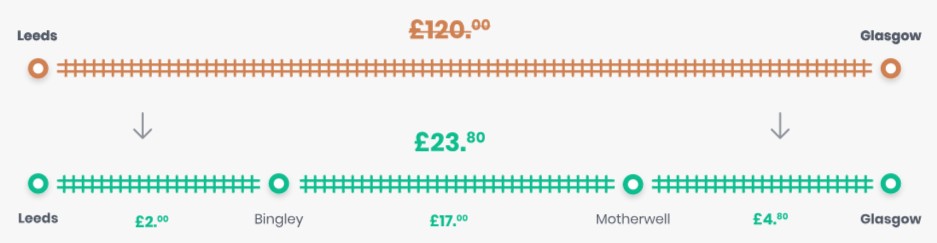
– A step-by-step explainer shows how Split My Fare divides a single Leeds to Glasgow ticket into three cheaper fares, saving £96.20 in total. (Source: splitmyfare.co.uk)
That risk was compounded by how unpredictable rail traffic can be. National coverage of a disruption or a strike could send visitors to the site within hours and without warning, and almost all of that audience was based in the UK, which meant fast, local response times and dependable uptime mattered more than most sectors would demand.
“Rail news or a burst of national coverage can send traffic climbing within hours, with no notice.” — Tobias Biberbach
The site also carries a large volume of long-form content, with station and route guides published regularly. That made reliable hosting for a content-heavy WordPress install a requirement, not a nice-to-have, since the team needed a platform built for scale rather than a small brochure site.
Speed and uptime for a UK audience drove the decision to move to Cloudways, along with the ability to choose where the server sits and round-the-clock live chat support. As Tobias Biberbach explained, “Being able to reach a person at any hour rather than opening a ticket and waiting is worth a great deal when your traffic can spike without warning.” The migration itself was handled by Split My Fare’s own development team, with Cloudways support resolving anything that came up along the way.
Once live, Site Manager gave the team a way to run regular plugin and WordPress core updates without gambling on the outcome. Before any update goes ahead, Site Manager takes an automatic backup, then checks pages afterward to flag anything that has changed unexpectedly.
“Site Manager takes an automatic backup first, then checks the pages after the plugin or WordPress core update has been applied to see whether anything has changed unexpectedly.” — Tobias Biberbach
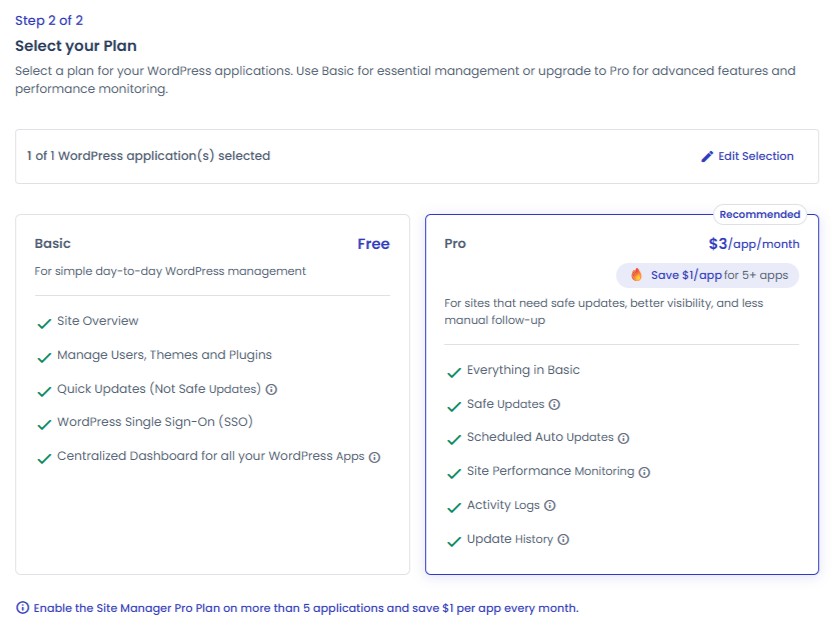
– Site Manager’s Pro plan includes safe updates, scheduled auto updates, performance monitoring and activity logs for centralized WordPress management. (Source: cloudways.com)
The team still runs its own manual checks on top of that layer, but having an automated safety net running alongside every deployment changed how updates felt day to day. One-click rollback rounds that out. It is rarely needed, but as Tobias Biberbach noted, when a manual check catches something the automated scan missed, the team can “roll straight back rather than working out how to unpick the update.”
In practice, traffic surges have been absorbed without the team needing to step in. Cloudways’ Cloudflare Enterprise layer sits in front of the site and takes on a good share of the load before it reaches the origin server, and the team monitors uptime as routine rather than waiting for a customer to report a problem.
“The site is noticeably faster than it was, and our content site has come through traffic surges, a full PHP version upgrade and monthly plugin updates without disruption our customers would have felt.” — Tobias Biberbach
That combination, a faster front door that has held steady through a major PHP upgrade and continuous plugin updates, is what Tobias Biberbach points to as the clearest measure of the move. The time freed up from maintenance has gone back into content drafting, research, new page development and email marketing.
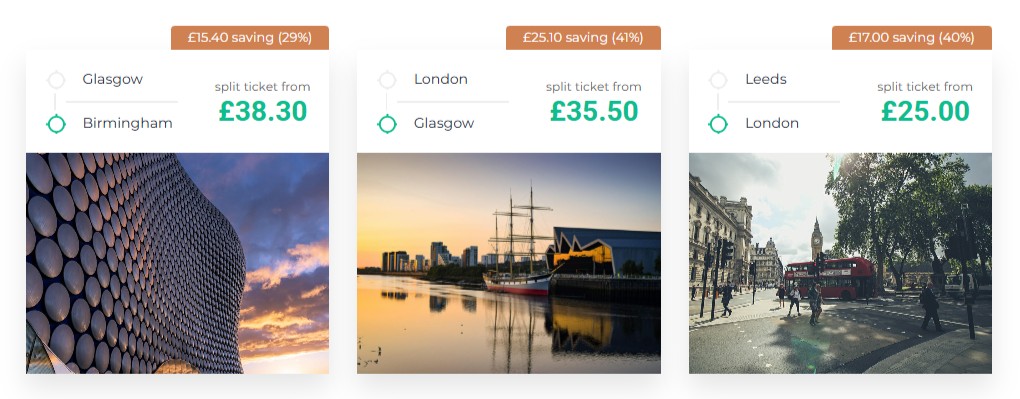
– Split My Fare’s route comparison tool shows potential savings across UK journeys, including a 41 percent reduction on a London to Glasgow split ticket. (Source: splitmyfare.co.uk)
Looking ahead, Split My Fare is expanding its coverage of stations, routes and train operating companies, which means a steady stream of new pages going live. Site Manager is set to take on more of that load as the site grows, and the team plans to lean further on Cloudways’ Cloudflare layer for security and edge performance as it does.

Cloudways Site Manager backs up every site before an update, checks for issues after, and rolls back instantly if something breaks.
Try Site ManagerShort but focused presentation of how businesses achieved their goals with our help

Sol Lee, a young entrepreneur, started his journey in ecommerce...
Read Now
They’re vital for our Magento applications. Built-in Elasticsearch and Varnish...
Read Now
Wendrich Digital Agency is a powerhouse in the world of...
Read Now