EXPLORE CLOUDWAYS
Experience lightning-fast loading times and seamless platform
View Demo >PRODUCTS
CLOUD PROVIDERS
SUPPORTED APPS
WHO WE SERVE
PARTNERSHIP PROGRAMS
Lifetime deal: 75% OFF
Advanced Support
POWERFUL FEATURES
DISCOVER
WHY CLOUDWAYS
 Read Case Study >
 Jesse Tutt
Founder & CEO

Share your contact details and we’ll send a download link to your inbox.

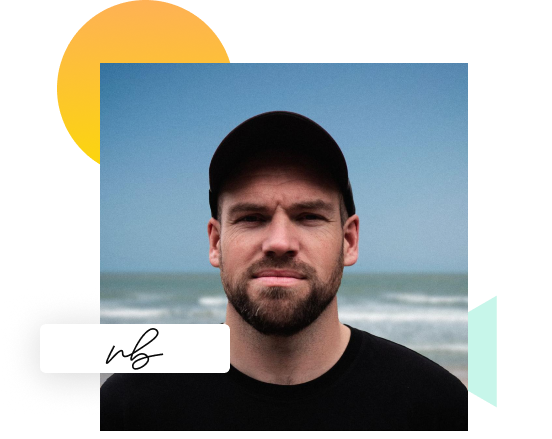
Richard Blackburn runs RB Website Design, a freelance web design studio based in Bognor Regis, West Sussex. Since 2017 he has built bespoke WordPress and WooCommerce sites for small businesses and national brands across the UK, pairing design work with SEO, PPC, hosting, and website maintenance.
Before Cloudways, Richard managed his entire client portfolio on a self-managed dedicated server running cPanel and Softaculous. It gave him control and a predictable cost, but it also meant hours of manual update work every month and no easy way to scale a site without planning a migration.
A hard drive failure that took his host nearly three days to resolve pushed Richard to find something more reliable. What he found solved more than uptime. Here’s how Cloudways and Site Manager changed the way he managed his clients’ websites.
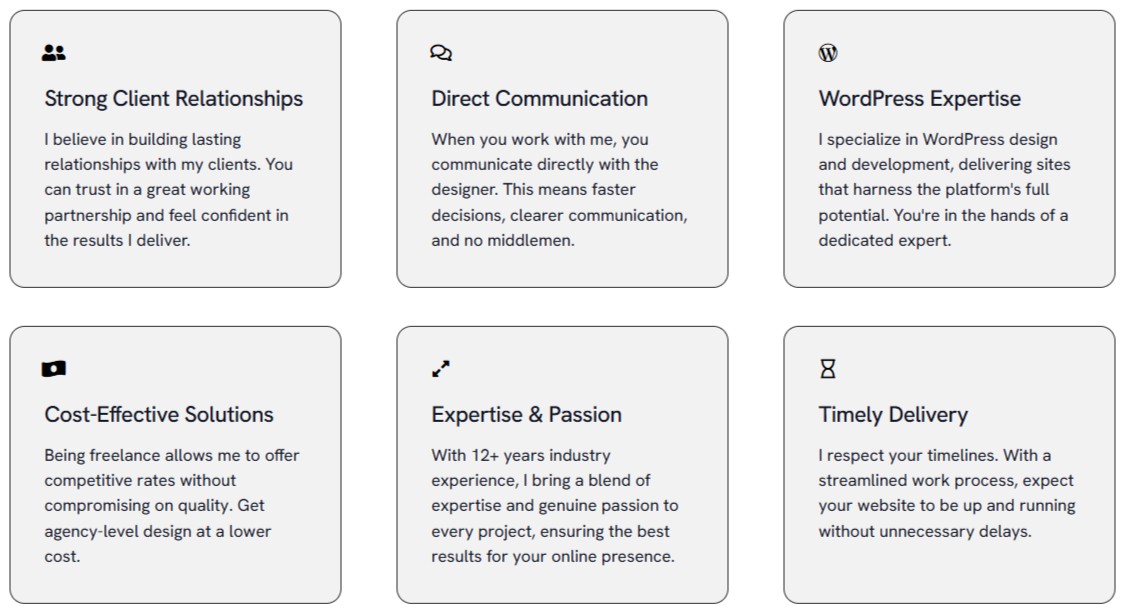
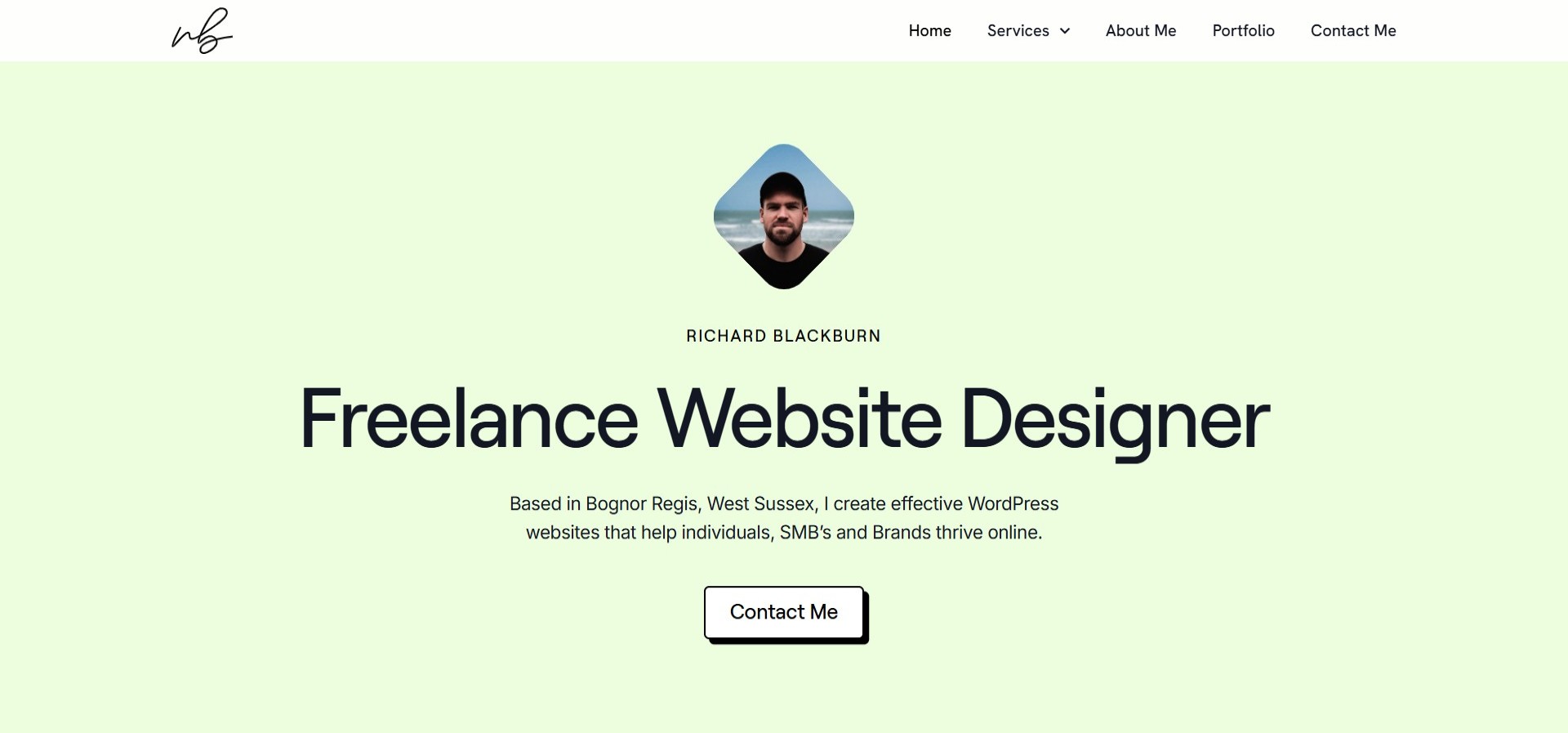
– Richard Blackburn service strengths including client relationships, WordPress expertise, and timely delivery. (Source: rbwebsitedesign.co.uk)
Richard’s dedicated server setup worked on paper. All his clients sat on one machine, at one predictable monthly cost, with full control over the environment. In practice, it added up to a second, unpaid job.
As Richard put it, “trying to maintain all my client sites was time consuming, and the problem got worse as my business grew.” Capacity was fixed too. A client having a strong month meant working around the limits of the server he’d already committed to, since adding resources meant a migration project of its own.
“Trying to maintain all my client sites was time consuming and the problem got worse as my business grew.” — Richard Blackburn
The breaking point was a hardware failure. When the server’s hard drive went down, it took his host nearly 72 hours to restore from backup. His clients were left without a working site or email for three days. That outage was what finally sent him looking for a more dependable setup.

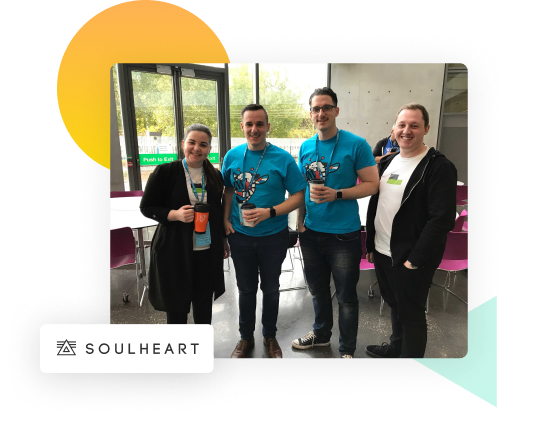
– Richard Blackburn reviews client site details, reflecting the hands-on attention he brings to managing sites for SMBs and national brands. (Source: rbwebsitedesign.co.uk)
Richard had already tried Vultr and DigitalOcean droplets before settling on Cloudways. He found both solid providers in their own right, but running them meant carrying the technical knowledge and time needed to keep the servers maintained himself. Cloudways, he said, “bridged the gap of high-powered servers and technical know-how with a user-friendly platform that made complete sense.” Being able to scale a single site by adding resources, rather than planning a migration, changed how he thought about growth for individual clients.
Cloudways solved the performance and uptime problems, but it was the Site Manager that addressed the part of Richard’s workload that quietly consumed his week: keeping every client site updated and checked.
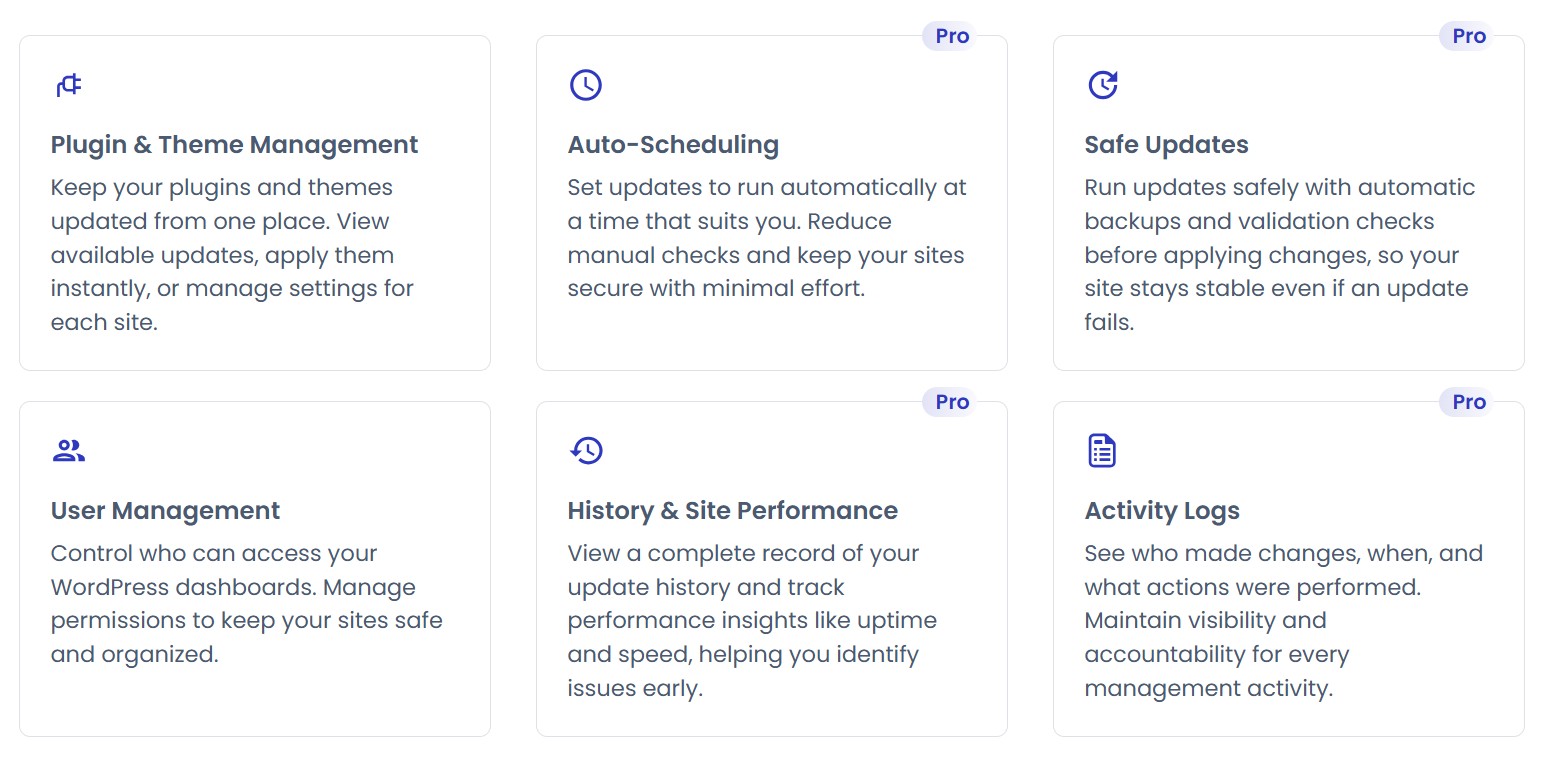
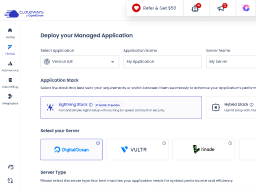
– Site Manager allows users to manage plugin and theme updates, auto-scheduling, safe updates, user permissions, performance history, and activity logs from a single dashboard. (Source: platform.cloudways.com)
Before Site Manager, Richard had no single view of his portfolio’s health. Knowing which sites were running outdated plugins meant opening each one individually, so the question rarely got asked. He explained that the shift “changed what I know more than what I do,” since that information now sits in front of him the moment he logs in.
“The difference between having to go and find that information and simply having it sounds small, but it’s the difference between maintenance being something you get around to and something you actually do.” — Richard Blackburn
Updates now happen on a set day rather than surfacing when a client emails about something looking off. Site Manager’s Visual Regression Testing catches the failures that matter most to Richard, layout shifts or caching issues that don’t take a site down but do affect how it looks. One-click rollback changed the question he asks himself before pushing an update, from whether it’s safe to how quickly he could undo it if it isn’t.
A maintenance plan, Richard pointed out, is really a promise, and for a freelancer that promise is only as good as their own diligence in a given month. “If updates depend on you remembering to do them in a week where three projects are due, something gives,” he said. Having the process run on its own, rather than depending on memory, turned maintenance from an intention into an actual service.
Richard now manages around 52 client sites. On his old setup, properly updating a single site, logging in, applying updates, and checking the main pages, took 10 to 15 minutes. Across his portfolio that consistently added up to real time lost every month. As Richard described it, that manual process “easily adds up to 1-2 days work a month, which is why in practice it didn’t always happen properly.”
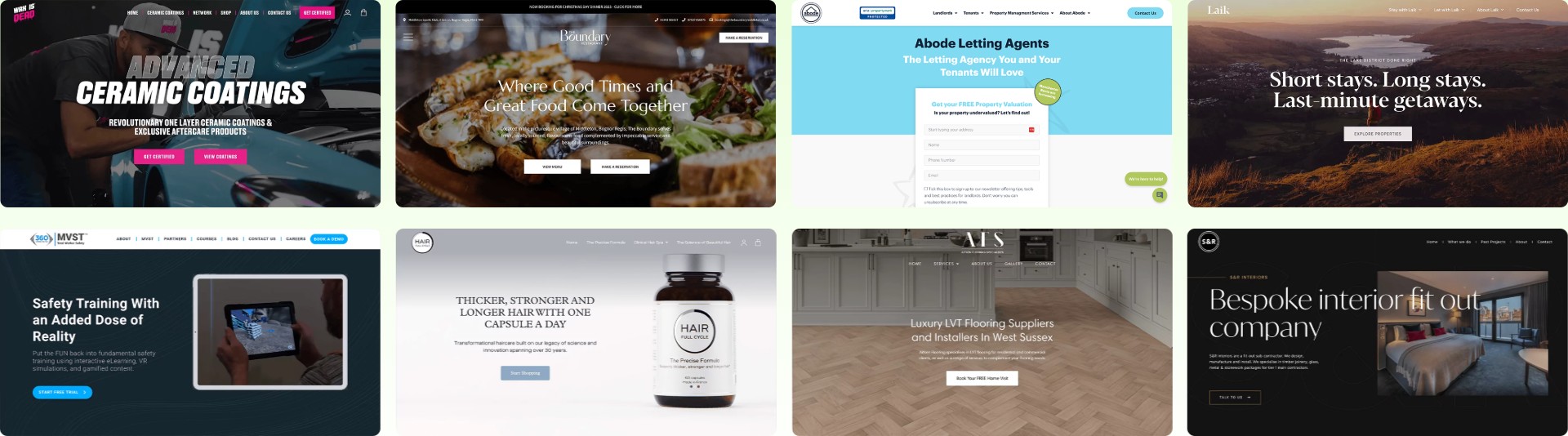
– Richard Blackburn’s portfolio, spanning industries including automotive care, hospitality, property letting, and interior design. (Source: rbwebsitedesign.co.uk)
Confidence in reliability shows up in what Richard no longer worries about. He recently spent a week in Spain without checking on his servers once. “That would have been unthinkable on the setup I ran before,” he said, adding that confidence now comes down to knowing that if something does go wrong, “I’ll know about it quickly, I’ll be able to see what’s causing it.”
Maintenance is invisible when it’s working, which Richard noted makes it a hard thing to charge for, since clients are paying every month for nothing to happen. The Site Manager gives him something concrete to point to instead, what’s been updated, when, and how the site is performing, which makes the renewal conversation more straightforward.
The type of client also changes what’s being asked of him. A local business tends to take him on trust, but a national brand asks harder questions about his update process, response time to critical patches, and what happens if something breaks while he’s away. “Now I can describe a process and it holds up to scrutiny,” he said, calling it a large part of how a freelancer working alone gets taken seriously for that kind of work.
“Adding another WordPress site doesn’t add another hour to my month the way it used to.” — Richard Blackburn
Every new site used to permanently add a slice of admin to Richard’s month, for as long as he kept the client. Enough of that, and a freelancer ends up spending the week on upkeep instead of the design work they took the job for in the first place. That’s no longer the case. Summing up the shift for other freelancers, Richard said it’s “taken the job I used to dread most off my plate.” Now what limits how much work he takes on is the design and build side of the business, which is the part he wants to be limited by.

Cloudways Site Manager brings all your client sites into one dashboard, so updates, testing, and rollbacks happen in a few clicks instead of taking up your week.
Try Site ManagerShort but focused presentation of how businesses achieved their goals with our help

Read how Cloudways helps Bigfork via ease of use, performance,...
Read Now
Meet Leon Sokolski, the owner of LokalEngage, a digital agency...
Read Now
Today, your local handmade jewelry shop in San Francisco transforms...
Read Now