EXPLORE CLOUDWAYS
Experience lightning-fast loading times and seamless platform
View Demo >PRODUCTS
CLOUD PROVIDERS
SUPPORTED APPS
WHO WE SERVE
PARTNERSHIP PROGRAMS
Lifetime deal: 75% OFF
Advanced Support
POWERFUL FEATURES
DISCOVER
WHY CLOUDWAYS
 Read Case Study >
 Jesse Tutt
Founder & CEO

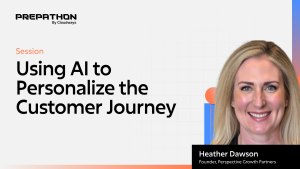
A Prepathon 2025 session on using AI to build “functional personas”, behavior-based rather than demographic, that actually improve user journeys, reduce friction, and lift conversions.
🎙️ Speakers
▸ Paul Boag — UX Strategist
▸ Host: Arsalan Sajid — Team Lead, Community Marketing, DigitalOcean
✨ Key Takeaways
✦ Traditional demographic personas are of limited use, functional personas focus on goals, tasks, objections, and touch points.
✦ Create multiple personas and different lenses (CRO, product, comms) for the same audience.
✦ AI can turn scattered notes, reviews, and support logs into behavior-based segments and draft personas in under an hour.
✦ Use a project workspace in ChatGPT, Claude, or Gemini, upload your data, and run deep online research with quotes and references.
✦ Segment by need or behavior, not demographics, and draft personas one segment at a time.
✦ Always validate with real users and customer-facing staff, and challenge the AI to justify its claims with sources.
✦ Keep personas alive with regular refreshes, and apply them to navigation, FAQs, objection handling, journey maps, and CTAs.
Arsalan Sajid: Hello everyone. I’m Arsalan Sajid, your host for this session. And first of all, before moving forward to our next session, I should give kudos to Moeez for hosting it, such an amazing activity that our audience really liked as much as I did, I’m sure. So talking about the session, before I talk about this wonderful speaker and the amazing person that we have to conduct this, we have Paul Boag with us, who has years and years of experience doing digital strategy, improving user experience and conversion optimization for numerous digital brands across the globe. And today for this session, Paul is going to talk about how we can leverage AI to create user personas that are going to help you improve user journeys and conversion optimization. So without further ado, let’s welcome Paul to our session. Hello Paul, how are you?
Paul Boag: I am very well, and yourself? You doing all right?
Arsalan Sajid: I’m good. You’re at the beginning of your session, so you’re not too tired yet, but wait until you finish, then you will be, I’m sure. And today is my debut for the hosting session, so…
Paul Boag: Oh, there you go, see, no pressure then.
Arsalan Sajid: No, I’m not dreading it at all. No, it’s all cool, it’s all fine. Right, shall I kick off? Yeah, sure, go on, let’s do it.
Paul Boag: Right, well, it’s really good to have you all with me today, and it’s an interesting time, isn’t it? We’re living in an interesting world right now because everything seems like it’s changing. We’ve got the huge innovations with AI that’s changing shopping habits and how people are browsing and interacting with the web, we’ve also got a new generation of users coming up who use the web in a very different way. And so everything’s a little bit chaotic, and it’s in times like this where you need to re-evaluate everything and ask yourself, are we doing things in the best way, do we need to change in this new reality, and the answer is, well, we probably do.
And today I want to look at one specific area where I think things need to change, which is personas. We all know about personas, we all know that they are a very useful tool, or historically have been a useful tool, for focusing us on user needs. But I would argue that traditional personas kind of suck, right, that these things we produce because we’re supposed to produce them aren’t actually that useful in really understanding our users and our users’ behavior and what it is that they do.
Because they’re primarily based around marketing, aren’t they? They’re focused very much on their likes and dislikes and their personality and all of those kinds of things. But actually, when it comes to making our websites more usable, that demographic way of looking at things isn’t necessarily the right approach. So I believe that with the new AI tools we’ve got at our disposal, combined with the fact that we’ve got changing audience behaviors, now is a great time to reinvent the persona into something that’s more functional and more useful for the work that we do, and can be more informative for the design and development process of the websites we’re creating.
And if we want our personas to really help improve conversion, we need to make sure they’re focusing on the right things. So for example, what goals and tasks a user is trying to achieve on their website, things like what questions and objections people need answering before they act. We heard in the last talk, didn’t we, about how one of the things AI loves is questions and frequently asked questions, because that’s what people are putting into AI, and so our website needs to be addressing those, but we also need to be addressing their objections, why are people not buying, what’s stopping them from acting.
Things like touch points, right, there was a stage where it was all pretty easy, wasn’t it, when you designed a website, people searched, they went to the website, they bought something. But now there are so many more layers to it, because we’ve got social media, AI, mobile interactions, customer service support, delivery experiences, all these different touch points that together create the experience. And then we also need personas that help us identify service gaps, places where we’re letting our customers down. So there is so much more that we can do with personas than their demographics, that they read the Guardian and drive an Audi, which have limited usefulness, I would argue.
So what are functional personas, this made-up word that I’ve just come up with to describe them? I’ve used that term to differentiate them from traditional personas, because one of the biggest problems I encounter is that I work with clients that go, yeah yeah yeah, we’ve already got personas, but they’ve got the demographic type of personas which have limited use in conversion rate optimization and user experience design. So the kind of personas I’m creating today are more like this, that I can create quite a suite of personas, this is one for a fashion brand, and with each of the personas I’m creating, I can add quite a level of detail to give you a real sense of who these users are.
So we can cover the basic stuff, we can give them a name and an occupation and an age, but then it gets interesting, we start including their goals and their pain points, their questions, the tasks that they want to complete, when and where they shop, their objections, what influences them, what triggers them. So there is huge potential to create much richer personas that contain really useful insights into user behavior. In today’s world, traditional personas often have this very rigid template that doesn’t fit all projects, and so it’s really important that we don’t replicate that mistake, and that as we create functional personas, maybe we start considering creating different lenses to our personas, different versions of the same persona.
So for example, with that fashion retailer I’m working with, the one you saw there was the conversion rate optimization persona lens, whatever you want to call it, but we equally produced one for the product team, and that’s the same people in the personas but the information we included for the product team was different, more focused on their taste, what they liked, what they disliked. And equally there was a communications lens of each of the personas, which was focused more on where they talk, where they interact online, who they listen to, those kinds of things. So there is very much an opportunity to create this wealth of information, not only way more personas than we might previously have done.
Someone just said in the chat that personas turn into this box-ticking exercise, we create them because that’s what you do, and so we have a small number and they’re kind of vague and not very useful. Well, we can create a lot more of those with much more specific information and create different perspectives on those personas. Now of course, the problem with that is that sounds like a lot of work, Paul, right, to create all of these personas is going to take us a long time and a lot of effort. But we live in a new reality, don’t we, a reality of AI where we can do all of this that I’ve just talked about in a matter of minutes, and by that I mean less than an hour, a full set of personas across multiple perspectives. Obviously you’re going to need to edit them, tweak them, validate them, but the fundamentals we can get in place in less than an hour.
And so what I’m going to talk you through is my process for doing that, but before I do, let’s talk about the benefits of these kind of functional personas, because they are really valuable once they’re in place. For a start, creating these functional personas that are driven and created using AI actually lightens the load of the amount of user research that we need to do. Now user research is always going to be important, I am not suggesting that it isn’t, but using the methodology I’m going to lay out we can do that in the leanest way we possibly can.
Secondly, these personas can be very easily updated and iterated upon, which means we can keep them current as user behavior changes, which it’s doing a lot at the moment. And then finally, we can tie our personas to outcomes, so tasks, objections, and proof points match straight onto things like our engagement funnel where we’re working out the flow and when our messaging should be going out and what that messaging should be, we can take the content of our personas and apply it directly to that.
So how can we use AI to create these amazing personas super fast? Well, first of all, we can start by taking all of those scattered notes we’ve got about users and bringing it together into clean, easy-to-scan themes. What do I mean by that? Chances are your organization has loads of information about your users, it might be anecdotes, customer reviews and testimonials, a previous survey you ran, or even old personas, call logs or email transcripts from conversations. And the trouble is we’ve got all of this information, but it’s all kind of woolly and all over the place. We can bring all of that together and use the power of AI to identify reoccurring themes, and suck more value out of that user data we’ve already got rather than going away and doing new user research.
Secondly, we can then spot segments based on these themes that occur. So instead of grouping people by their demographics, we can instead group them by their behavior, by the things they’re trying to do and achieve, and that is a lot more useful when it comes to everything from communication to user experience and conversion rate optimization. We can also use AI to produce first drafts of these personas and even journey maps very quickly in a matter of minutes, which means we can constantly be iterating and refining and evolving our understanding of users, and then we can iterate these with other stakeholders and even with end users on the fly to get feedback and improve them.
So step-by-step guide, how are we going to do this? Step one, in our large language model of choice, we’re going to create a dedicated workspace. So if you are in ChatGPT or Claude, these are called projects, you create a project, and you can also do this with Google Gemini, I think they call them gems there, which is a bit of a weird name. I think Copilot calls them projects as well, although I can’t remember off the top of my head. So we create a project, and then what we’re going to do is upload everything we can lay our hands on related to the user, so all of those things I said before, call logs, old surveys, analytics data, whatever you’ve got, and we’re going to dump it in.
But before we do that, we’re going to create some clear instructions, you can add instructions to your project. Your instructions will vary depending on what you want to achieve, but here’s a sample to get you thinking, “As a user researcher, create realistic functional personas using the project files and public research,” come to that in a minute, “segment by needs, tasks, questions, pain points, or goals,” you might want to change that depending on what lens you’re creating, “and show your reasoning,” and that’s an important thing which we’ll come to later. So we add the instructions in, and then we upload whatever we have, every file we can lay our hands on, interview transcripts, old personas, survey results, support tickets, chat logs, analytics, anything we can find, we’re going to just dump in there.
Now once we’ve done that, we’re going to change tack just slightly for a moment and then come back to all those files. What we’re going to do next is run some deep online research. All of these tools have got some research mode, and we’re going to go for that. What we’re going to do is ask AI to go out onto the internet and see what people are saying about your product or service. Now depending on your product and how well known it is, if you’re doing a startup, then nobody’s going to be saying anything about your product or service, so you get it to do the same thing but on your competition, and if you don’t know who your competition are, get it to do the research on the problem you’re solving. So basically to go out and find out what people are saying about the area you operate in.
So we want to give it a role, tell it it’s got to act as a user researcher online. We’re going to give it a clear goal, which is to build up insights and understanding about user behavior with your product or service. We’ve asked it to test the quality of its output, in other words we’re going to advise it that it needs to find actual quotes and links to those quotes and report those back so that we know it’s not hallucinating and making stuff up, we want it to provide references for the same reason. And the “ask it to test the quality of the output” will also be getting it to go back over itself and say, right, okay, once you’ve written this report, go back through all those references and quotes and check they’re genuine, so it’s checking its own homework, so to speak.
We want it to list insights that you require, so you’re going to need to tell it what insights you’re after, like tasks, questions, objections, etc. Other things I look at is sentiment, are people positive about your product or negative, questions they have, objections that stop them buying, tasks they want to complete in your product area, and goals and pain points you can address. So we’re getting it to go out there and do a load of research. And then once it’s done all of that research, you can take the report it gives you and upload that as another project file, alongside all of those other project files we created.
And then what we need to do is get it to propose segmentation for our personas, what groups of people are we going to have. So we’re going to say, based on your project files and your deep research, propose an appropriate number of segments we can use for the creation of personas, and this is critical, segment based on criteria such as need or behavior, not demographics. So it’s now going to go away and segment your audience in a way it feels is most appropriate based on the different themes that have emerged from its online research and its review of your project files.
Then once it’s done that, we’re going to ask it to start drafting up personas for each of our different segments, and you need to do those one at a time, if you ask it to do them all in one go, it tends to do a bit of a shitty job, so just get it to do one at a time. And what we’re going to tell it is that it needs to state what this person’s goals and tasks are, what their objections and blockers are, highlight their pain points, show the various touch points and ways people are going to be interacting, and identify service gaps where you might be letting them down.
And on the screen here you can see a bit of a template that you can steal, and you basically tell it to fill in the gaps using all the information it’s got, and it’s that simple, and it will produce detailed, good-quality personas that outline the behavior for the different audience. You can tweak the prompts to focus on different areas or different lenses, but basically it’s a really fast, quick way of generating personas. Obviously however we do need to validate them, because as we all know AI hallucinates. I always find it a bit funny that people say, oh, AI hallucinates, it’s rubbish because it hallucinates, well, so do people, we make up stuff all the time, so just like we need to check our own work, we need to check AI’s work.
So how are we going to validate it? A couple of ways. First of all, if you’ve got access to your user audience, we’re going to show them some of the personas and ask them which one of these do they feel they can most associate with, and what elements do you feel you associate with, and what do you feel is missing? So a little bit of user research of passing these by users makes a huge difference just to make sure you’re not going completely dolally, is that a very British euphemism, I think, dolally. You could do that as a survey, a document you send out, or an interview. Whatever feedback you get, what we do is upload that feedback into the AI as a project file and say, based on the feedback you’ve given, please now refine those personas, you don’t even need to do the refining yourself, we get AI to do that for you.
And then the other audience we can validate with is customer-facing staff. So if you’ve got people dealing with support tickets the whole time, or salespeople, or anybody interacting regularly with your end audience, then we can pass this to them and ask them to say, is this information correct, is there anything missing. So by doing this you’re going to end up refining and improving your persona over time, but also you’re going to continue to get more and more insights, more customer testimonials and reviews, more analytics data, and we can just every once in a while feed that back into the system and get it to update and improve the personas, so you’ve always got fresh personas that are representative of users’ current behavior.
But there’s a little bit of troubleshooting you need to consider as you work through this process, you will encounter some pitfalls and problems, and I don’t want to oversell it as this utopia where everything is wonderful, so let’s work through those briefly. One thing you can end up with is too many personas, so although you can create endless personas with this, you get to the point where you’re almost splitting hairs and the personas overlap with one another and you can overdo it. So I’d suggest you maybe start with lots because you can, and then over time start to combine or remove personas that are not so good, and over time you’ll end up with a more refined set, it’s all about fast iteration.
Secondly, you will find that some stakeholders want demographic information, but I would encourage you to avoid that unless it affects the user’s behavior in some way, otherwise just leave it out, it will be a distraction. But like I said, you can create separate personas for different functions, a comms persona, a conversion rate optimization persona, a user experience persona, or whatever. We’ve talked about AI hallucinations, if you get stuff back in the persona and you’re like, I’m not sure about that, where did it get that from, ask it, say, you’ve said this in your persona, what led you to this conclusion, and it will come back with a load of justification. But then you need to follow up and say, okay, give me specific quotes and references to justify that justification you’ve just given me, so that you know it’s actually basing it on reality and not pulling it out of its mental virtual backside.
And then finally, you might feel you’ve not got enough data, and that’s fine, you can mark assumptions as assumptions in your persona, so as you look down the persona, if there are things that aren’t really backed up but you feel are probably right, that’s absolutely fine, just mark them as an assumption. And then later on, when you’ve got a bit of time and energy, you can do some surveying or quick usability testing to validate whether those things are real. And really the most important part of all of this is to keep it alive, make sure you’re regularly revisiting this, maybe schedule a refresh every year or whenever there are major changes in behavior or when your product or service changes, maybe you launch a new version of your software or you pivot the business slightly, you could just rerun your research, regenerate those summaries, and archive any out-of-date assumptions you’ve made.
So we’ve got our personas, but let’s take a moment to ask, well, what are we going to do with them, because this is the other big problem with personas, we go through the exercise of creating them but then we don’t really make good use of them, they end up getting shoved in a drawer somewhere and ignored and all of that effort was wasted, it was that checkbox exercise again. So how are we going to make use of our personas? Well, the first thing you want to do is use them as part of a process for creating site navigation, information architecture, e-commerce categorization, so you can use methodologies like top-task analysis alongside personas to start building out an information architecture or product categorization that’s based on the personas and users’ needs and tasks rather than how you organize and think about things internally.
Secondly, you can use these personas to map things like user objections and FAQs, it can also help inform case studies and microcopy, FAQs in particular and objection handling in particular are excellent things you can draw out of those personas and start addressing on your website, and I’m happy to cover those more in Q&A. Then we can also use personas as a starting point for journey mapping, where we look at the flow and the steps a user passes through in their journey, and we can then map that against process flows of how someone moves through your application or website and what questions and objections they have at different points.
And then also they’re incredibly useful for conversion, they help inform your calls to action based on your persona’s readiness, their goals, and their pain points, so it can be incredibly insightful. And we can use personas as a basis for tracking our KPIs and identifying KPIs that are of real value rather than just vanity metrics. So I’ve blasted through that really fast because I wanted to leave enough time for questions. But I’ve written a couple of articles that build on these themes, the one on the left covers everything we’ve just talked about and about personas and how to make them useful and functional, but also I’ve got another very detailed guide about mapping customer journeys, which are basically personas but over time, because people’s questions and objections and goals change as they interact with you. So hopefully that’s useful and points you in the right direction. But I want to stop now with my slides because I want to answer your questions and dive into a little bit more detail. So what have we got, any questions?
Arsalan Sajid: Great, this was insightful, Paul, and I loved it, and I’m sure our audience are going to take back home some practical insights that they are going to work with right from the word go. So let’s move towards the Q&As, let me get through the questions. The first question we have is from Nib, he’s asking, connect personas to conversions, how do you map objections, content, proof points, UI changes in a traceable way?
Paul Boag: So, personas are just one tool in our arsenal, I’m not going to claim they’re this magic tool that will solve all your problems. But a good set of personas will provide one thing, which is they list your objections, what is it that’s stopping a user from acting on your site. Now when combined with journey mapping, it’ll also tell you when somebody is likely to think of that objection, so is that objection going to be in their mind right at the beginning of their journey, or are they only going to think of it when it comes to the moment of payment or whatever else. And once you know your objections and when in the journey someone has that objection, then you can start bringing those objections, or answers to those objections, into the user interface.
So a classic example, I haven’t got the screen handy unfortunately, but I do a lot of work in charity donations. So imagine a donation form where you’re asking questions like how much do people want to give, how regularly do they want to give, you’re asking them to enter credit card information. Now oftentimes when I design that, almost alongside every field I have an objection-handling statement to address that fear people have. So for example they’re faced with a toggle, monthly or one-off, what’s the objection there, the objection is, oh, what if I can’t continue to give monthly, is it easy to cancel? So we add the objection-handling statement of “you can cancel at any time with one click” written right alongside the form field. So it really does let you take those objections and start mapping them very specifically to UI changes. But can you necessarily track all of those? Probably not just with personas.
Arsalan Sajid: Okay, moving towards the next question, it’s from Curtis, he’s asking, when trying to use tools like website heat maps, is there a way to tag personas to see who is staying where, etc.?
Paul Boag: Oh, wouldn’t that be great? You can kind of do it in some ways. I’m coming back to be bitten by my own smartass comment in the chat earlier where I was rude about the quiz and I said the answer is always “it depends,” and that’s exactly where I find myself now, it depends. What you can do is tag people based on the content they have viewed on the website. So for example, if we know that a persona type has a specific question, then if somebody goes to a page which answers that question, we could tag them as potentially being part of that segmentation. Also, you can do comms campaigns specific to different persona groups, so if somebody is coming in through a marketing channel that was targeting a specific persona group, we can tag them as being part of that persona group with some degree of certainty.
And the other thing you can do is occasionally we build pages, it’s appropriate to build pages dedicated to particular audiences, like landing pages. So I’m working on a nursery website at the moment that sells trees, and one of the audiences they’re targeting is hunters who want to create a nice environment that attracts wildlife. And so we’ve created a landing page dedicated to hunters that matches our persona for hunters, so as soon as they hit that landing page, we can now tag them as being hunters. So there are ways and means, but it’s messy, it’s not 100% perfect, nothing ever is, is it really? Does that answer the question?
Arsalan Sajid: Next one, the next question is from Darren, and he’s asking, what are the biggest mistakes we should avoid using AI to generate personas?
Paul Boag: Not double-checking that what it’s saying is valid, because the trouble with AI, and I’m sure you’re all aware of this now, is it can sound very compelling and persuasive, but that doesn’t mean it necessarily is correct. So you do need to ask it, okay, why this approach, why have you said this thing, what was it you were thinking here, where did you get that information? So you need to question and challenge it the whole time, otherwise it will, as we say in the UK, it will talk bollocks at you.
Arsalan Sajid: So I have one very long question and an interesting one now, which is from Usma. She’s asking, how do you convince leadership at an organization that’s bent on following the traditional personas instead of trying the functional approach you’re advocating, is there a seminal study we can reference?
Paul Boag: No, there isn’t a study, at least not one that I found, annoyingly. The approach I take, because I come across this problem all the time, is incredibly simple. I don’t call it a persona. I just say, I need, and you can give it whatever name you want, you can call it a functional persona, an empathy map, make up some name, I need this asset to be able to do my job. You can still have your traditional persona, that’s nothing to do with me or what I’m trying to achieve, I need this to do my job, and that tends to make it a lot easier.
The other thing that makes it a lot easier is that in doing it the way I’m proposing, we’re not at any stage saying, oh, we need to go away and do three weeks of additional user research, it’s very lightweight, very easy to do, so there’s no reason for them to say no because it’s not going to cost them anything. So this is one of those scenarios where really I just wouldn’t ask for permission, I would just go ahead and create it for yourself and start referencing it, and if you need to give it a different name, give it a different name, that’s my attitude.
Arsalan Sajid: Great, I wish we could take more questions, but we have to take care of the time limit we have here. So I would like to thank you again, Paul, for being at the Prepathon. And before you leave, I would like to ask you, how was your experience of being…
Paul Boag: Oh, it was awful, it was terrible. I’m going to be rude about your question. What I mean is, how is any speaker going to say, oh no, it was absolutely awful, so I think it’s a fundamentally flawed question and I reject the premise of your question. No, it’s been great, you guys have been great, you’ve been really supportive and nice, the people in the room are really engaged, which is always fun, and I love doing this kind of stuff. I can’t believe that you’re offering a three-day conference for nothing, that’s crazy biscuits, you’re putting a load of very hardworking events organizers out of a job by doing this for free, so I hope you feel bad.
Arsalan Sajid: Great, that’s all we wanted to hear. So that’s a wrap for this session, and coming up next is another amazing activity that Moeez is going to conduct, he’s going to rejoin the stage to do the activity called AI or Not. I hope you’ll like it, and it’s a bye from my side, take care everyone.
Answer a few questions, and we'll present you with a personalized tour of the Cloudways platform based on your answers.