EXPLORE CLOUDWAYS
Experience lightning-fast loading times and seamless platform
View Demo > Read Case Study >
 Jesse Tutt
Founder & CEO

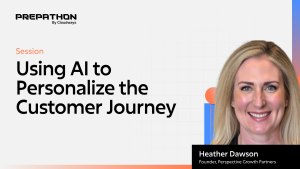
📣 AI is redefining how people shop — from personalized recommendations to chat-based checkouts. In this Prepathon session, Sonia Ibel, Delivery & Account Manager at site, walks us through how AI is transforming every step of the customer journey. Discover how agents like ChatGPT and Claude will soon shop for customers, how interfaces are evolving beyond websites, and what online store owners must do to stay visible in an AI-first future.
Intro & Session Overview Hello everyone. Thank you for being here today. My name is Sudra Be and I’ll be your host today. Uh most of you might already know me from the chat, but this is the first time that I’m on the other side of the screen and honestly it feels great. The chat is amazing. Everyone’s buzzing and there’s it’s just electrifying to be here. Um just wrapping up quickly on the last session that we had. Thank you to our amazing speakers for being here. It was I think for any e-commerce store owner it was a very valuable and in insightful session altogether in crushing the BFCM sales season and I think like Ivana mentioned in the chat it was just good knowledge to have in general as well now for the upcoming session that we have uh we’re going to be joined by Sonia Ibel she’s the delivery and account manager at site and she’s going to be telling us how AI is actually reshaping the entire customer journey and the entire customer shopping experience so we’re going to have her on stage and you know before she joins us. Let’s just give her a very warm Prepathon style welcome. Use the chat, emojis, reactions. Hey, Sonia. Hi. Thanks for having me. Of course. Thanks for being here. How are you? I’m great, thanks. Excited to talk here today. Yep. I see you’ve got a lot of reactions here, so I think everyone else is pretty excited as well. Cool. Yeah. How Shopping Evolved: From Corner Stores to Online Malls So, I’m Sonia. I’m a delivery and account manager at side and I’m here today to take you shopping. So my topic today is about how AI will change the way that we shop, how interfaces might evolve and what this means for all of us. So a few words about me and um the company that I’m working for. As I said, I’m delivery and account manager. I’m working in our WooCommerce and payment specialized team. I’m here mostly for like customer happiness and making sure that our clients get the value they need from us. Um, side is Europe’s biggest WordPress and WooCommerce agency with more than 19 years of experience. We have more than 130 colleagues in over 35 countries all over the world. So, it’s a great experience working there. Before I want to go into the bright future of shopping with AI, I actually want to take a few steps back. And by back, I mean actually back in time and want to look at how the shopping experience has evolved throughout the past decades. We’re starting here in the 50s60s in a little corner store and you see behind the counter this lovely lady, Mrs. Johnson. And Mrs. Johnson is so to say the original recommendation engine. So she knew exactly about your shopping preferences back in the days. She knew what kind of bread you liked. She would know exactly about all of your allergies, what kind of sweets your kids like. And on Tuesday morning, she would put aside like the best tomatoes for you because she knew that this is when you would come around to shop. But like most things in life, this came with a little trade-off. So in those little corner stores, there was not a lot of variety of products and the prices were maybe a bit more steep than we are used to right now. Then what happened next? We call it the big box revolution. So that was in the 70s starting 80s where we see those those big markets. Think Walmart, think Costco. Uh where you have like here in this image, you have like flashy price tags. You have sales tags everywhere like buy four um for the price of free and you basically your own recommendation engine in this scenario. So you have to be really aware of what you need and um what products you want to buy otherwise you might end up buying things that you don’t even want it. And the last thing we saw was of course online shopping since the early 2000s. So this is kind of bringing together what we had before. Um we had a lot of different products um all over the world. We have the worldwide web involved now. But still you’re a bit on your own out there. You are checking for your products yourself through filters through different websites. you’re trying to navigate through different reviews and trying to find out what is the best product for you which can be quite overwhelming especially if for example you’re trying to make a bigger purchase um like I don’t know maybe a TV and you are trying to find the best fit for you and compare all of those different options out there. So that brings me to the question what’s next Enter AI Commerce: Meet “Mrs. Johnson with Superpowers” a commerce. So what we’ve seen the last years is that AI has changed a lot how we are working and how we are tackling things online and this will also come to place when it comes to shopping. So right now all of the big agents um the AI systems like Chat GPT, Claude, Perplexity, they are trying to support us now with this shopping experience and bringing together all of those great things we had in the past but with AI powers. So if you think back to the lovely lady that we saw in the corner store, Mrs. Johnson, we could say that Mrs. Johnson is back now, but she’s having AI superpowers this time. And if you’re asking yourself now the question like that sounds really cool, but are consumers out there really ready to adopt and are they ready to dive into this AI based shopping experience? I just wanted to check quickly with you. How is your feeling about this? So I prepared a poll for this and I hope that this is working here now online and first of all I would like to know from all of you if you are using AI in your daily life right now. So please vote now. We are all very interested and I think we can publish the results of this. So we are having 67% who said yes and 33% who said no they are not using it in daily life right now. And the second question is, are you ready to give AI more complex tasks like shopping for example? So please vote again. All right. So why I am asking you this question? This was actually a question that has been asked by Adobe and they have asked their consu their users. Okay, we have the results here. Sorry, we have 60% yes and 41% with no. And Adobe has asked exactly this question to their users. They wanted to understand where are actual users right now. Are they ready to adapt to complex Consumer Readiness: Are We Ready for AI Shopping? cases like this? And 92% of users they asked have said yes, we are using AI in our daily life right now. It’s out there. It’s great. It’s working for me. So why not? And they also asked if they would be ready to give it more complex tasks. And actually only 5% less. So 87% in this survey said yes, we would be ready to give AI complex task like shopping for example. Now here we saw a bit lower numbers. Um maybe because we have a very tech-savvy uh audience here today and I could imagine that a lot of people are still skeptical how this could work and how to make this secure because this is the big question. So to understand how this shopping experience would look like, I actually went ahead and asked Claude to give me an idea and I said, “Hey, I want to go shopping. Give me a mockup. Tell me how this would look like in future if you would shop for me and my dog.” Here you see my dog Tbe who’s usually with me uh when I’m working in home office. Now he’s sleeping outside. And this is what Claude came up with. So this is a mockup that has been created. So that was not an actual shopping experience, but we will come to that a bit later. And I asked Claude a simple question. I need a new dog toy. My budget is $15. And then Claude went ahead and did some research. Now, you might notice I didn’t give Claude a lot of input here. I just said here give me a dog toy. But be because in future this AI agent will have of all of my background because I have been shopping now already a little bit with Claude and it knows about my dog. It knows about the preferences. It knows what I’m usually buying. So I’m not AI in Action: Claude’s Dog Toy Example really giving it a lot of context because it’s already there. This is what Cloud is doing now in the background. It’s scanning the stores out there. It’s reading all of the details, checking reviews, comparing prices, of course, because we are having a clear budget here. Very important. It’s checking what is actually in stock because I don’t want to be in a checkout process and then finding out that this product is actually not available. It’s also checking for trust scores, making sure that I’m actually buying from a recommended seller. Now, after all of those steps, Claude is coming back with pre-curated options for me. And it’s coming back with the tennis balls, uh, which are great for fetch with playing with my dog. Then with a cotton rope toy, where it says it’s great for tugofwar with your beagle, and with a squeaky plush bear. And it’s telling me I can complete the purchase right here in your chat. Now, I made a decision. I like the cotton rope toy and I’m taking Claude to go ahead with the checkout. So, Claude is telling me, “Okay, that’s a great choice. I place the order. Payment is processed. You will have a shipping delivery within two days.” It’s giving me the order tracking number. So, the order is complete. And down here, Claude is giving me now a really interesting comment because it’s telling me, “You just bought from the Paw Perfect store without ever visiting their website.” Now, please hold that thought for a few minutes. We will come back to that. But first I want to take a quick look on what had actually happened here in the background. I asked my AI agent Claude in this case a very simple question and it went through all of those steps basically independently. It went through the discovery, the research, the analyzation, presentation and then it executed directly. Now step one to four are basically fully there without any problem. So this is what we do right now. We can go into chat GBT and ask hey can you give me recommendations on a product those are my um criteria please find the best fit for me. So only the execution the last step has been still tricky but there have been some very recent developments that this is actually possible right now. So in this case, the customer, my dog is very happy with the choice and he’s playing with the with a cotton rope toy. So it was a great um shopping Real Use Cases: Amazon’s “Buy For Me” and AI Agents on Websites experience. And I want to take a look with you now what is already out there, what is already possible because that’s the interesting part for us. One thing that might be interesting is Amazon buy for me for example. So this is an option where a huge e-commerce platform is basically building this AI agent on top. So you can go ahead with this buy for me option and it’s giving you kind of this experience what we just looked at. So for the big shopping platforms like Amazon this is a pretty simple trick because they are basically having everything. They are having the products they’re having the merchants on board. They’re having the full checkout. So the only thing they do now right now is really just putting this AI agent on top of everything. What’s interesting in this development here is for example that Amazon is trying to close their platform more or less. So they are preventing AI crawlers now from entering their website and shopping there because they want to be this platform like your onestop shop where you actually go to buy everything and not where an agent might visit and then buy on behalf another AI product. Then one thing that my team recently built was an AI agent that is shopping on your website. So if you imagine you have an e-commerce shop and now you want to have this AI shopping experience but embedded in your shop on your website and what the team did here was just a small proof of concept on behalf with the WordPress MCP which is working together with a with a small sample shop and connected to the open AI model 4 and this is what it looks like. So we are in the back end here now in WordPress. We have no orders so far and now we are going in the front end and asking do you sell any watches? Now the agent is going into the shop and checking for all kinds of watches. I find a model that I like. So I’m asking for specifics on this summit watch. So now this AI agent is going to fetch all of this data and it’s giving me all the product details here. You can see pricing and everything. And now you can start interacting with it asking for example what is the wristband size of the Summit watch. So it’s fetching this from the product information and giving me all of that back and I want to buy that watch. It’s putting it on the cart. And now that I have it in the cart, I can verify that everything is okay. So, it’s really like step by step. I can verify that this is what I actually want. Now, I can place the order, have a last check if everything is fine, if my shipping address is fine and everything. And of course, we are saying thank you to AI because we’re nice. And now, we are going back into the back end and refreshing. And now we have the order in there. So this is a pretty simple proof of concept. Um you might have noticed also that the actual payment was not part of this flow. We took that out. We we took like the easy route for now and said this is going to be paid when the shipping arrives. But potentially it is possible. It’s more of a UI problem at the moment. Now coming to let’s say most recent events. Um yesterday OpenAI published their buy it in chat GPT function. So basically this workflow that you’ve seen before with the doc toy in claude this little mockup this is now basically ChatGPT’s New “Buy It in Chat” Feature possible with chat GPT directly. So they just announced this yesterday. Um I tried to fit it still in because I think this is very very relevant information for all of you. So what is happening now is that you can go into chat GPT look for products and directly perform checkout and payment completely within chat GPT. So this is really interesting and and quite exciting developments and there are still some limitations like for example at the moment this functionality is only available in the US. So, outside of the US, I actually couldn’t test it myself. And it’s at the moment limited to Etsy and credit card payment only. And at the moment, it also only supports one item per time at a checkout. But it is the start. It is the start of something big. And this will expand. The Future of Interfaces: Chatbots, Voice, and AR/VR Commerce Now, coming back to the little mockup with Claude and the sneaky comment in the end that we bought this toy from the Paw Perfect store without ever visiting the website. What does that mean for us? What does that mean if a customer doesn’t visit your website anymore? And to understand that, I want to take a look at how interfaces might evolve in future. Looking at the classic e-commerce interface here, a very uh common uh example I would say the Apple store where you can browse and buy products. This is what we know today. Now what’s next? Looking at this example with clot and now the most recent one with chat GPT where it’s actually happening. We will buy in chat bots. So the interface will be actually a chatbot. So you will go to chat GPT or claude and say hey I am searching for this product. It will present you this product in a way. It will present you images and it will present you the product description but you will not actually visit the website of the seller. So you will stay in this chatbot interface. Thinking about those chatbot interfaces, I think they might also evolve into something different because right now those start feeling a little bit rigid for this very humanlike and very interactive tasks that we have. So other things that are already out there and start developing more and more are for example voice only devices. This is an example of an voice only um device which is AI powered and those kind of devices make a lot of sense for language interactions. For example, if you’re thinking about learning a language, it makes so much sense if you have, for example, an AI language tutor where you can just talk to because everyone who tried to learn a language, I think, uh, will agree that the only real way to learning it is is listening to the language and speaking it. So, there are a lot of really great use cases out there. Also, if you have something um in your hands, like if you’re driving, you might want to have a device where you can just talk to. Another very interesting use case will be point of sale POS. Let’s imagine we are having really immersive shopping experiences. For example, you’re on your way Thursday morning to McDonald’s. You’re going to McDonald’s every Thursday morning and you’re buying a bagel and a latte and your agent knows that you’re on the way. So, you’re talking to your agent on the way. It’s asking, “Hey, you’re half a kilometer away from McDonald’s. Do you want me to place your usual order?” And you will be just like, “Yes, please place my usual order.” You arrive, everything is ready. This is just a start. There will be a lot of different use cases that make so much sense for point of sale once we are getting there. Another interesting case that I never really saw coming myself is virtual reality and augmented reality because at the moment I would say that for me personally there is no real use case for VR and AR. But if you think about shopping it makes a lot of sense. For example, in this left picture, you see the virtual showroom. For example, you’re going to a car dealer. You want to buy a car, but he has the specific model only in blue, but you’re thinking about buying this car in red. That’s a bold choice. So, you would like to see what this actually looks like before you buy it. So, now imagine you have those VR glasses and you can check out how this car looks like in red. You can swipe through different colors and decide on which one fits best for you. Or the right example, if you think about shopping of clothes right now, you have the choice either to go like to the city center, to the store, finding a brand that you like, finding the best fit, finding the right size, the right color, and then queuing to try it on. The other road you can take right now is online shopping, but um I think everyone knows you might end up buying some things, sending them back because they don’t fit. Now, if you have augmented reality, you could say that you’re trying it on. You can swipe through different colors. You can see different models on yourself directly and directly choose the best fit for you. So, I’m actually really excited to see something like this happening. Now, in all of those cases, we saw that basically users are not seeing the product on your website. So, you’re losing a lot of the brand identity that you’re putting probably a lot of effort into. A lot of the design choices that you’re doing right now become irrelevant. Preparing for AI Commerce: Optimization, Structure, Speed, Trust So, that leads us to the question, how can we actually prepare for what’s next? How can we prepare for aentic commerce and making sure that our products will be found and that shoppers will choose our products over others? Now, here are some tips and tricks, let’s say, to get you started. First of all, start with content and website optimization. You can directly look into reviews and testimonials. So, of course, you can’t just go ahead and write yourself good reviews. Um, but what you can do is providing a top-notch customer service because if somebody has a problem with your product or with returns or whatever, they might contact your customer service and if you just have a very generic customer service there, which is not answering the customer’s request or their actual needs, they might be inclined to leave you a bad review. On the other hand, if you’re providing a very good review, um, very good customer service, they might be inclined to leave you leave you a good review. Search actively for people that give you testimonials and write relevant case studies that you can present. The next very important thing is make sure that you have your content structured that it is really machine readable that those AI agents find the data that they need. You need to be ready to give AI not just only keywords but you also need to answer questions. If somebody is asking an AI agent like what is the best outdoor shoe for me? They might come with some context. They might come with some questions and you need to be ready to answer those questions. And a really good way to do this is for example a structured FAQ section. So think about possible questions or questions you already got and put them into a structured FAQ section. The next very important point is latency speed. You don’t want to loot at lose at the checkout. As a human user, you might be willing to wait 5 seconds or even 10 seconds at a checkout. But an AI agent is thinking in a different scale. If the checkout takes too long, they might just drop. If your page is not loading within a time frame this agent is expecting, they might just drop. And the last thing that you can start right now is putting relevant security badges on your website. Making sure that AI understands your shop is secure. You can also put like trusted seller badges there. That makes AI really inclined to shop on your website. Measuring AI Impact: KPIs for an Agent-Driven World The second step after those optimizations is of course measuring and then starting to iterate on it. You will need to look for slightly different KPIs than you may be looking right now. The first one might be a structured data coverage. Is all of that data that we said before really in there? Is it completely filled? Is it up to date? For example, stock. Is it always up to date? The next one is the AI bot traffic ratio. So you want to know how much of the traffic you’re getting now is from AI and how much is from human users because AI will shop differently. You might have way less clicks from AI, but they are with a very high intent already. They might just need two clicks for an actual checkout where human users might be browsing around and just checking the store, dropping off, checking another store. So it’s important to understand how AI is using your store and to get it together in the end you will need to measure the traffic conversion and connected to that the card abandonment making sure the AI can really fulfill the checkout and if it’s always dropping at the last step there might be a problem. Now bringing this all together, what does this mean for us? What does this mean for the traditional e-commerce as Disruption & Opportunity: What It Means for Small Stores we know it today? The first thing that will slightly change is how the content will be consumed. We have been already touching on this a little bit. Right now our websites and our shops are very much measured and optimized for clicks, keywords, bounce rates. All of that will be still relevant in future because it will be not only AI shopping on your website. But you will also need to start thinking more what does the AI agent need? What answers is it looking for? and be ready to provide AI the answers that it’s looking for. This comes of course also with some disruptions for the traditional e-commerce big players out there. Just because they’re the big players today doesn’t mean that they will be the big players tomorrow. So many things are fundamentally shifting right now and everyone is trying to get it right. If we are looking back at this Amazon example where they’re trying to build their own agent and prevent other agents from shopping on their platform, this is their best guess at the moment. But is it right? We don’t know it yet. We will figure it out within the next months, years, however long it will take. So right now it is very much about speed, finding the right solutions and really understanding what customers want. And this brings us also to what opportunities are out there with this. Some disruptions for big play players might also mean that this is an opportunity for smaller shops, for Q&A Highlights & Final Thoughts example, because if they understand right now how to play this right and how to get their products ranked on the top of those AI agents, for example, this just opens completely new funnels for them. And this is something that’s extremely interesting. It’s also like so many different roots are opening up right now. The shopping within the AI agent itself like claude jet gpt and so on is only one route that we can take. There are so many others like for example the Amazon way that they’re just trying to build this platform themselves or AI based shopping on your website itself. Now bringing this all together and coming back one last time to Mrs. Johnson, the lovely lady from the corner store in the beginning. You could say that right now AI is replacing this shopping experience. Mrs. Johnson is back and this time she’s not shopping for you, but for millions out there. Thank you so much. Do we have questions? I’m just checking quickly if there are any questions that you would like me to answer. All right. So, I think we have a couple of questions in the Q&A tab, and I’ll just pin them to the screen here. So, this is one of our first questions. Okay. Ah, okay. Okay, I can read it down here. What’s your guidance on robots text and allow listing to block bad scrapers but admit good agents securely? I think for this one we will need to rely on some tools and some filters. I actually can’t give you a good recommendation for tools. I think very much of this is being developed at the moment and we will need to do some trial and error testing to find the good ones. But this is the route that I would recommend for now. because I don’t think that at some point it will be still possible to do that manually. Of course. And then we have another one in chat here that I’m going to put on the screen that this one’s from Hani and she’s asking, “Do you think there could be people also ask for a feature for AI like we have on Google for search?” Absolutely. I think right now it’s still not clear in which way this will develop like what kind of funnels will come out of this. Will this come with other opportunities that you can say like for example after some point hey you have been buying from this seller this is their top rated product um something like this or if um what what happens to all of those bonus programs for example that we are seeing right now because that might be also tricky to have them still in our AI agent funnel. It’s also a bit like is there an option for example to pay to get ranked better? For example, what we are seeing with Google right now um if you Google something that you can say like hey those ones are pinned to the top because they are like paid ads or something. I could imagine that something like this will also pop up in our AI agents in future. Excellent. And then we have another one here. What are the top three reasons agents skip a merchant even when price is competitive? I think like Yeah, just like top question like top reasons here. Yeah, I mean right now I can only give you my best guess because the first one actually doing it is is live since I don’t know maybe 24 hours. So there is no real data behind this right now. But my best guess would be really number one is any checkout problems speed. this is taking too long. Like the AI agent is in a in a waiting funnel for like five seconds, 10 seconds and it’s just learning from that and it’s like okay this shop is not reliable. Next time I will take another one. The next one I think will be really trusted seller signals because AI will need to make sure that it’s shopping from an e-commerce store that is reliable that it’s not performing a checkout putting money into it and then this product for example never arrives. So this would be my number two. And number three that’s that’s a tricky one. Um maybe appealing. It could be for example that it’s also choosing like this has the highest quality image and highest quality content in this product. Awesome. I think with that we’re done here. Thank you so much Sonia for being here and I know this was your first time being on the Prepathon stage. So if you could just share a few quick words on how your experience was here. Yeah, thank you so much. Um, it was really cool. It’s actually the first time that I’m speaking at an online event, which is a bit a different vibe, I would say, than an in-person event, but honestly, organization has been really great. Um, the the walkthrough has been great. So, yeah, thank you so much. It was a really great experience for me. Of course, and thank you for being here. We loved having you around. Thanks. And if you want, you can also like stick around in the chat and like, you know, answer people there as well. Awesome. Sure. All right. And with that, we’re done with the session. But don’t go anywhere because we are going to be starting with a quiz that is an e-commerce knowledge test. So, let’s get our thinking hats on and let’s make sure that you’re winning this one. You’re all already winners by being here. But I know that this quiz has a really cool gift prize as well at the end. So, the winner gets it all. All right. Thank you.
Answer a few questions, and we'll present you with a personalized tour of the Cloudways platform based on your answers.