EXPLORE CLOUDWAYS
Experience lightning-fast loading times and seamless platform
View Demo > Read Case Study >
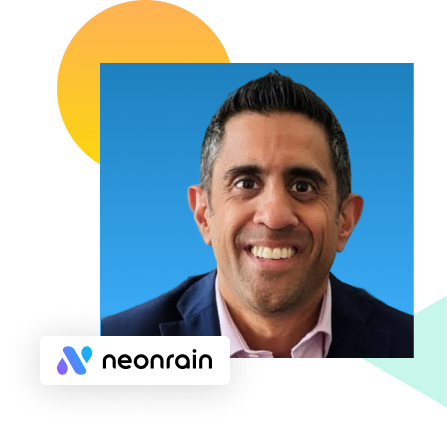
 Jesse Tutt
Founder & CEO

Share your contact details and we’ll send a download link to your inbox.
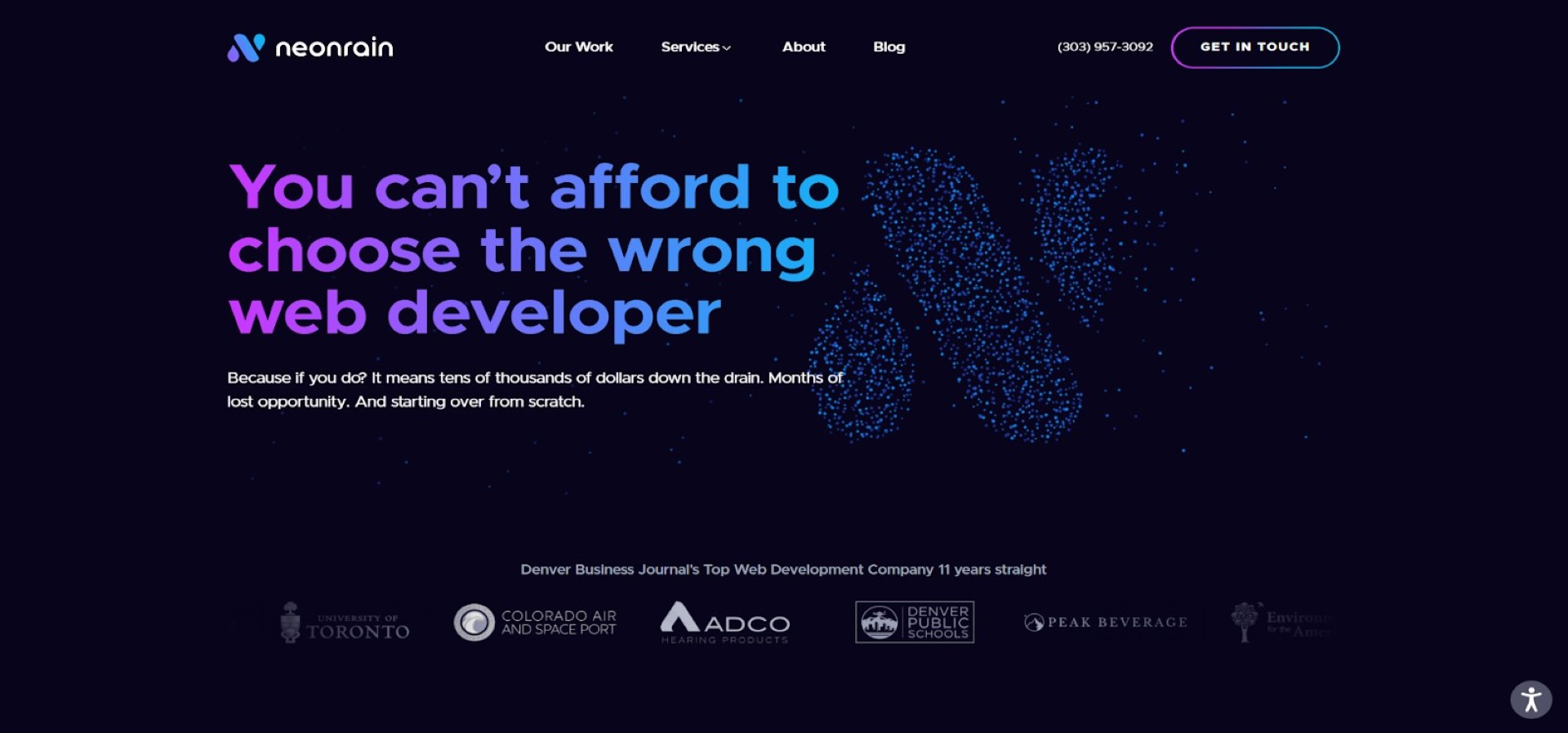
Founded in 2002, Neon Rain Interactive is a top-rated Denver web design and development agency. Their clients range from early-stage startups to small businesses, non-profits, higher education institutions, and government organizations. The common thread isn’t the size. It’s that each one needed something built right and found an agency that could actually do it.
Their work spans custom web design on WordPress and Drupal, custom software applications, AI integration, and workflow automation. No templates, no cookie-cutter builds. They figure out what a client needs, build it, and stick around after launch.
Today, Neon Rain manages 75 to 100 active clients at any given time, from small business websites to complex applications for large governmental organizations and universities. For years, finding the right hosting infrastructure to match that scale was one of the agency’s biggest challenges. Founder Arif Gangji found a solution worth reading about.
– Neon Rain has earned recognition from Clutch, the Hermes Creative Awards, the Denver Business Journal, and more, across web design, software development, and digital strategy. (Source: Neon Rain)
For years, Arif relied on two hosting setups to keep everything running: Liquid Web with dedicated servers and cloud instances, and AWS with EC2 instances. Each had its strengths, but neither was built for the kind of seamless, on-demand scalability a modern agency needs.
Liquid Web offered something Arif valued deeply: strong, knowledgeable support. But over time, that support quality changed. More critically, scaling up an instance was anything but smooth.
“We would have to clone the instance to a new one, which could mean hours of downtime, something our clients wouldn’t accept.” — Arif Gangji
AWS offered faster resizing, but it came at a different cost. The hands-on technical support that Arif appreciated with Liquid Web simply wasn’t there. There were trade-offs on both sides, and neither platform fully solved the problem.
The real stress showed up in the moments that mattered most, when a client launched a campaign with little warning. When upgrading an instance could take hours, those 30-minute warnings weren’t just nerve-wracking. They were a direct threat to client trust.
“We’d get an email from a client saying they were expecting a massive surge in traffic, with very little warning, and we’d have to scramble to find a solution.” — Arif Gangji
Before landing on Cloudways, Arif also tested WP Engine and Kinsta. Both fell short in a critical area: flexibility. WP Engine imposed a one-minute limit on backend processes. Kinsta allowed five minutes. For Neon Rain’s clients running longer scripts, neither was workable. “We found that Cloudways gave us the most flexibility for any future needs we might have,” Arif says.
The bigger issue wasn’t disasters. It was manual effort, and sometimes no effort at all. On some platforms, a traffic spike meant dropping everything to spin up instances and adjust load balancers. On others, there was nothing to do but watch and hope it held.
Arif is deliberate when evaluating new hosting providers. He doesn’t make quick decisions. His standard process is to set up sites on a new platform and leave them running for around six months, testing network reliability, resource availability, and overall stability before committing.
Cloudways passed every test.
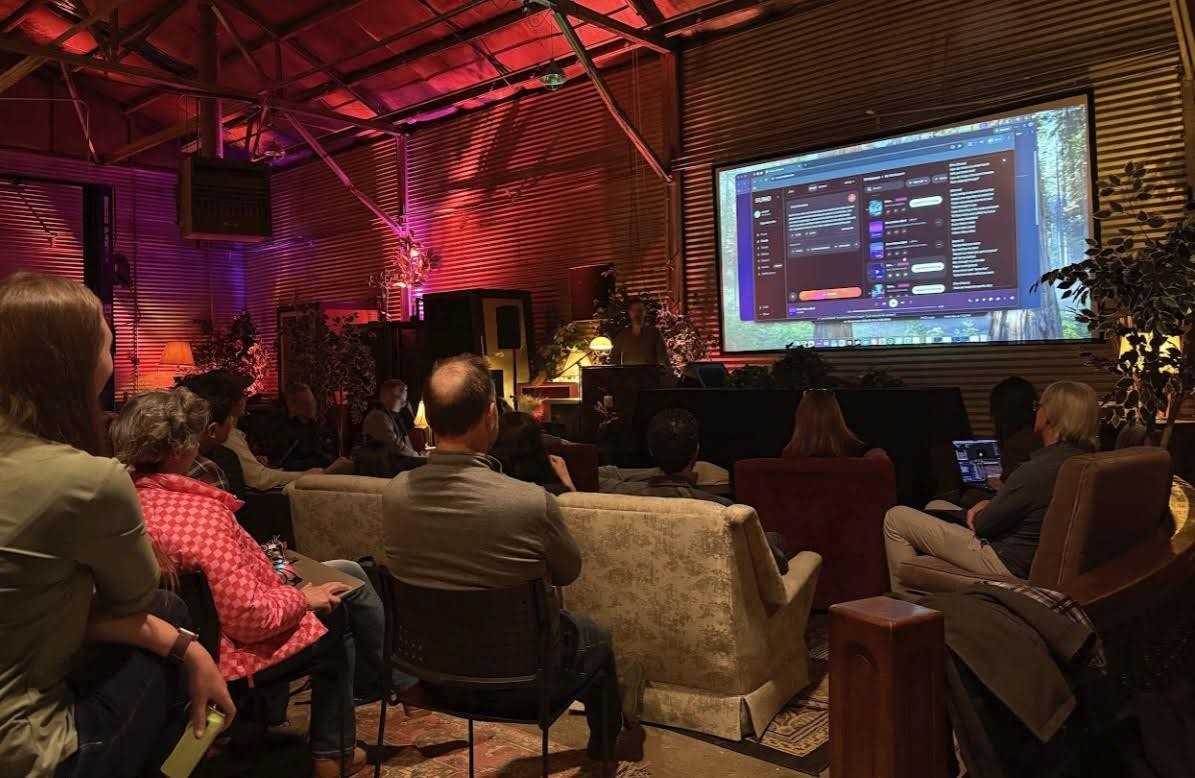
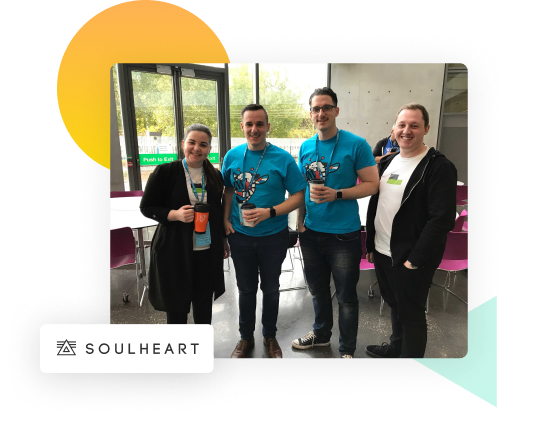
– Neon Rain’s culture goes beyond client delivery. The team regularly participates in industry events, bringing their expertise to the broader tech community. (Source: Neon Rain)
After the evaluation period, Arif began migrating his WordPress clients to Cloudways, drawn by what he describes as the best of both worlds: the ability to scale resources quickly, combined with consistent, knowledgeable support.
“Being able to handle resource needs for spikes or new clients easily was a huge benefit.” — Arif Gangji
For larger clients with high-traffic demands or strict uptime requirements, Arif turned to Cloudways Autonomous, the platform’s auto-scaling tier, built on Cloudflare Enterprise. The appeal was straightforward: instead of planning for traffic spikes or overbuilding infrastructure as a precaution, Autonomous handles surges automatically, in real time, without any manual intervention.
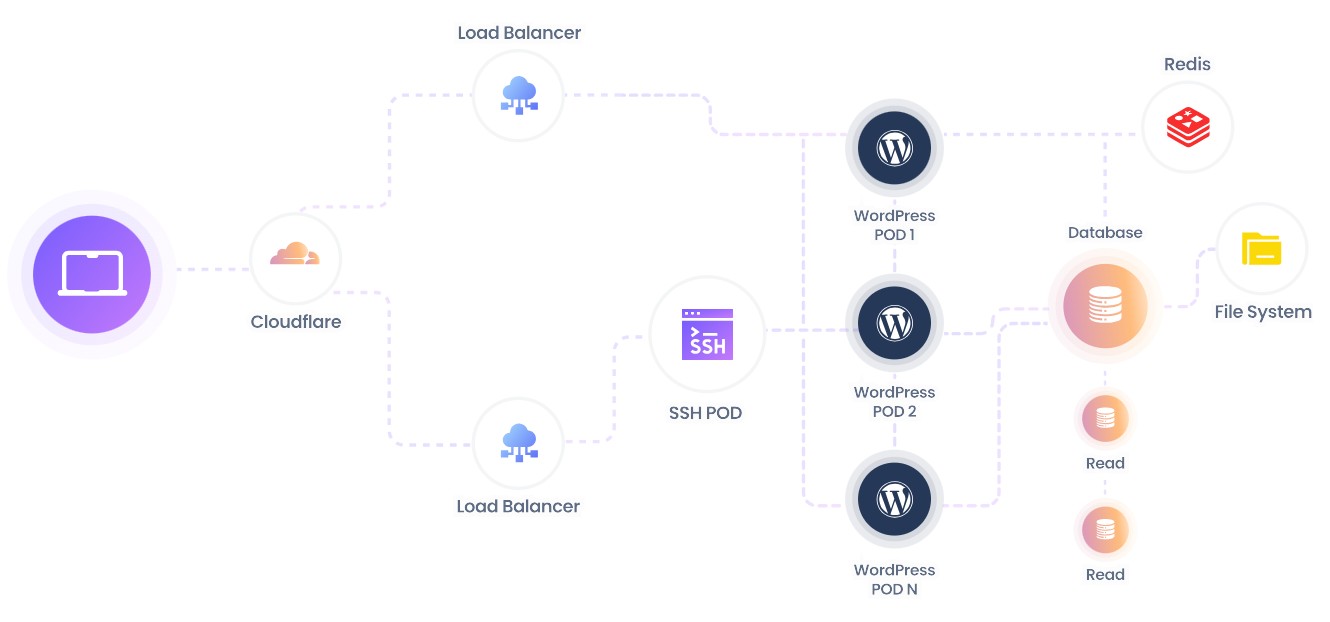
– Cloudways Autonomous routes traffic through Cloudflare and multiple load balancers, scaling WordPress pods automatically to handle any surge without manual intervention.
The difference this made became immediately visible with one particular client. That client had previously been hosted on Azure, where the only reliable way to prepare for traffic spikes was to provision far more resources than were typically needed, an expensive and inefficient approach. With Autonomous, that overbuilding became unnecessary. The platform scales up on its own, exactly when it’s needed, and scales back down just as quietly.
“With Autonomous, we don’t need to plan for it ahead of time. Cloudways Autonomous handles everything. We find out after the fact – it’s uneventful, which is a good thing in our industry.” — Arif Gangji
For some of Neon Rain’s more complex WordPress projects, the flexibility Cloudways offered on backend processes was equally important. Unlike WP Engine and Kinsta, there were no restrictive time limits on scripts. Applications connecting to Salesforce, running data processing jobs, or handling complex automation workflows could operate without being cut off mid-execution.
For Arif, the decision wasn’t just about one product. Neon Rain now uses both Cloudways Flexible and Cloudways Autonomous, selecting the right tier based on each client’s profile. Straightforward sites go on Flexible. Clients with spiky traffic or enterprise-level uptime needs go on Autonomous. It’s a practical, client-first framework that gives the agency room to grow without forcing every client into the same box.
Nearly ten months into using Cloudways Autonomous, Arif’s verdict is simple: it works, and it keeps working.
The most vivid proof came from an unexpected source. One of Neon Rain’s clients, a business drawing between 5 and 10 million visitors per year, was suddenly tagged by a well-known celebrity with ~6M followers in an Instagram story. The mention sent a massive, unplanned traffic spike to the site. There was no warning. There was no time to prepare.
“We didn’t have to do anything for traffic spikes. Cloudways Autonomous just took care of itself.” — Arif Gangji
The same held true closer to home. When another client unexpectedly went viral on TikTok in March 2026, hitting 300,000 visitors in a single day, there was no emergency call, no scramble, and no downtime. Autonomous handled it without anyone on Arif’s team lifting a finger.
Across their client base, Neon Rain now regularly sees peaks of ~9,500 concurrent users, traffic levels that would have triggered an emergency under their old infrastructure. Today, it triggers nothing but automatic scaling.
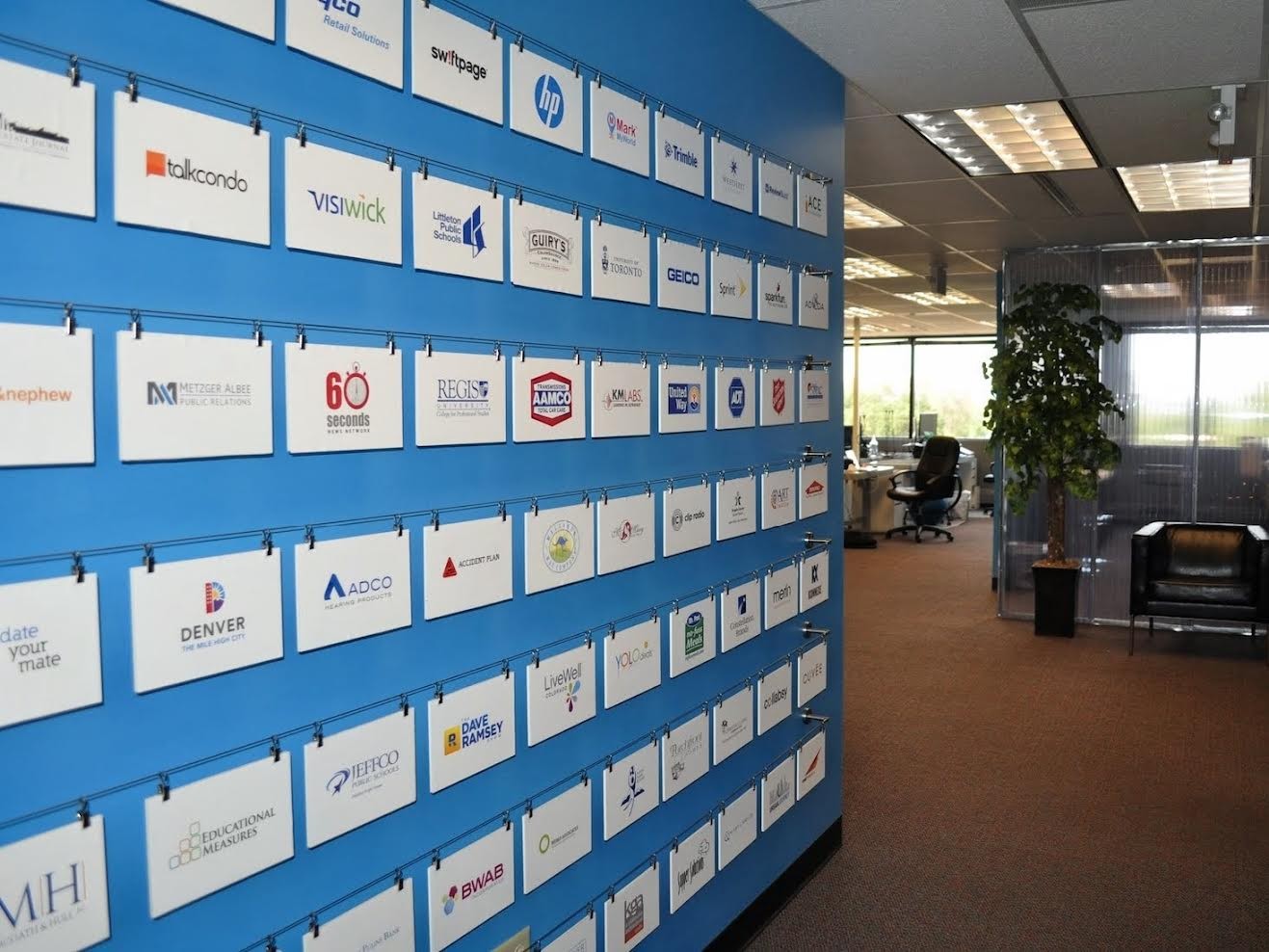
– Every logo on this wall represents a client whose site needs to stay up, no matter what. With Cloudways Autonomous, Neon Rain can make that promise without hesitation. (Source: Neon Rain)
Before Autonomous, that same client was on Azure, overprovisioned as a precaution against exactly those kinds of spikes. They no longer need to plan for it, and neither does Arif’s team. The platform handles it automatically.
“It’s nice to have a platform where there’s a team that has your back. It helps us sleep better at night knowing things are taken care of.” — Arif Gangji
The operational impact inside Neon Rain has been just as real. Infrastructure used to be something Arif was always thinking about, whether a client site could handle a spike, whether a platform would hold up. Now it rarely crosses his mind.
“We’re on one of Autonomous’s largest plans, and it feels like a long-term solution. Having infrastructure sorted out means I’m not thinking about it as much. I can focus on the agency instead of the servers.” — Arif Gangji
Knowing the infrastructure can handle whatever comes has given Neon Rain the confidence to go after larger clients. The conversations about traffic capacity and uptime that used to come with caveats no longer do.
“We’re not worried about whether the platform can handle a new client’s traffic anymore. That gives us room to go after bigger opportunities.” — Arif Gangji
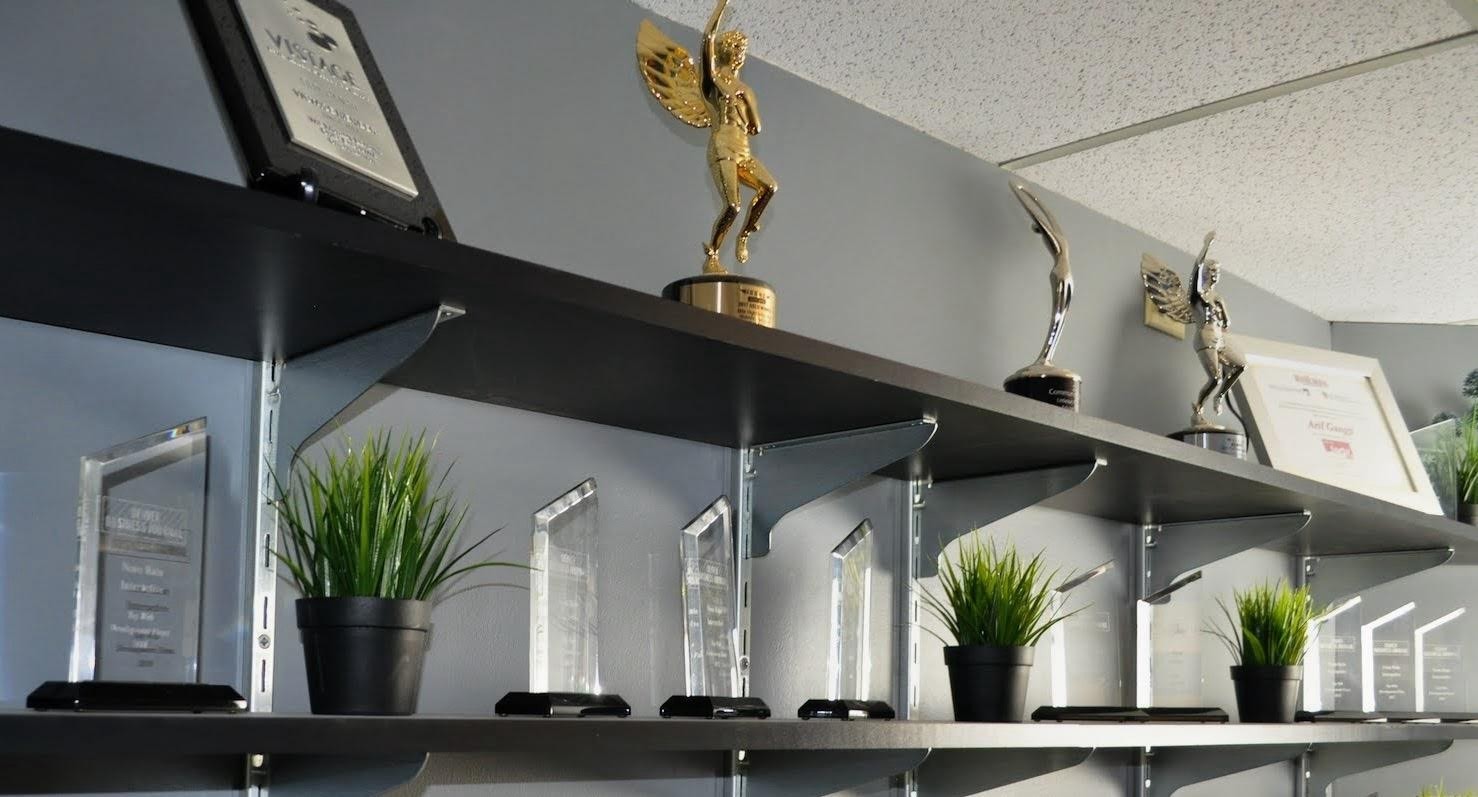
– A shelf of awards at Neon Rain’s Denver office, reflecting over two decades of recognition across web design, software development, and digital strategy. (Source: Neon Rain)
Asked whether he would choose Cloudways Autonomous again, Arif doesn’t hesitate. “Yes, I would definitely choose it again.” For other agencies wrestling with infrastructure stress, his take is practical. “You’re getting Kubernetes-based autoscaling and Cloudflare Enterprise baked in. That’s top-tier infrastructure that most agencies couldn’t afford to piece together on their own. With Autonomous, it’s all seamlessly configured and ready to go.”
And if Neon Rain ever had to move away? Arif is clear about what would be lost. “What I would miss the most is the freedom from having to plan for and manage traffic spikes.” Without it, the agency would likely return to overprovisioning infrastructure, expensive, inefficient, and a step backward for both the team and the clients they serve.

Let Cloudways Autonomous handle traffic surges, resource allocation, and performance stability, so you can focus on growth, not infrastructure.
Try AutonomousShort but focused presentation of how businesses achieved their goals with our help

Running a growing digital product is hard enough without your...
Read Now
Brand On Fire, LLC is a web design and development...
Read Now
Grow With Meerkat LLC is a US-based digital agency that...
Read Now