EXPLORE CLOUDWAYS
Experience lightning-fast loading times and seamless platform
View Demo > [Free Event] Build. Ship. Scale. at Velocity. See What’s Next at Prepathon | Sep 22–23 Save Your Spot
 Days
Hours
Min
Sec

*Valid till 15th September 2026
Lifetime deal: 75% OFF
Advanced Support
 Read Case Study >
 Jesse Tutt
Founder & CEO


Share your contact details and we’ll send a download link to your inbox.
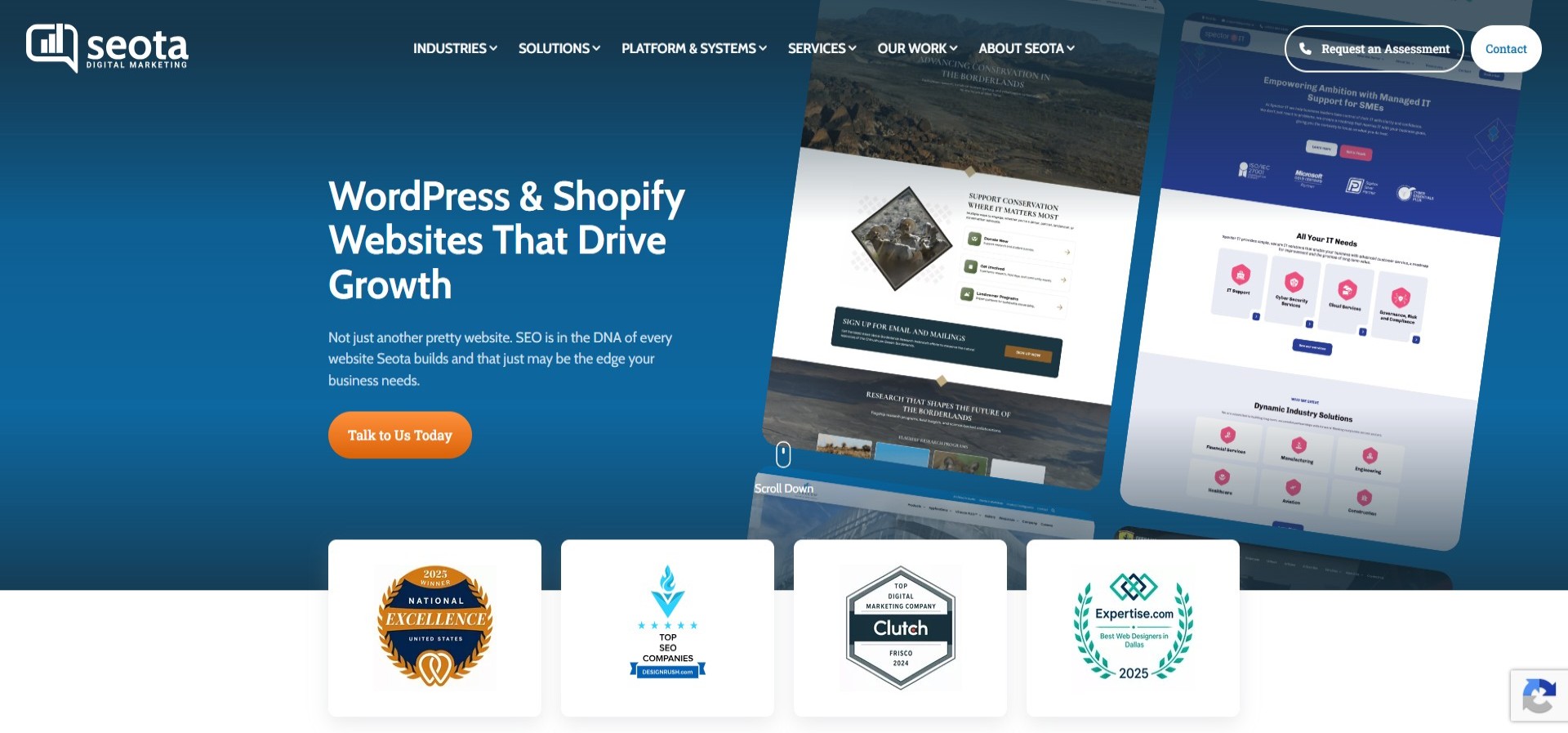
Seota is an engineering-first digital agency founded in Frisco, Texas, in 2009. Built on a foundation of custom development, deep systems integration, and data-driven SEO, Seota serves businesses in industries where websites are connected to operations, not just marketing.
The agency specialises in serving mid-market manufacturers, multi-location and franchise brands, and managed service providers whose digital infrastructure demands performance, reliability, and clear accountability at every level of service delivery.
To find out how Seota manages complex client hosting at scale without a dedicated DevOps team on Cloudways, read the full case study and explore the results firsthand.
Cloudways: Can you introduce Seota — when it was founded, what industries you serve, and the scale of client websites you manage today?
Vish Patel: We began as an SEO-focused firm, as the name Seota came from that foundation, and evolved into an engineering-first digital agency that combines custom development, systems integration, managed hosting, SEO, and paid media. Our three strongest markets are mid-market manufacturers and B2B distributors that need ERP-connected ecommerce; multi-location and franchise systems that need scalable website architecture and local SEO; and managed service providers that need secure, conversion-focused website design and inbound growth programs.
For manufacturers, we build customer portals and ecommerce experiences that connect platforms such as Epicor P21 and Epicor Kinetic with WooCommerce and other web applications. Our work also includes enterprise multi-location WordPress platforms and digital identity, website, and SEO programs for MSPs.
Today, we manage approximately 35 client applications across close to 10 Cloudways servers. The portfolio ranges from corporate and lead-generation websites to complex ecommerce environments with live pricing, inventory, customer-specific catalogs, and order data. For those clients, hosting is not a background utility. If a manufacturer’s portal is unavailable, customers may be unable to see contract pricing or place orders. That is the level of performance, reliability, and accountability our infrastructure must deliver.
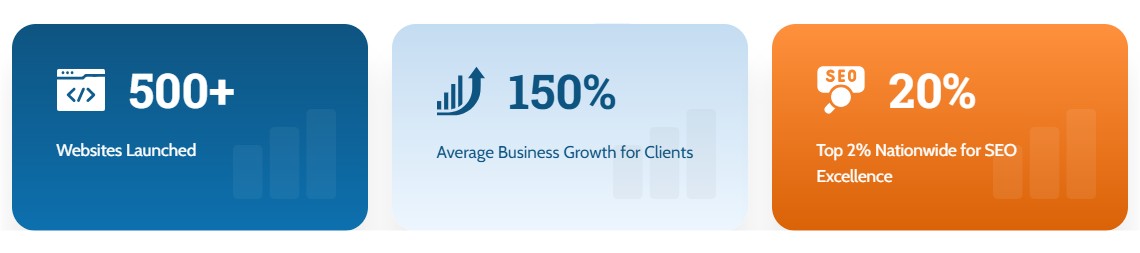
– Seota by the numbers: 500+ websites launched, 150% average business growth for clients, and ranked in the top 2% nationwide for SEO excellence. (Source: seota.com)
Cloudways: Before Cloudways, what hosting challenges were holding your agency back — performance issues, unreliable support, or difficulty scaling client infrastructure?
Vish Patel: The biggest challenge was the gap between commodity hosting and managing raw cloud infrastructure ourselves. Shared hosting and many traditional managed WordPress platforms were not designed for the dynamic workloads we support – WooCommerce transactions, ERP API calls, customer-specific pricing, scheduled synchronization jobs, large multi-location content footprints, and custom PHP applications. Under real load, we could see database bottlenecks, slow WordPress administration, and inconsistent performance.
Going directly to AWS, DigitalOcean, or another cloud provider solved the infrastructure problem but created an operational one: our developers became part-time systems administrators. Every hour spent patching servers, tuning services, or diagnosing infrastructure was an hour not spent improving a client’s website, integration, or growth program.
Support was equally important. When a manufacturer’s ordering portal, a franchise system’s location network, or an MSP’s lead-generation site has an issue late at night, a 24-hour ticket cycle is not an acceptable operating model. We needed a standardized managed cloud layer that could support both straightforward WordPress sites and transaction-heavy applications without sacrificing control, speed, or access to expert support.

– The Seota office, where the team manages hosting infrastructure for clients across manufacturing, franchise, and MSP sectors. (Source: seota.com)
Cloudways: What made Cloudways the right choice for Seota? Were there specific features or capabilities that stood out during your evaluation?
Vish Patel: Three things made the decision clear. First, Cloudways gave us the performance and control of cloud infrastructure from providers such as DigitalOcean and Vultr without requiring Seota to own day-to-day server administration. Second, the workflow is built for agencies: staging environments, application cloning, team access, automated backups, monitoring, and fast provisioning let us standardize how projects move from development to production. Third, the commercial model scales with the actual workload. We can right-size infrastructure for a lead-generation website, a multi-location platform, or an ERP-connected ecommerce store instead of forcing every client into the same hosting tier.
In our side-by-side evaluation, the migrated sites loaded approximately 20% faster before we made code-level optimizations. That performance improvement, combined with the operational efficiency, showed us Cloudways could become the managed infrastructure standard behind Seota’s client care plans.
Cloudways: How did the migration and onboarding experience go? Were there any unexpected hurdles in managing complex WordPress builds during the transition?
Vish Patel: The migration was smoother than expected. The Cloudways WordPress Migrator handled our standard sites, while staging environments gave us a safe path for complex applications — WooCommerce stores with custom API middleware, ERP synchronization jobs, webhooks, scheduled tasks, transactional email, and third-party services. We could clone the environment, test the complete business workflow, benchmark performance, and then manage the DNS cutover without materially disrupting the client.
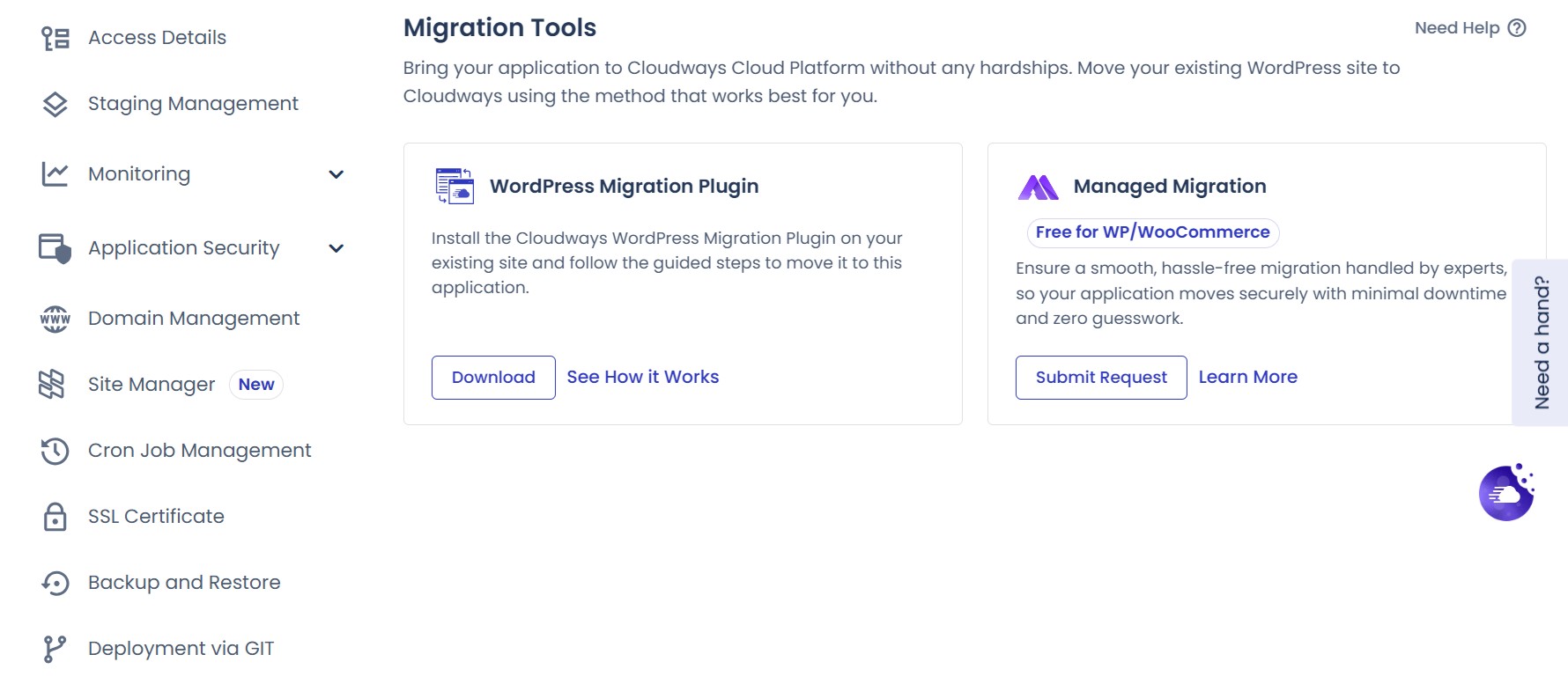
– Cloudways Migration Tools offers plugin-based and fully managed migration options for WordPress and WooCommerce sites. (Source: cloudways.com)
The most important lesson was to inventory every dependency before moving: cron jobs, API credentials, IP allowlists, webhook endpoints, SMTP services, caching exclusions, redirects, and background processes. Those dependencies can fail quietly even when the front end appears normal.
After the first migrations, we converted what we learned into a repeatable playbook: migrate to staging, validate integrations, test revenue-critical user journeys, document rollback steps, schedule the cutover, and monitor the application closely after launch. That process now helps us move both standard WordPress sites and integration-heavy builds in a controlled, consistent way.
Cloudways: Since switching, what measurable results have you seen — load times, PageSpeed scores, uptime, or improvements in overall client satisfaction?
Vish Patel: The performance gains were visible quickly. Across the sites we benchmarked, average load times moved from roughly three to four seconds to under two seconds. On one ERP-connected manufacturing ecommerce site, the mobile PageSpeed score improved from the low 50s to the low 90s after migration and stack tuning, without a code rebuild. Uptime across the managed portfolio has remained above 99.9%, and more of our sites now meet Core Web Vitals thresholds.
Those improvements do more than make pages feel faster. They strengthen the SEO programs we run, reduce friction on paid-media landing pages, improve the experience across large multi-location websites, and help B2B customers complete pricing lookups and orders with less delay.
The most telling result, however, is operational: the “why is my site slow?” emails have largely disappeared. When hosting stops being a recurring client concern, the platform is doing its job. That reliability also supports stronger care-plan retention because Seota can remain the single accountable partner for the website, integrations, performance, and ongoing optimization.

– A meeting space at the Seota office, home to a team that manages complex, integration-heavy client websites across multiple industries. (Source: seota.com)
Cloudways: How many servers and apps are you running, and how do you decide between the Lightning Stack and Hybrid Stack?
Vish Patel: We run approximately 35 applications across close to 10 servers of different sizes, with each server matched to the workload and business criticality. The portfolio includes standard WordPress sites, enterprise multi-location websites, WooCommerce stores with ERP-connected middleware, custom PHP applications, and Seota’s own reputation-management platform, ReviewFire. Hosting our own product on Cloudways is an important vote of confidence because we experience the platform as both an agency and a software operator.
For new, compatible WordPress and WooCommerce builds, our internal preference is the Lightning Stack because its NGINX and PHP-FPM architecture provides a strong performance baseline for modern dynamic workloads. We use or retain the Hybrid Stack when a legacy migration or custom application depends on Apache-specific behavior, complex .htaccess rules, older rewrite logic, or another compatibility requirement that has not been validated on Lightning.
Our team’s rule is simple: modern and compatible applications go to Lightning; legacy or highly customized applications go through a compatibility review before we change the stack. Cloudways’ ability to right-size each environment is equally important. A brochure site, a 500-location website, and a transactional ERP-connected ecommerce store should not be forced into the same infrastructure footprint.
Cloudways: How has Cloudways Copilot fit into your daily workflow, and has it changed how your team handles hosting management or troubleshooting?
Vish Patel: As an agency actively building AI into our internal workflows, we were naturally interested in Cloudways Copilot, but it earned its place by solving a practical problem. We use it as an early-warning and diagnostic layer: it helps surface abnormal server or application behavior, translates technical signals into a clearer starting point, and shortens the time between “something is wrong” and “we know where to investigate.”
That changes the client experience. Instead of waiting for a manufacturer, franchise operator, or MSP to report a problem, our team has a better opportunity to identify risk and respond proactively. Copilot has not replaced our engineers, and we would not want it to. It helps them spend less time assembling the first clues and more time validating the cause, choosing the right fix, and protecting the production environment.
Cloudways: What has the Agency Partner Program meant for Seota — and has it influenced how you package or sell hosting to clients?
Vish Patel: The Agency Partner Program helped us turn hosting from a pass-through expense into an intentional managed service. Partner benefits, stronger support access, and more predictable economics allow Seota to bundle managed cloud hosting, maintenance, monitoring, and optimization into care plans with healthy recurring margin.

– Cloudways Agency Partner Program benefits, including dedicated account management, onboarding discounts, growth bonuses, and enhanced expert support. (Source: cloudways.com)
Just as important, it simplifies the client relationship. A manufacturer does not want the ERP provider, web agency, and hosting company pointing at one another during an incident. A franchise system does not want inconsistent infrastructure across locations. An MSP expects clear ownership, security discipline, and fast escalation. Our offer is therefore built around one accountable partner for the website, integrations, infrastructure, and ongoing growth. That positioning helps us win and retain sophisticated clients whose websites are connected to operations, not just marketing.
Cloudways: Which Cloudways features or add-ons does your team rely on most, and how does Cloudways compare to providers you’ve used before?
Vish Patel: Our daily-use features include staging environments with controlled deployment, automated offsite backups, application and server monitoring, Cloudflare Enterprise for sites that need additional performance and security, SafeUpdates for routine WordPress maintenance, and Cloudways Copilot for faster diagnosis. Bot protection has also been valuable on WooCommerce stores that attract card-testing and other automated abuse.
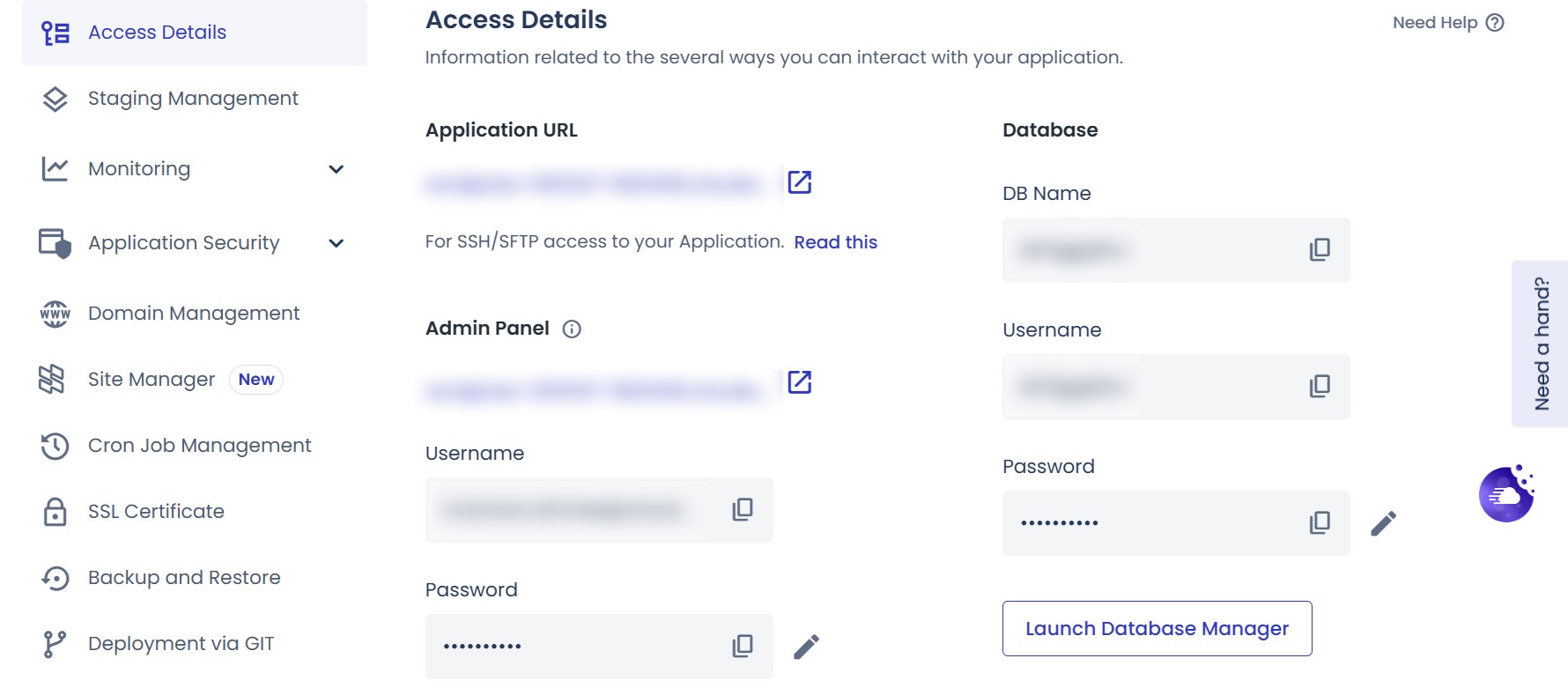
– Cloudways offers staging, monitoring, security, domain management, and backups into one unified platform. (Source: cloudways.com)
Compared with providers we used before, Cloudways occupies the right operational middle ground: more infrastructure control and workload flexibility than a conventional managed WordPress host, without the maintenance burden of bare cloud servers. That matters because Seota manages very different applications, from local lead-generation websites to enterprise multi-location platforms and ERP-connected ecommerce. We no longer have to choose between performance, control, and operational sanity.
Cloudways: What advice would you give a digital marketing agency considering Cloudways — especially one managing complex builds and high-performance client sites?
Vish Patel: Treat hosting as part of the product you deliver, not as a commodity you pass through. First, standardize your environments. Define a preferred stack, server profile, backup policy, monitoring standard, and security baseline for each workload tier so provisioning becomes a repeatable process.
Second, use staging for every meaningful change, especially on ERP-connected ecommerce, high-traffic multi-location websites, and security-sensitive MSP sites. The cost of testing is small; the cost of disrupting a revenue-critical application can be a client relationship.
Third, document every dependency, APIs, cron jobs, webhooks, SMTP, caching exclusions, redirects, DNS, and rollback procedures, before migration or deployment. Finally, package hosting inside a care plan with clear ownership, response expectations, maintenance, reporting, and sustainable margin. Cloudways gives an agency the performance and control needed for complex builds without forcing the development team to become a DevOps department.

Cloudways gives your agency the infrastructure control to take on more clients without adding server management overhead.
Start Free NowShort but focused presentation of how businesses achieved their goals with our help

For 14 years, Develo Design, a Magento ecommerce agency, wrestled...
Read Now
Proudly independent and technically led, Root Solutions has been crafting...
Read Now
For eBay power shoppers, finding the right item is all...
Read Now